Corporate Leadership
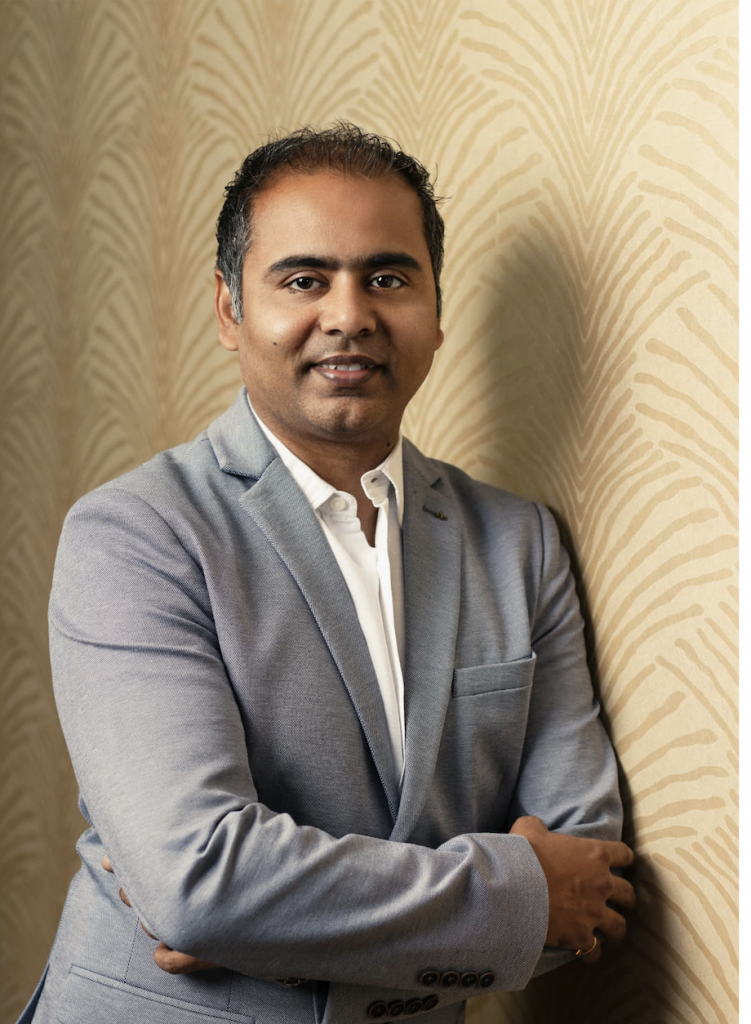
Saurabh Chandra is currently Partner & Financial Services Domestic Consulting leader with EY. He has been an entrepreneur and has worked with several companies in the past namely BCG, JPMC, Visa, Amazon, FlipKart and Oracle. He has been part of few notable market launches in mortgage, unsecured lending, open banking, GDPR, payments, Digi bank, retail and e-commerce domains.
Mr Chandra’s expertise lies around transforming companies including fundraising, policy formulation, regulatory and compliance, mergers and acquisition and new geo-launch. He also brings a good blend of business, regulatory and technology expertise.
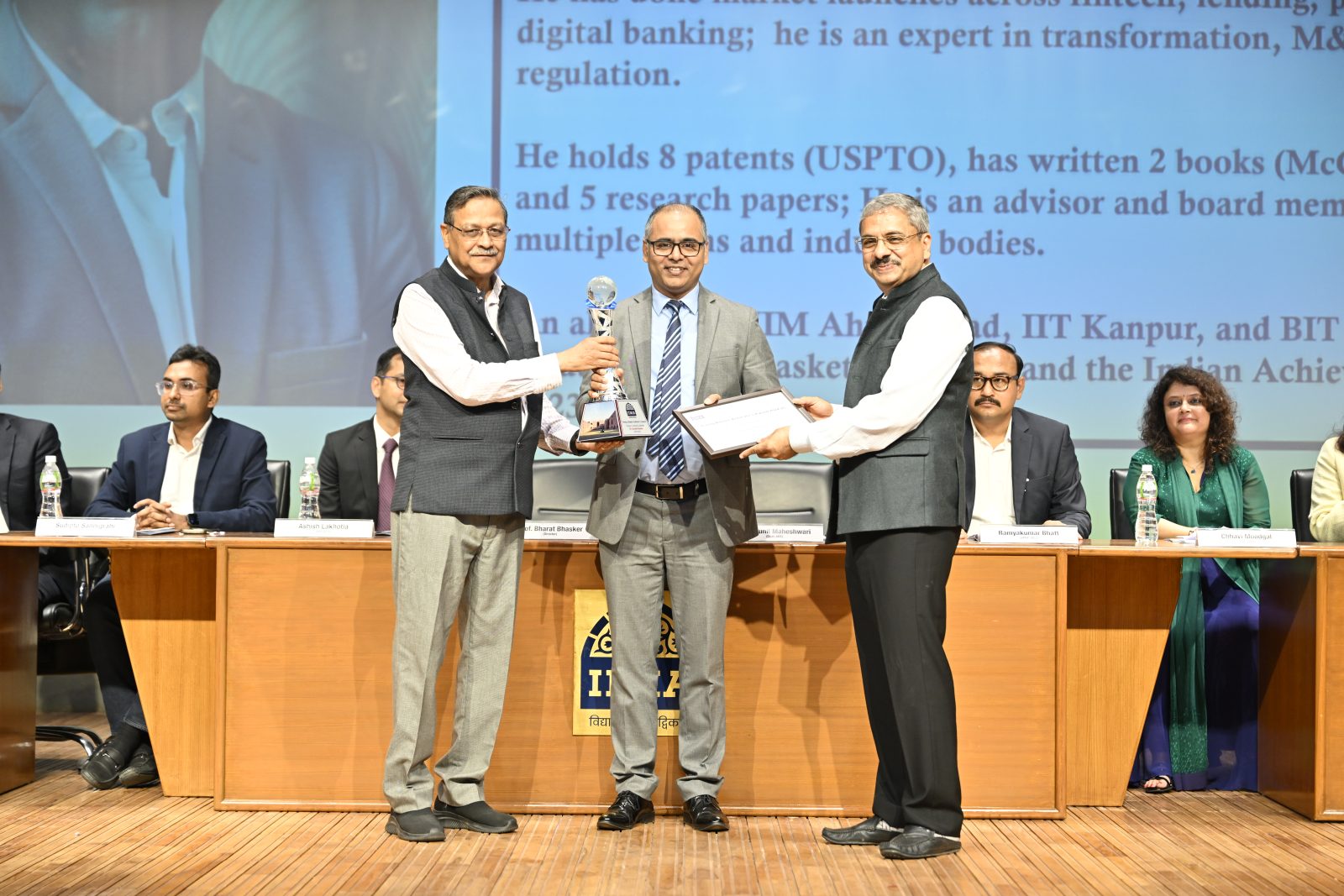
Mr Chandra holds eight patents and trade secrets (USPTO), two books (McGraw Hill) and five research papers. He has also been an independent advisor and board member to multiple companies and non-profit industry bodies. In the year 2023, he was conferred with ‘Indian Achievers Award’ in the field of science, technology and entrepreneurship.
Mr Chandra is a sports enthusiast and has represented nationals in basketball, in his early formative years. Besides sports, he loves reading, travelling and learning about varied cultures.
Besides IIMA, he is also an alumnus of Birla Institute of Technology, Mesra and IIT Kanpur.
Congratulations Saurabh on winning the award, how does it feel to receive this recognition from IIMA?
Firstly, it was a pleasant surprise. It was not expected at all. But when I received and I heard about it, it was more of a responsibility. We have always been taught that how we keep the business and society balanced, and with this, I think it’s more about that maybe there’s something right we are doing, and we have to do much better. So it’s more of a responsibility than anything else. It’s a privilege and honour.
You have held leadership roles across major organizations. What are the most significant lessons that you’ve learned working at the intersection of technology, business, and strategy?
I think the first one is the founder’s mindset, irrespective of the level or work that we do, how can we keep the founder’s mindset alive? Second is working alongside people and diverse perspectives. Several times, we miss many things just because we don’t integrate with the people around us or the diverse perspectives. And that doesn’t lead to the best solution. I think that’s the second. The third is, think big. It’s not always about getting a problem and solving it. The question is whether you make it better or enhance it? Fourth is keeping it very simple. If any solution that is being worked out touches lives, that is the best solution. And fifth is the value of time and conducting yourself with utmost integrity. So I think these five, if wrapped in a box, are what I take away as my overall experience of a professional career.
As a national leader for financial services management. What are your priorities for adding value to India’s financial industry and institutions?
So we thoroughly live the ethos: Client first. Now, what it means is that whether it is a company or a national asset, or a policy intervention, how it is going to give impetus to the growth of the country. Now, it could be in the form of economic growth. It could be in the form of social growth. So our first pivot is always, is it adding value? Second is how it is helping build capabilities. So it shouldn’t be a transaction, “I do it once, I do it right, but then I get exhausted and it can’t be replicated”. So, how to add capability so that it’s sustainable, and the third is, while doing that, how you help industry bodies come together and take the best advantage of it, so that the overall industry also grows, rather than one or two assets. So these are three pivots by which we ensure that the country’s progress is sustained and continuous.
So our first pivot is always, is it adding value? Second is how it is helping build capabilities. So it shouldn’t be a transaction, “I do it once, I do it right, but then I get exhausted and it can’t be replicated.”
You have many patents, and you were also an entrepreneur. Can you talk about your journey, and then your journey in IIMA? How did that come up?
Yeah, so the patent journey is very interesting. I filed my first patent. I remember at a very early age, but the genesis was not patent. I thought I will forget after some while. So let me document it. Let me put it into an official artifact, so that whenever I have to refer, I’ll have something handy. And when I was doing that, somebody told me, “Why don’t you file a patent around it any which ways that has documentation that has a life, and you can refer to anytime they’ll be yours”. So you know, that is how it all started. But I think reflecting back, it was always about what’s missing. What is that delta that could have been done more and that led to multiple patents? So, that’s a journey of patenting, which is always finding what’s the gap where the incremental value can come is.
My entrepreneurship journey was very interesting. I think that’s the closest to my heart. As we all say, we all study founders’ mindset, but that’s the only platform that help you live it 200% and that journey teaches multiple things. At the end of that journey, irrespective of the outcome, entrepreneurs become better humans, and I think that’s the largest takeaway.
Tell us more about your journey to come to IIMA.
I got accepted into multiple B schools internationally, and there was a question that I know technology, I know certain nuances of business, but can I have a formal education around it? And that led to multiple applications. There were a few Ivy Leagues in the USA, and then IIM-A. When I visited all the places, interacted, I realized that IIMA is a place that gives you a very real-time experience, an experiential study and coaching, which can actually create a difference in you. I wanted a place wherein you are not just taught; you live that experience, and that is what I found here, and that’s when I decided that this will be the place.
What is your advice for students who wish to work in consulting or technology, or be an entrepreneur, since you have experience in all of them?
To students, I think we need, we need to first master the art of problem solving. And problem-solving in real time, the world is always ambiguous, right? We may not know the exact problem several times. Then we have to construct the right problem and then find a solution. That’s the most difficult part, because generally, you know, people tend to jump on solutions, so finding a problem and then solving it rightfully requires lots of skills to come into play, multiple subjects, and a lot of unknowns. There is also reading the room. So this ecosystem [IIMA] and this environment actually provide all that. The question is, are we observing that and seeing what our weak points, our strength areas, and hence developing ourselves. So I think that is suggestion one, that leverage the ecosystem. Second, I think it’s very important to have the right network. Again, this place gives the best network one can imagine, either in a country or internationally. Are we creating a network of friends, a network of well-wishers, advisors, again in the run and chase of subjects, marks, etc., that may become a little bit weak, so how not to lose on that, is the second one. And the third is, enjoy these studies, which means that one of the best parts of this ecosystem is that you are not given marks because you put as-is from the books to the exam paper. You are awarded marks in multiple forms and formats, which is very dynamic, very real-time, very unexpected, and very real. So are you comprehending and internalising the concept or chasing semesters and marks? Internalising the concept will help in real life. Unfortunately, no one subject comes in handy outside. So when you internalise, you can join the dots, and that’s what helps in the real world.
We may not know the exact problem several times. Then we have to construct the right problem and then find a solution.
Do you see winning YAAA award bringing new responsibilities or expectations in terms of mentoring or giving back to the IIMA community?
100% I think, as I said, it’s, it’s an honour and privilege. One of the best things that can happen is that whatever little we have taken from the ecosystem and then from the industry, if we can give it back, make five more of us who are better than us. That’s the biggest give-back to the college as well as to society and the country. I see it through that lens. And second, it certainly is a very big responsibility, because you know you are carrying the brand, which is nothing but the ambition of so many people behind you. How do you keep yourself honest with it and conduct yourself in that way? So this award means that you have to hold this responsibility with utmost care. My goal is to keep living that and thrive through that.
Watch on YouTube: https://youtu.be/BB2pPascjjA?si=x6jbR4T0CUODrV8U