By Shailaja Mohapatra, PGP 2027
It is 3 PM on a December afternoon. The cricket ground, nestled amid IIM Ahmedabad’s iconic red-brick old dorms, erupts with cheers. A game of tug-of-war between two teams of SMILE students has just ended. The winning team used a clever strategy. They pulled in sudden, timed bursts, and their collective momentum snapped the other team’s balance. Guiding the SMILE kids were students from IIMA’s PGP cohort. In the process, the latter passed on a lesson from their own group assignments: coordinated effort always outweighs individual strength.
In 2025-26, this has been the central theme of all activities organized by SMILE (Student Mediated Initiative for Learning to Excel): democratizing MBA learning for underprivileged children. SMILE came into being a decade ago to act as a bridge between the campus and the city and has since evolved into a powerful knowledge exchange platform. IIMA students are translating complex management principles into simple lessons for the next generation.
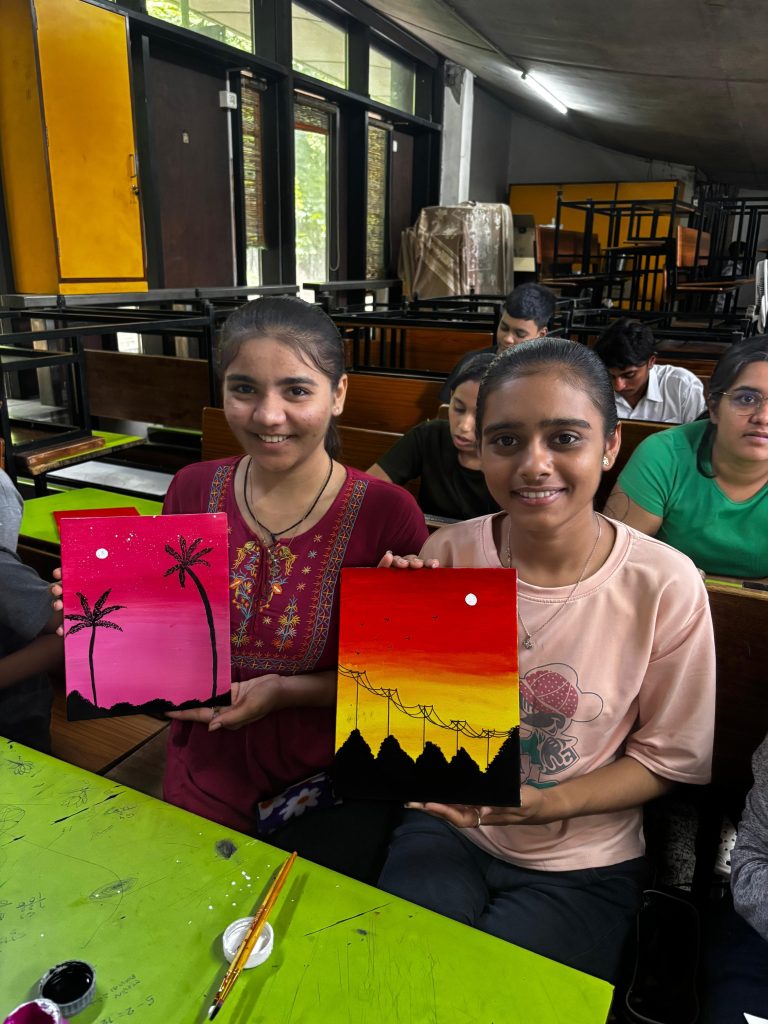
Take, for instance, the mini-MBA activity among others conducted for classes 9 and 11 during Summer Activity Camp’25. Over the course of a week, 30 SMILE students were divided into groups of five and assigned the task of selling a packet of chips. Sounds simple, right? But it was not just any packet of chips…the students had to design the product. The packaging, the price point, the target audience, and even the go-to-market strategy were all debated within these small teams. By the end of the week, they weren’t just selling snacks; they were pitching business plans. They learnt that a higher price might signal better quality, or that a bright wrapper can be the difference between a sale and a skip. It is the 4Ps of marketing – Product, Price, Place, and Promotion – stripped of their academic weight and put into the hands of 13-year-olds.
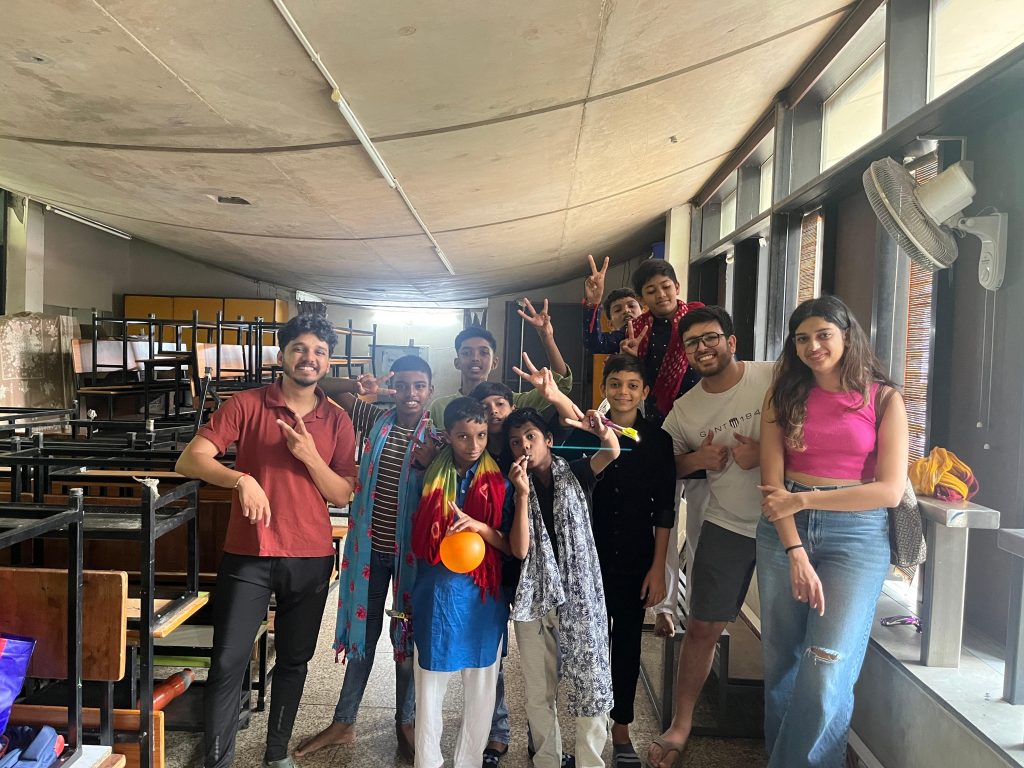
And who better to teach these concepts than the MBA students themselves? For them, it is about translating textbook theories into live action. It is no surprise that the SMILE Summer Activity Camp saw over 200 volunteers from the IIMA community participate across five core activities. Every day after classes and lunch, PGP1s and PGP2s would make their way to the SMILE centre across the street to become the “teacher”.
But what’s in it for the volunteers? Apart from working toward positive change, they, too, get a crash course in communicating with clarity, patience, and empathy. More importantly, they realize that learning is never a one-way street. The volunteers engage with teens whose worldview flows from raw resourcefulness.
Take 13-year-old Dev, a Class 8 student. During a hydroelectric power science project, the roles reversed: Dev became the instructor. He took charge of the wiring, brought his own materials, and when a technical hurdle arose, he simply ran out of the class and grabbed a stone to fix the alignment. The volunteers couldn’t have felt happier with his maturity and technical expertise. It is moments like these that define the SMILE-IIMA relationship: a community that grows together.
“SMILE is driven by passion,” says coordinator Nihaal Ahamed. “Beyond enthusiasm, we don’t look for specific skills. Volunteers gain a deeper sense of social responsibility and the rewarding experience of seeing their mentorship create a positive change that cascades through generations.”
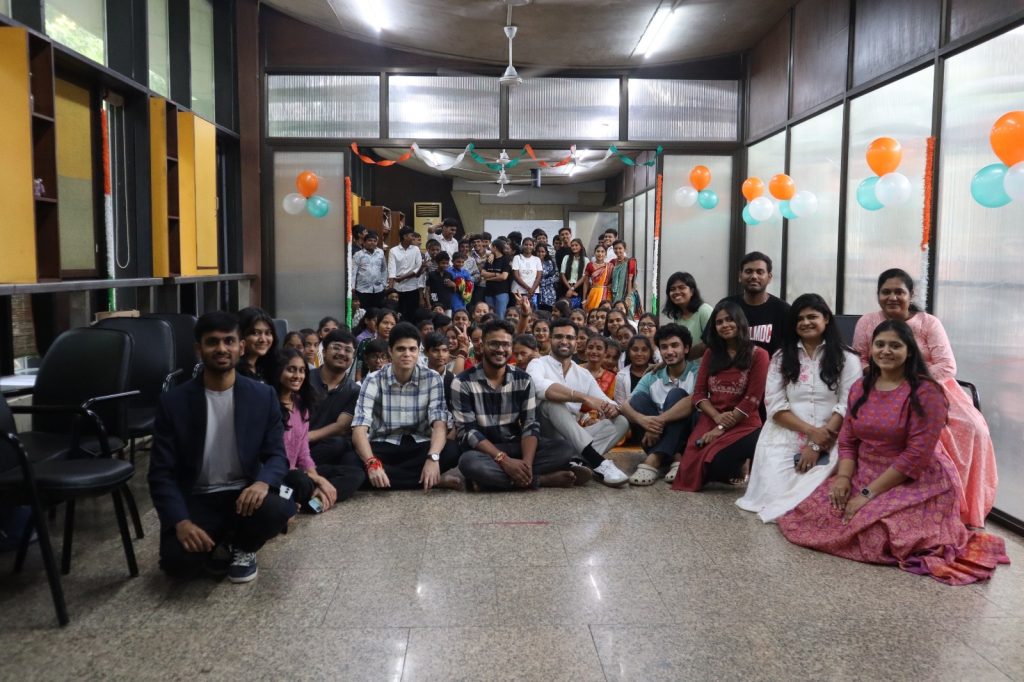
To ensure this change is lasting, the club expanded its horizons this year by introducing a Computer Science curriculum. Designed to make the kids job-ready, the sessions cover everything from Excel, Word, and PPT to the practical use of AI tools. In fact, as the IIMA volunteer team comes from pan-India, the team used AI to bridge a major gap: teaching English to Gujarati-speaking children. By using AI as a translator and tutor, they turned a traditional language barrier into a digital win.
This digital empowerment is best seen in students like Prachi. Apart from being the top scorer in the Computer Science practical exam, she mentored her classmates through every activity. For IIMA volunteers, watching a student like Prachi transition from a learner to a leader is the ultimate proof of SMILE’s impact.
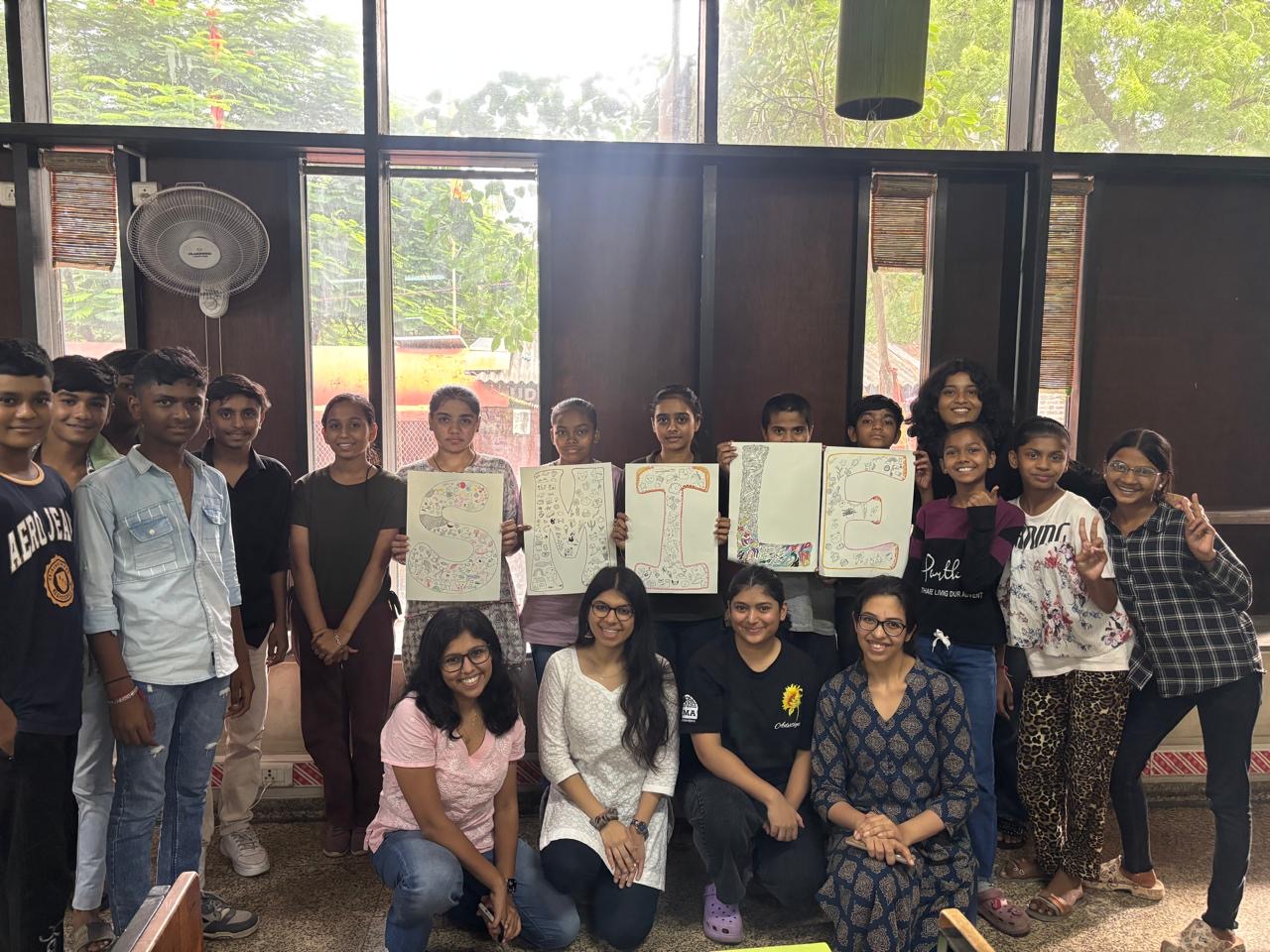
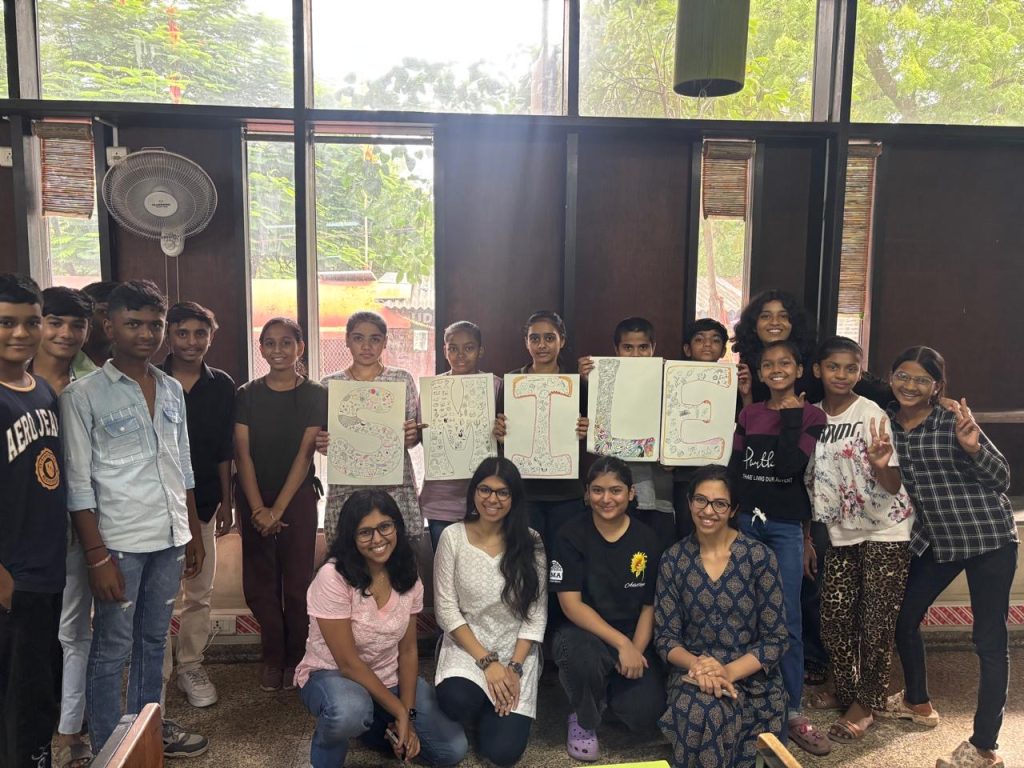
Of course, it isn’t all work and no play. Weekends are filled with workshops for SMILE kids in chess, art, and drama, alongside annual highlights like Garba night and the Christmas fundraiser. Looking ahead, Nihaal hopes to bring more of this energy back to the “red bricks.”
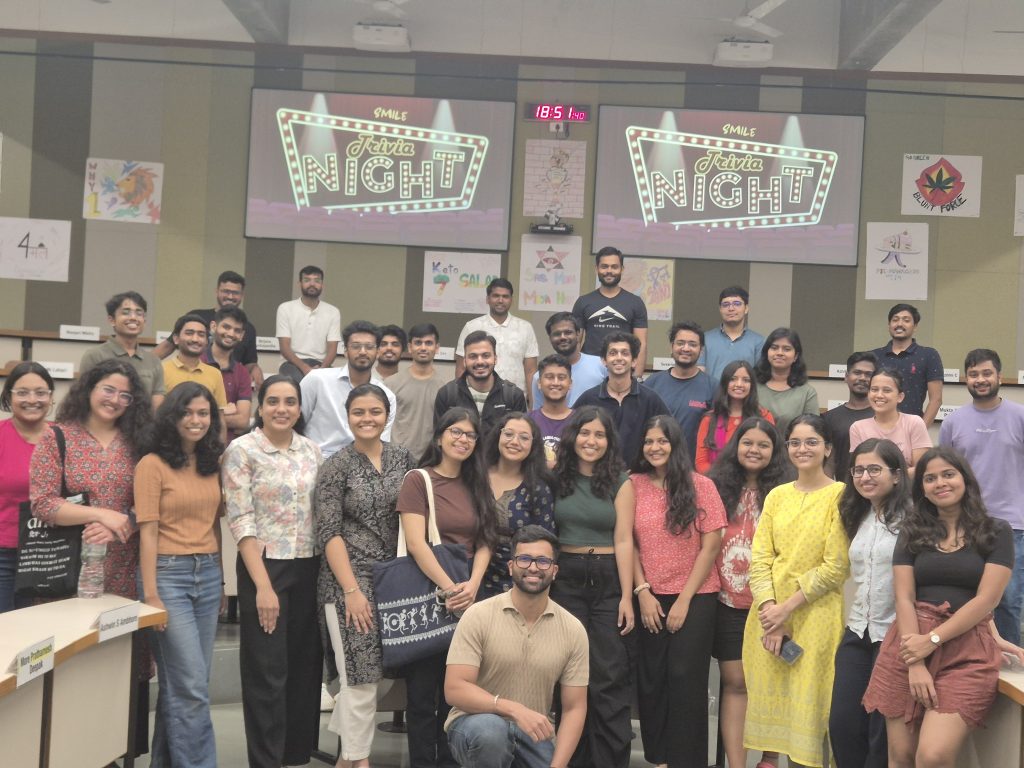
“We want to bring more SMILE activities directly onto the IIMA campus,” Nihaal says. “Moving events on campus will improve visibility and foster greater awareness. We can encourage more from the community to join the cause.”
As a step towards that SMILE held its first-ever case competition titled ‘Lakshya’ during The Red Brick Summit 2025. It challenged 450 participating teams to solve a real-world problem: how to scale operations while maintaining quality at educational NGOs like Pratham and Teach for India. The final round was judged by long-time faculty and SMILE founding member, Prof. Anil Gupta, alongside Ms. Renu Seth, a senior leader at Pratham. The event laid the groundwork for SMILE’s philosophy to reach a national audience.
As SMILE celebrates a decade of impact, the goal is clear: to keep the gates of knowledge open. Whether through a case study or a game of tug-of-war, the IIMA community is committed to pulling together for a brighter, more inclusive future.