
By JK Dadoo, PGP 1980
Fragrance and Flavour Development Centre(FFDC), at Kannuaj, the perfume capital of India, is a 6-hour drive beyond Agra, from Delhi. A prestigious MSME research & training centre, which has the dubious distinction of generating adequate internal resources, to be independent of OPEX requirements from the government. Spread over 23 acres for about 30 years, it was established under a tripartite agreement, with the State government providing the land, the Central Government giving the capex and opex, and Unido/UNDP assisting in the technical know-how.
FFDC houses its entire training facilities & staff accommodation in its premises. Its new modern building is ready to move into in 2026. Pride of place is its oldest quality assessment lab, which is NABL-accredited, and is renowned for all perfume and ingredient-related queries across the country. It also boasts of the cultivation of several aromatic plants, herbs, grasses, etc. The Director proudly presents it as a centre undertaking all activities from “Kheti se khushboo”. His knowledge & experience enabled proper documentation to get the GI tag for Kannauj.
India’s perfume/deodorant market was valued at ₹2,350 crore approx. in FY2024, with 15% CAGR. Mass India perfume Fogg, may hog nearly Rs. 2,000 crore turnover this year, because of sleek packaging and Gen-Z advertising focus. Bella Vita has quickly galloped to ₹750 CR in 24-25 & is likely to touch Rs. 1,000 crore turnover, from a mere Rs. 30 crores 4 years ago. This is proof of the fact that India-made perfumes are getting serious attention and capturing the mass market.
Director, Mr. Shukla, who showed me his exclusive aromatic plant garden, & apprised me of the value of each of the flowers/herbs there. An interesting fact sheet developed as I heard Marigold oil sells at Rs. 30-40,000 per kilogram when distilled here. Jata Masi, a herb whose oil gets a price of Rs. 80-85,00 per kilo, & Sugandhabala and Sugandhmantri, each Rs. 10-15,000 per kilo. Nagarmotha, which grows in abundance in Chhattarpur and Jhansi Districts of Madhya Pradesh, is distilled at Kannauj for Rs. 20-21,000 a kg. The more expensive one is Jasmine, which releases less oil than others, and is widely cultivated in Coimbatore and Madurai districts of Tamil Nadu, commanding a price of Rs. 5-6 lakhs per kilo.
Kannauj houses nearly 350-400 distilleries, accounting for a total annual turnover of ₹660 cr, of which 10% is exports. Kannauj is the primary driver of the “Natural Attar” category, with major buyers in the UAE, USA, UK, and France. It has 23 units concentrating on Sandal oil production, which sells at about Rs. 1 lakh per kg. The most expensive is Rose oil, because, out of 2,000 varieties of roses found in India and abroad, only 4 possess aroma. 3 of them are found in India, and their production is widespread in the Aligarh district, with supplies reaching Kannauj too. Here, distilleries produce and sell their oil at Rs. 11-12 lakhs a kg. The lone non-Indian variety is found in Egypt and is extremely expensive. The rose distillery also has vital byproducts like rose water and gulukand, which sweeten the paan.
Equally expensive is Kewada flower, predominantly grown in Ganjim district of Orissa, where distilleries are able to extract and sell the oil for same price as rose oil, at Rs. 11-12 lakhs kg. While Khus was famous in the hot northern India to curtail the loo wind factor, it is also a sought-after aroma for juices and other Indian herbal products. Mostly grown in the wild, it is now getting professionally cultivated. However, distillation of wild Khus commands a price of Rs. 55-65,000 a kg because of its naturally stronger khushboo, while cultivated ones have a restricted price of Rs. 18-20,000 a kg.
Rajnigandha serves as a vital input in paan masala, and is therefore able to garner a high price of Rs. 5-6 lakhs per kg. Dr. Shukla, with his encyclopedic knowledge on aroma, told me about a night Jasmine named Parijaat, where only attar can be extracted, but no oil.
Sindoor is a plant I didn’t know, & the Director showed me how its bud can be opened, and a row of seeds inside can be ground by a finger and thumb, to release the red liquid, which adorns the Indian female ‘maangh’. He also demonstrated red sandalwood, which has medicinal value, but no oil extraction is possible. What astonished me most was his explanation that a particular oil called Pachouli, acts as a base material, with the capacity to provide a long-lasting perfume experience, for any of the above nasal stimulants. Parijat oil is distilled in far eastern Assam for about Rs.7,000 a kilogram, but Indonesia monopolizes its global production with 90% of supply. Regarding Mint production, India is the monopolist, capturing 90% of the global market.
Narangi plant is another gift from Nature’s bounty, where 3 oils from 3 parts of the plant are tapped. The peel of the orange is cheap at Rs. 1200 a kilogram, leaves are expensive and utilized in all international colognes of premium variety. The price, however, is just Rs. 2,500-3,000 a kilogram. However, the real juice comes out of the flower, which generates revenues of Rs. 6 lakhs per kg.
The Government of India has prepared a Sugandh Mission, with a total projected outlay of Rs. 700 crores, for intensive research and development. This may come from the National R&D Fund of Rs. 1 lakh crores, and contribute significantly to the modernization and the professionalization of this industry.
As I entered the lab area, I saw Citronella being extracted, and de-oiled Citronella grass, used as fuel for distilling it, circumventing the need for any external fuel. While Citronella sells for Rs. 1200-1300 a kilogram, dried and de-oiled Citronella grass makes excellent agarbattis and facepacks. Even sugarcane bagasse, a vital fuel in sugar manufacturing, can also be dried and made into robust agarbattis. Dr. Shukla, for his innovative work in this area, was asked by Vrindavan temples to utilize voluminous quantities of rose petals that were presented to the deity. He trained 200 women there to make Gulaal for Holi and agarbattis out of dried rose petals, ensuring large amounts of valuable aromatic material are not wasted. To ensure environmental protection and maximum mileage, he displayed a Taiwan machine from Hung Tang factory, which produces agarbattis mechanically at a fast pace, obviating the need for the time-consuming manual process.
This is relevant as the agrabatti market in India crossed 10,000 CR in 24-25 with 10% exported to the USA, UAE, UK, Malaysia & Africa. Nearly 70% production is in the organised sector with 3 leading brands – Cycle at ₹1200 CR, ITC Mangal Deep & MDPH at ₹800 CR each. Rest comes from the cottage industry, & FFDC is developing BIS standards for agarbattis.
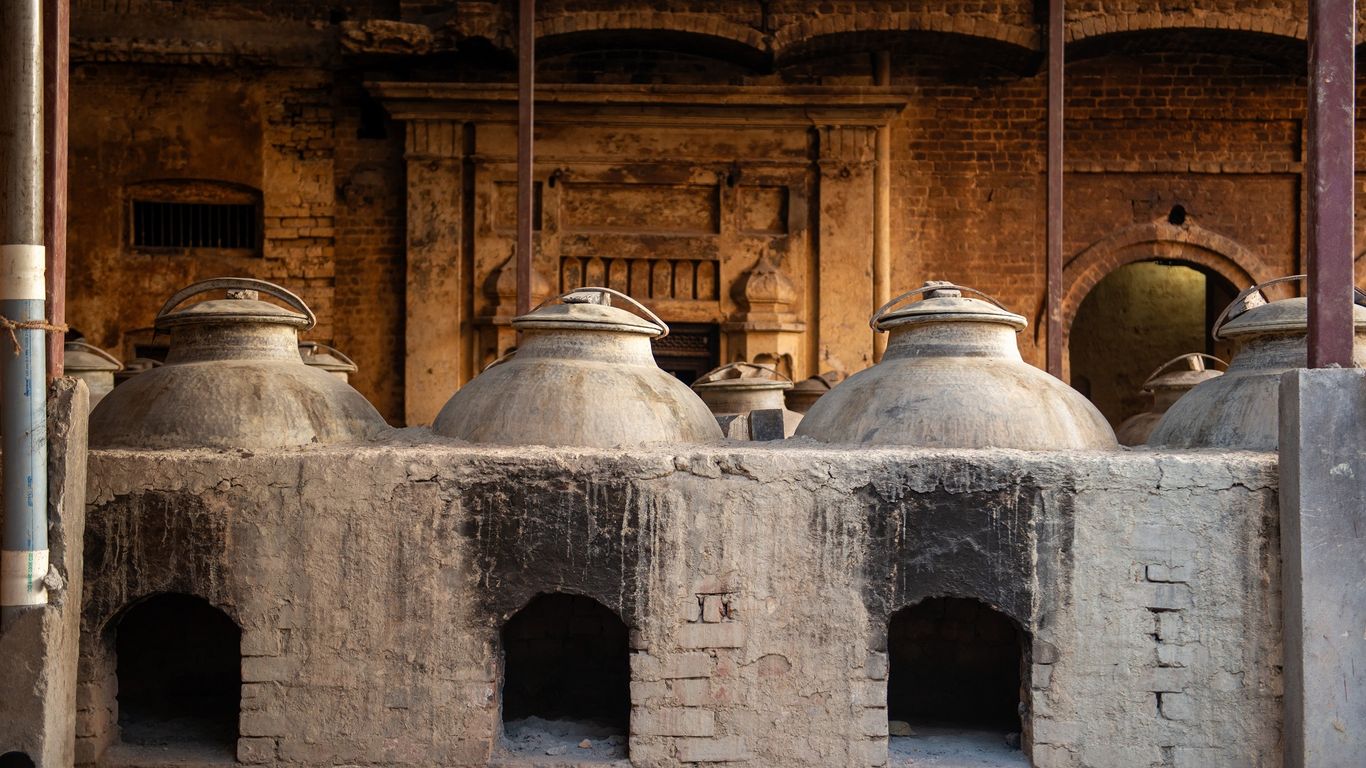
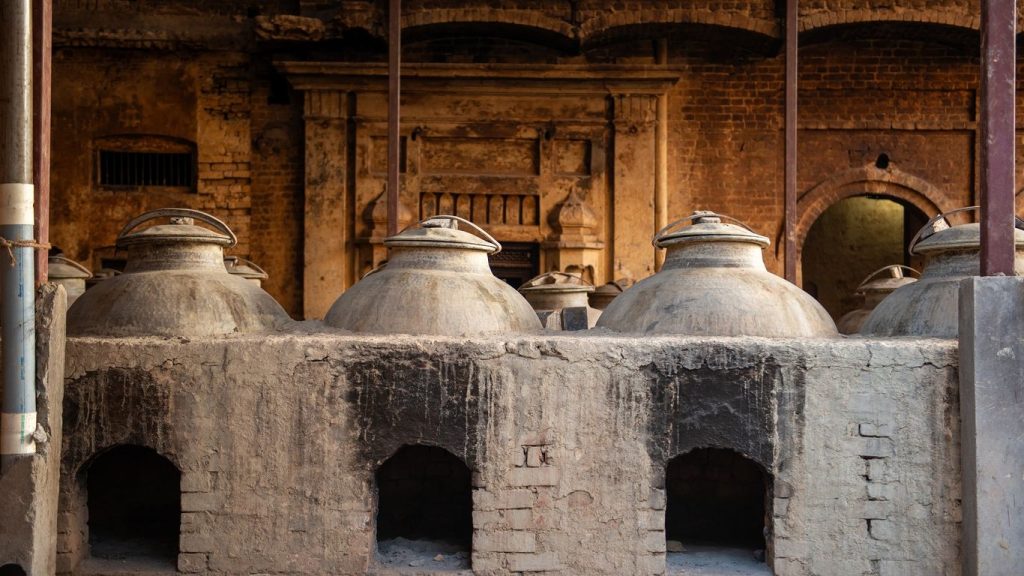
When asked how Kannauj does its distillation and has become world famous, he revealed that the town follows a 5,000 year old environment-friendly process of distillation and blending, using Sandalwood or other alternatives as a base. The traditional simple method captures the vapour of the rose flower mixed with water, when heated, with cow dung as fuel. The daily fuel cost of 1 Baphka, as it is called, is about Rs. 400, & rose flower input cost about Rs.1400 for 20 kg of 1 daily dose at Rs.70 a kilogram. Length of processing time depends on how strong is the fragrance requirements of the buyer. The base is either Rs. 1 lakh a kg Sandalwood oil, or cheaper substitutes, costing about Rs. 1500 for 5 kg, & is the constant factor in production, as it gets the odour layered on it. This traditional non-alcoholic non-chemical process is the forte of Kannauj.

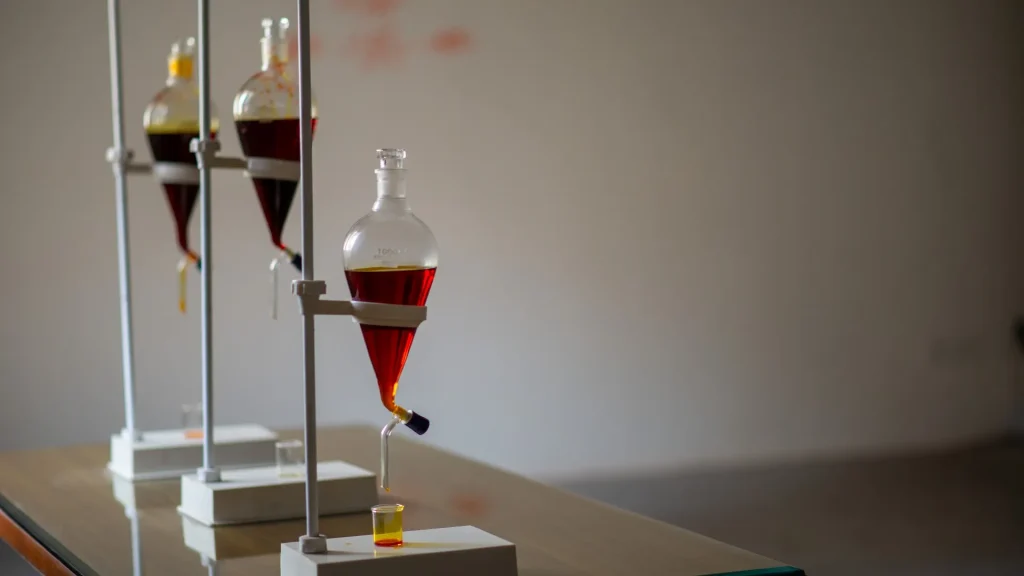
For hard materials like Sandalwood, steam distillation is necessary. Extraction of difficult solvents, like Hegzane, requires a different solvent extraction process. Fractional distillation becomes necessary for Citronella oil, because it has other odours which smell like rose, and separating the odour is the challenge. The fourth variant is where reaction and value addition are important, like in the case of Lily, requiring hydroxi-Citronella smell to be captured.
FFDC has a modern lab that conducts 3,500 sample tests annually. Few labs in the country have the infrastructure to test any oil sample for its content, aroma, and value. One machine costing Rs.1.2 crores does minute testing, and test results are available for Rs. 9,000. Another one bought for Rs. 30 lakh has a testing cost of Rs. 1000. The sensitivity of accurate testing was brought to my notice by Dr. Shukla, as confiscated material by any of the government regulatory departments, requiring analysis and authentic reports, needs FFDC expertise.
The most exhilarating facility on the campus is the fragrance creation lab, which is supported by a French firm, with a turnover of $100 billion- DSM-Firmenich OOO. This astonishing creative venture is where Director Shukla produced & present CM gifted 6 perfumes to the French President. 800 different materials are researched and processed in this fragrance lab. A 16 oil mixture has also been developed as a headache-migraine therapy. Tripura commissioned FFDC to create 5 perfumes, based on the 5 rivers of this state, 3 years ago. Looking at its potential and capacity, a private company has tasked it to utilize 2200 ingredients and make 3 fully natural perfumes, which are going to be launched.
Amazed at what I saw and experienced, I realized that the full value of this FFDC capacity creation is yet to reach the outside world in its entirety. Aromatherapy, aromacology (aroma use in psychological treatment), and aromantics or enticing aromas, like the age-old southern tradition of hair flower circular rings, worn by women on the back of their heads, are engaging the attention of this leading institute. However, to my mind, if it has to professionalize, modernize, and develop the 350 distillation units in Kannauj to high levels of production, quality, and capacity, it must work on 3 essential areas;
- Convert all the distillation units to solar power use and prevent the spread of methane gas.
- Change the base material of long-lasting aromatic value, like Pacholi oil, to enhance the life & hence demand of such perfumes.
- Revolutionise the process of conversion of flower vapour into its specific odour, by a modern & new conversion technology, with the aid of IIT Kanpur. This is required to ensure cleanliness, quality, and value of the entire process of aroma capture from flowers, herbs, leaves, roots, & grass, on the basic base material.
I suggested to Dr. Shukla to formulate a research and development proposal for the Ministry of Science & Technology, to make FFDC a Centre of Excellence. It should also strive to become a deemed university under NEP 2025, which can grant diplomas and degrees for short-term and long-term courses, in the larger field of aromatic science.
Author Bio:

Mr. JK Dadoo (PGP 1980), an alumnus of IIMA, spent 3 years in the private sector before joining IAS in 1983, & superannuated in 2017, after a 35-year illustrious career. Since then Senior Advisor to 6 big listed companies for 6 years. On the board of 2 listed companies as an Independent Director for the last 6 years. Author of a highly acclaimed book – 100 Ideas To Improve Governance in India.