By Anushri Mishra, MDP 2010
Ancient wisdom, available to us in its clearest form through the Vedanta scriptures, is precisely what people living in the modern world need most urgently. As we progress financially, or even merely aspire towards such progress, mental challenges emerge. With increasing prosperity, or even with its pursuit at the level of thought, the mind gathers more and more objects to handle, goals to chase, identities to protect, and fears to manage. Attention becomes divided and keeps dividing, until life begins to feel scattered from within.
What do we mean by the modern world? Is it merely a technological advancement?
Machines are becoming more efficient and sophisticated by the day, yet their users often grow increasingly anxious, overstimulated, and fatigued, physically and mentally. The same tools that promise convenience also multiply distraction, accelerate comparison, and intensify the pressure to keep up. When the makers and users of these machines are themselves becoming vulnerable, at risk of losing the very life they seek to improve, can we honestly accept this as genuine development? Prosperity that ignores life itself and its quality is no prosperity at all. Real development is realised only through inner clarity, through self-knowledge and honest understanding.
We need development in every dimension of life, physical and mental alike. It cannot remain purely external. Inward development requires the capacity to look within, guided by those who have done so honestly and thoroughly. This is what the wisdom literature of the ancients offers us, left behind by rare beings who refused to live mechanically, whom we call saints and sages, teachers and reformers, seekers and lovers of Truth. Their essential teaching was simple: remain established in the essential, and act from there. When the doer is not driven by insecurity and self-image, action becomes lighter, more accurate, and more compassionate. The Vedanta texts and devotional verses of saints, ancient and modern, are honest and loving gifts available to anyone willing to receive them.
Today, we are privileged to live surrounded by machines that could potentially serve human and ecological welfare holistically. But ancient wisdom reminds us that true welfare is not a personal project. Personal welfare pursued in isolation easily becomes greed, which obstructs genuine human welfare in the larger sense. At the same time, we face a world in deep crisis. The foundational clarity from Vedanta is needed to live in balance. Under its light, one learns to question possessiveness, violence, and exploitation at their root. One learns to respect diversity without turning identity into a weapon, and to act with care without converting care into a slogan. Modern managers and thought leaders may build frameworks for leadership, but those remain hollow unless the inner centre of decision-making is purified of self-interest.
The modern world offers countless choices in every decision. Vedanta, the Upanishads, the Brahma Sutras, and the Gita help the mind remain centred and act with Viveka, the ability to distinguish between the essential and the inessential, the real and the unreal. A conditioned mind, operating from the ego, makes decisions from a false centre, one that lives on craving and fear. The problem it tries to solve is often misperceived because it is protecting the very source of disorder within. This gap disrupts harmony in ecosystems of all kinds, inner and outer alike.
An attentive mind learns to listen carefully, understand deeply, remember accurately, and analyse with clarity. The wisdom scriptures direct our attention from darkness towards light, from unconscious living to awareness. They teach us first what darkness means in the human context: the compulsive movement of desire, the habit of escaping oneself, and the inability to stay with facts without distortion. Only then is the love for light awakened within. The world today faces overpopulation, pollution, climate change, species extinction, water scarcity, biodiversity collapse, new viruses and pandemics, overconsumption, waste generation, and geopolitical conflicts. At the root of all these lies human desire when it remains unexamined and unchecked, wanting more without understanding why. This is what today’s thinkers and leaders must explore honestly.
A large section of our population remains illiterate. Many others are literate only by degree, having acquired certificates without understanding. One often encounters people who are educated and financially successful yet lack attention, love, and sensitivity to truth. It would not be wrong to call them the educated illiterate, and it is sad to witness. Experiencing sadness and restlessness when everything around appears fine is a great misfortune. Or perhaps the fortune lies in noticing that sadness, refusing to cover it up with entertainment or achievement, questioning what we call good, and inquiring until the root is exposed.
Holistic approaches to world problems are needed today far more than superficial solutions designed merely to maintain records and appearances. Wisdom literature teaches minds to see clearly, act rightly, and be free from the problem at its source. Artificial rain will not solve pollution caused by unchecked desire, when water scarcity itself is another looming crisis. Technology can assist, but cannot replace inner responsibility. Studies from ancient texts help us see these connections under proper guidance. Honest reflection on the true nature of desire is essential for every person at any stage of life.
Sensitising children to understand the workings of their own minds is of the highest importance; they will inhabit an even more complex world. We have already begun witnessing climate change and its visible effects. Tomorrow’s generation will have to live amidst far worse conditions. The literature of Kabir Saheb, preserved in his sakhis and songs, explores the human mind and teaches how to deal with its tendencies skilfully. Children must be introduced early to a guiding light, so they can turn to timeless wisdom literature on their own whenever life becomes difficult. When one has learnt to look rightly, life does not become easy, but it becomes clear.

A life of understanding and awareness is the only constructive capacity the human mind truly possesses. It alone gives us the strength to face challenging times with sobriety, compassion, and clarity.
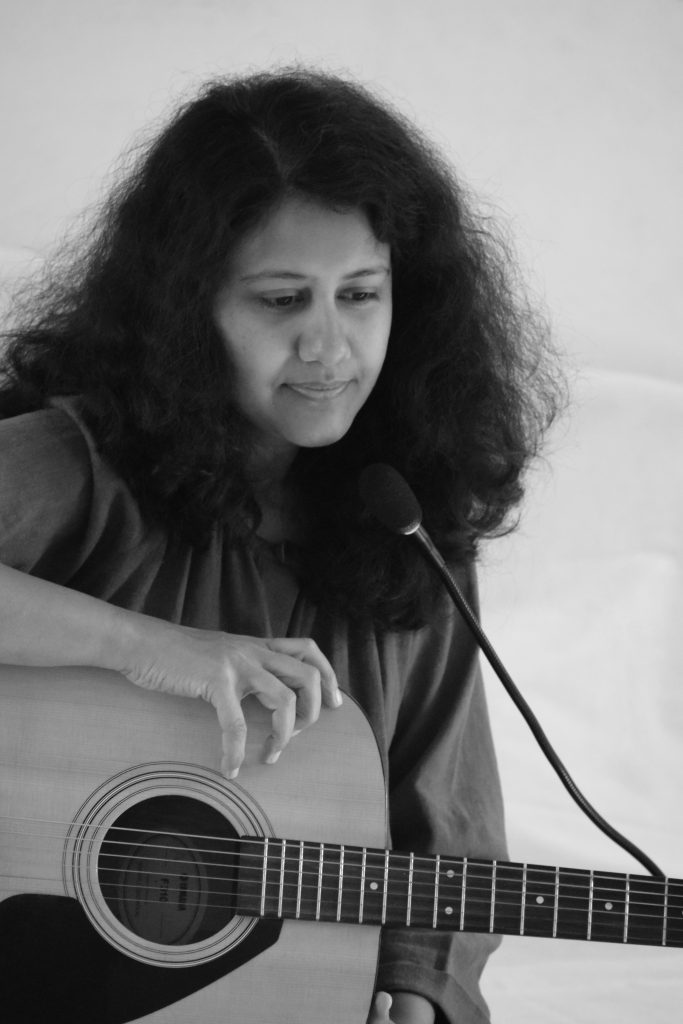
Author Bio:
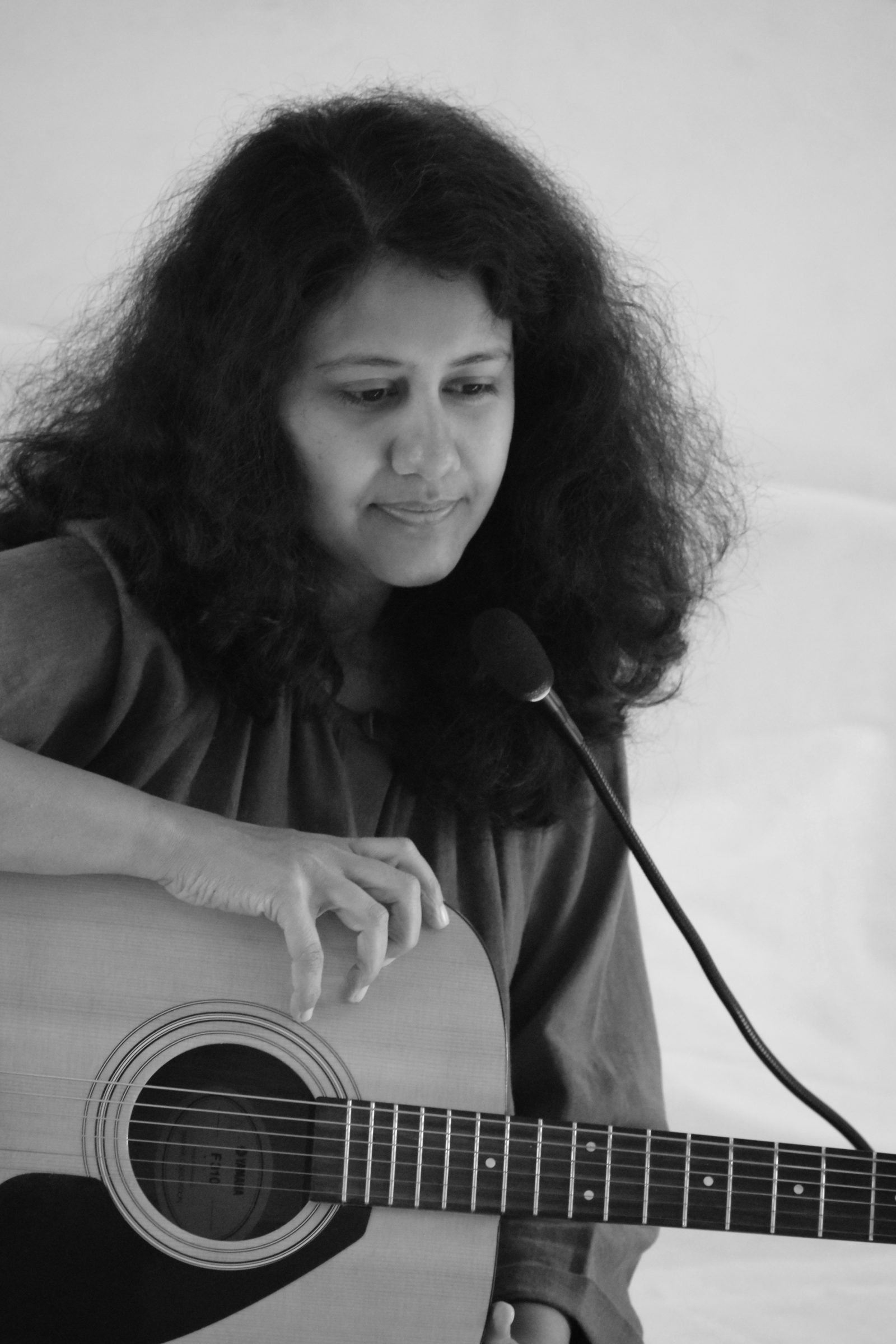
Anushri Mishra (45) is the Founder and Trustee of Anubodh Foundation. She is actively engaged in spreading wisdom education through spiritual music and discourses, with a special focus on the teachings and songs of India’s saint-poets.
At the Foundation, she serves as a teacher and performer, and regularly organizes programmes across educational institutions, corporate institutions, and social communities.
YouTube Channel: youtube.com/@AnushriMishra