By Dr. Oly Mishra, FDP 2023
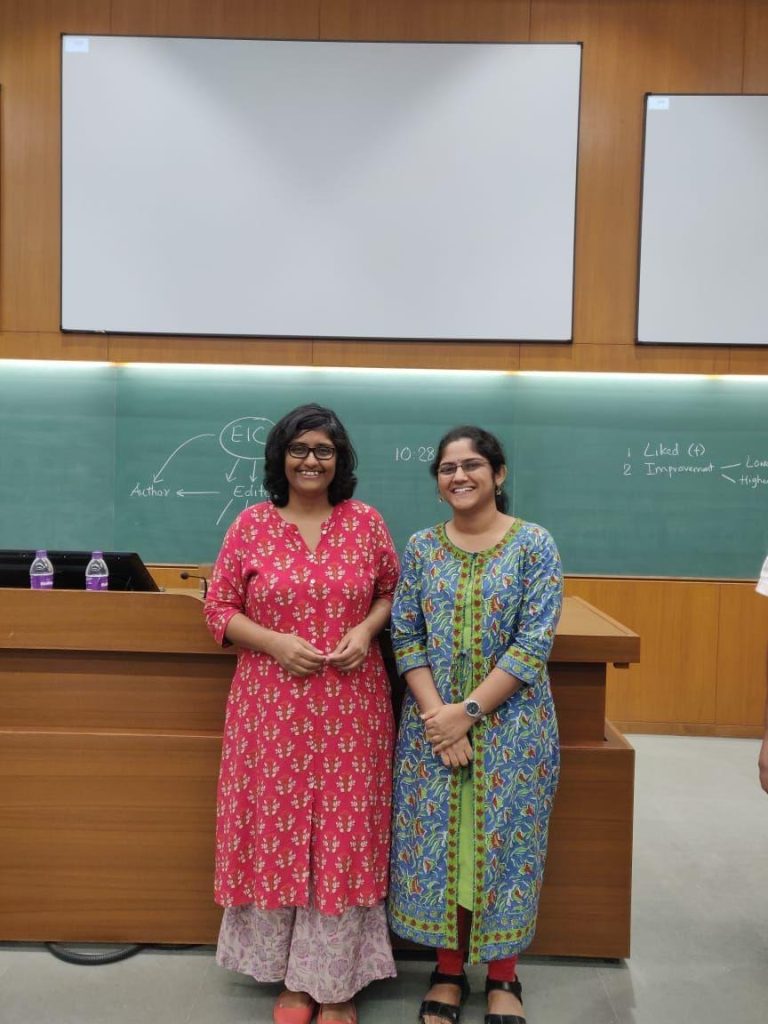
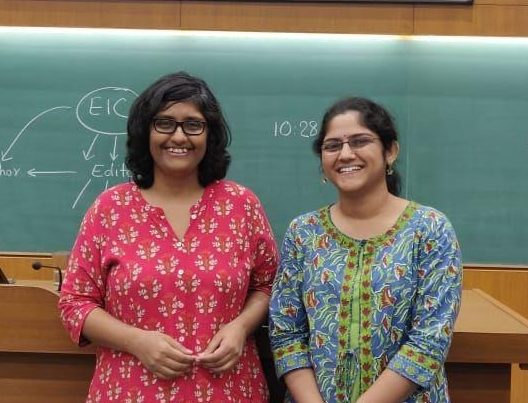
Author (right) with Prof. Devasmita Chakraverty
When we speak of teachers who leave an indelible mark on our academic journey, we often recall those who not only impart knowledge but transform the way we think, question, and grow. For me, one such teacher is Prof. Devasmita Chakraverty, whose sessions during the Faculty Development Programme (FDP) at the Indian Institute of Management Ahmedabad were not just informative modules on research, but a masterclass in scholarly inspiration.
Prof. Chakraverty is not only an accomplished academic but also a compassionate mentor. Her sessions on Crafting and Publishing Research offered much more than techniques and strategies—they instilled a mindset of rigor, purpose, and responsibility in academic writing. Through her lectures, she gently but firmly guided us into understanding that research is not merely about publishing for metrics, but about making meaningful contributions that can advance thought, impact practice and shape policy.
I walked into her sessions expecting a checklist of do’s and don’ts for publication. What I found instead was an engaging dialogue on the ethics of authorship, the importance of context in research design, and the need to be authentic yet critical in our scholarly voice. Her emphasis on the foundational work of literature review, not as a chore but as a craft, reshaped my approach to reading and synthesizing academic work. She drew from her own extensive experience and ongoing projects, demonstrating the intellectual curiosity and resilience it takes to produce high-quality research.
One of the most powerful takeaways from her sessions was her insistence on research with integrity and intent. In an academic environment that often pressures individuals to “publish or perish,” her advice on resisting the temptation to compromise on quality was both timely and reassuring. She encouraged us to think deeply about the “why” behind our research questions and how our work can contribute to the broader academic and social ecosystem.
A memorable aspect of her teaching was the way she encouraged us to normalise and learn from rejections, something rarely discussed openly in academic circles. She advised us to maintain a dedicated table to track the rejections of our research papers, not as a source of disappointment, but as a reflection of our persistence and progress. This perspective shifted how I view setbacks and reminded me that each rejection is a stepping stone toward refinement and eventual success. Her honest sharing of her own experiences with rejections made the message even more relatable and empowering.
What truly sets Prof. Chakraverty apart is her pedagogical style. She does not merely lecture; she connects. Her sessions were highly interactive, often filled with probing questions that invited us to introspect about our positionalities and privileges in research. She made space for every participant’s voice, ensured that no question felt too basic or trivial, and patiently engaged with a wide spectrum of ideas and challenges posed by the participants. This ability to balance academic depth with empathetic listening made her sessions a stimulating space to learn.
On a personal note, I was humbled and encouraged to receive full marks in the reflection assignments she had designed assignments which demanded introspection and authenticity. To my surprise and delight, I even received a special mention in her second session, which meant a great deal to me coming from someone I hold in such high regard. That recognition was more than just a moment of pride; it was a motivating reminder to continue engaging sincerely with the learning process.
Her generosity with time and knowledge left a deep impression on me. Whether it was helping someone refine a research question or offering feedback on a tentative abstract, she approached every interaction with the same earnestness and respect. She did not just teach us how to write a paper; she taught us how to think like scholars and how to own our academic identities.
Personally, I walked away from her sessions with a renewed commitment to my research. I found myself revisiting my ongoing work with greater clarity, curiosity, and confidence. Her discussions on crafting introductions, identifying gaps, and choosing the right journals were practical, yet they were underscored by a deeper message—that we, as scholars, have a responsibility to engage with the world through our writing. That we must strive not just to get published, but to be read, understood, and, most importantly, to be relevant.

In a world where good mentorship is often elusive, Prof. Devasmita Chakraverty stands as a beacon of what it truly means to mentor with purpose. Her sessions at the FDP were more than just a segment of a training programme; they were a transformative chapter in my journey as a researcher and academician.
As I continue this path, I carry with me her lessons, not just about research methods or publishing tips, but about scholarly integrity, intellectual courage, and the quiet strength it takes to pursue academic excellence. I remain deeply grateful for the opportunity to have learned from her.
Thank you, Professor, for being a teacher who truly made a difference.
Dr. Oly Mishra works as an Assistant Professor at the Indian Institute of Foreign Trade.