
By Mr. Manish Kumar Srivastava SMP 2019
A trek in the Himalayas is often a life-changing experience—one that teaches you more than any well-written book or classroom ever could. In June’25, I set off on a trek seeking solitude, to reconnect with nature and disconnect from the unrelenting pace of New Delhi. What started as a short escape turned into a journey of reflection, discovery, and unexpected management wisdom.
The decision to go was spontaneous. I made all the arrangements just a few days prior. Fortunately, I had done some research earlier and knew which trek and company to choose. My batchmate from IIM Ahmedabad, Nandan Baranwal, a practicing lawyer, agreed to join me and my ten-year-old son. It was his first high-altitude trek, and my second.
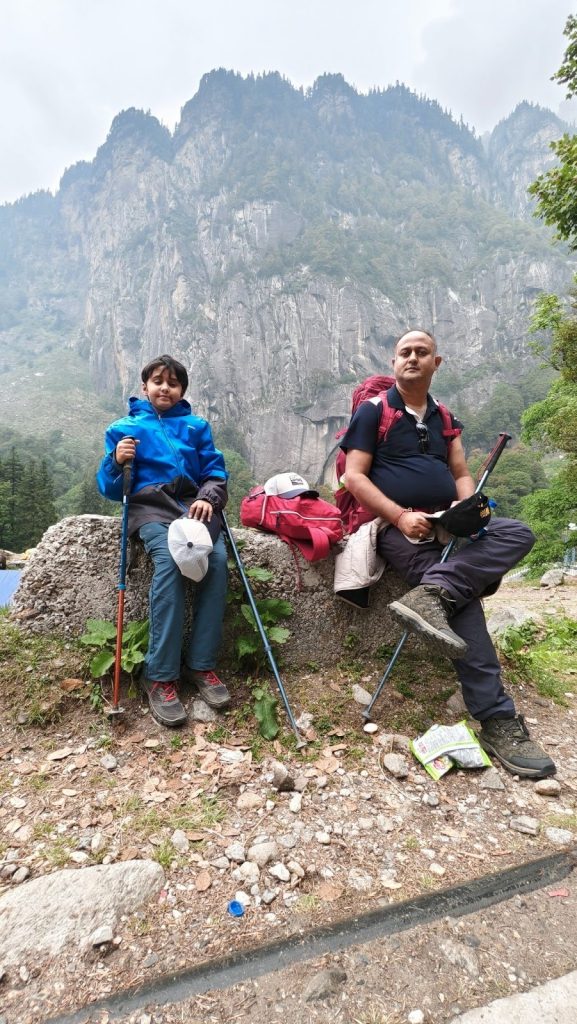
All set and ready for Trek- Namish and Nandan.
We chose Hampta Pass—a stunning mountain pass at 14,100 feet, stretching over 26 kilometers in Himachal Pradesh. It connects the lush Kullu Valley to the stark Spiti Valley, offering breathtaking transitions from green meadows and forests to rocky, snow-covered terrain. Historically, it served as a trade route between the two regions, although the construction of the Atal Tunnel has now made connectivity easier.
We boarded the overnight HRTC Volvo from Delhi on June 11 and reached Manali early the next day. At 6,730 feet, arriving a day early was essential to acclimatize. The day was spent exploring Rohtang Pass and the Atal Tunnel in pleasant, breezy weather.
The Trek Begins
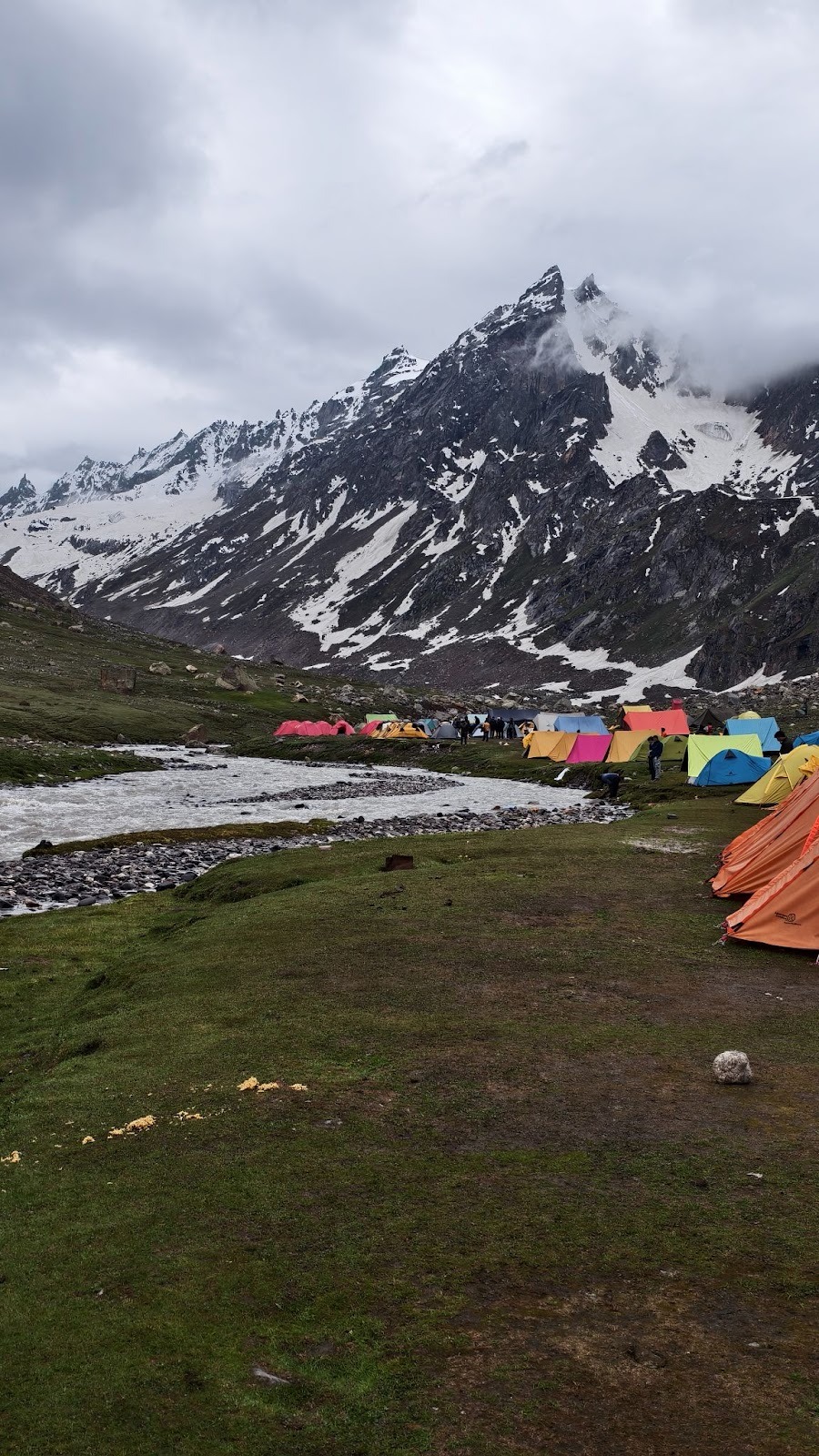
Day 1: On June 13, we assembled in Manali and were driven to Jobra (9,800 ft), our trek’s starting point. The trail passed through beautiful deodar, silver birch, and maple forests. We reached Chika campsite (10,100 ft) by nightfall and settled into twin-sharing tents under a canopy of stars and the comforting sounds of the nearby river.
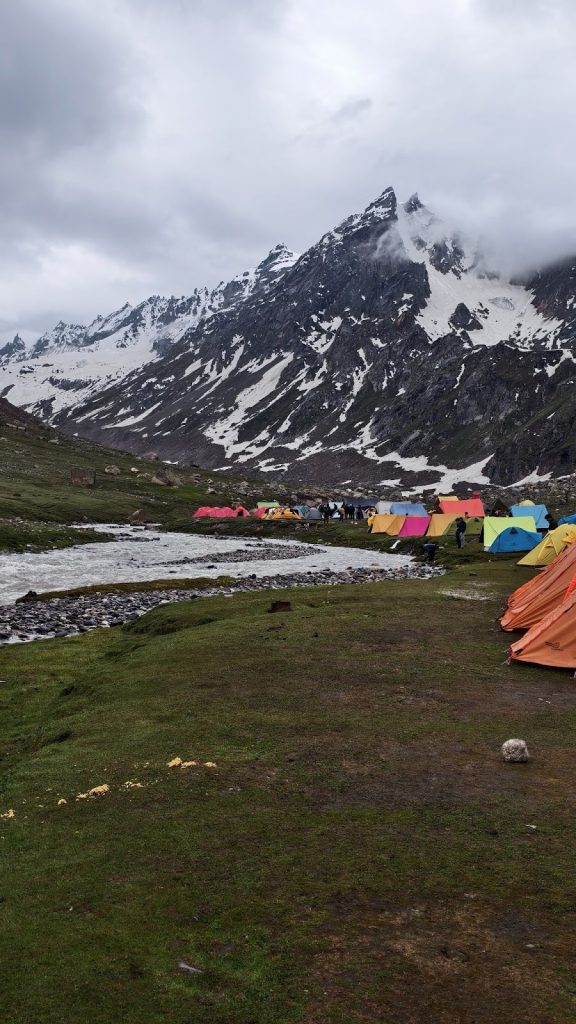
Camping by the lullaby of flowing water.
Day 2: After a warm breakfast, we trekked 8.5 km to Balu ka Ghera (11,900 ft). It took around seven hours, through changing landscapes—rhododendron forests, waterfalls, and snow-dusted ridges, all against the backdrop of the majestic Dhauladhar range.
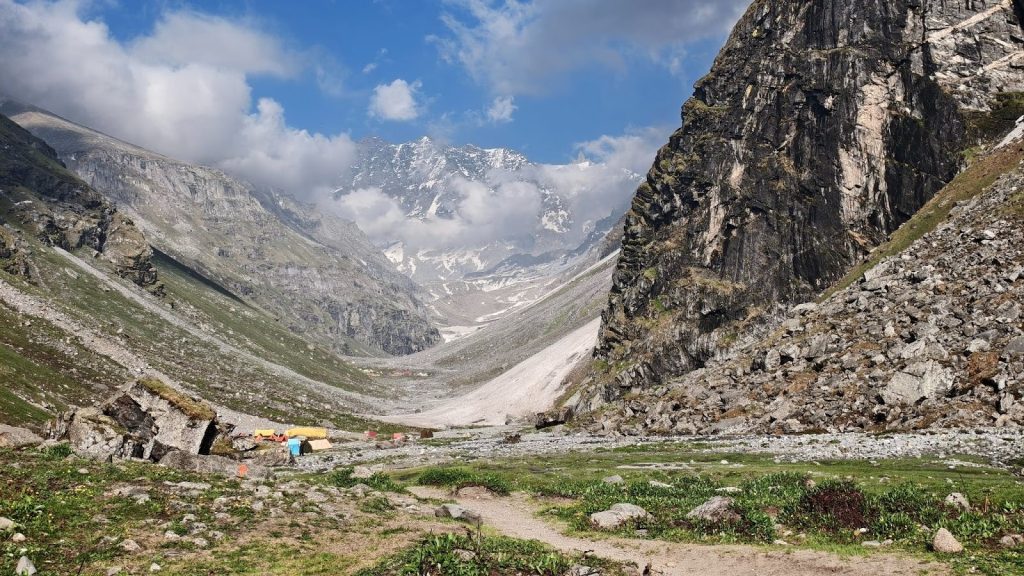
The view of the distant snow-capped peaks.
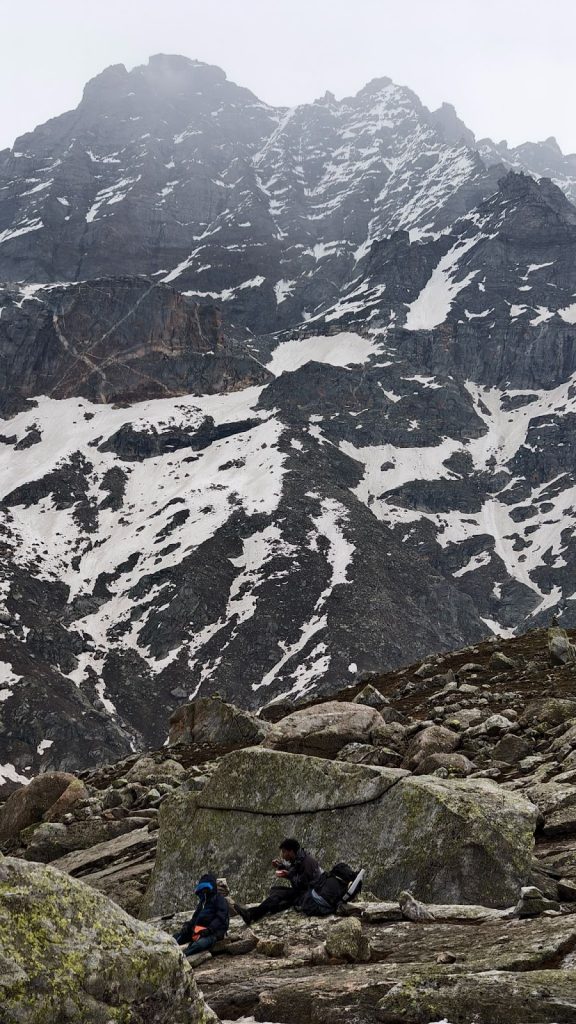
Stones, moss, and mountain silence.
Day 3 – Summit Day: This was the most challenging day—ascending from Balu ka Ghera to Hampta Pass (14,100 ft) and descending to Shea Goru (12,900 ft). We started at 8:30 AM and reached the pass around 3:30 PM. The ever-shifting terrain—from forest to meadows to snow—was surreal. The view from the summit was awe-inspiring: deep valleys, distant glaciers, and towering peaks like Mt. Indrasan. We descended steeply to reach Shea Goru at 7 PM, physically exhausted but mentally elated.
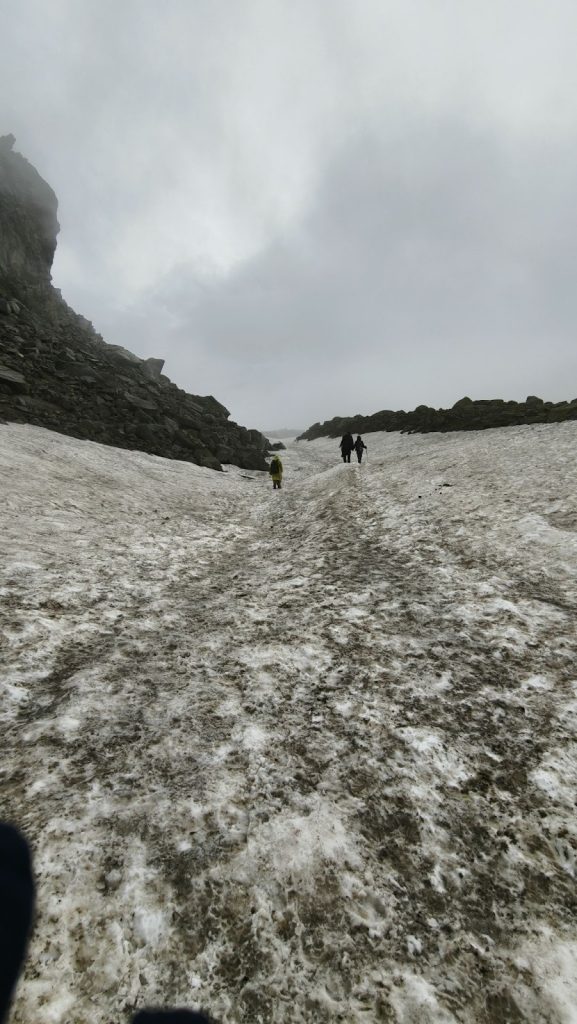
Snow on Hampta Pass
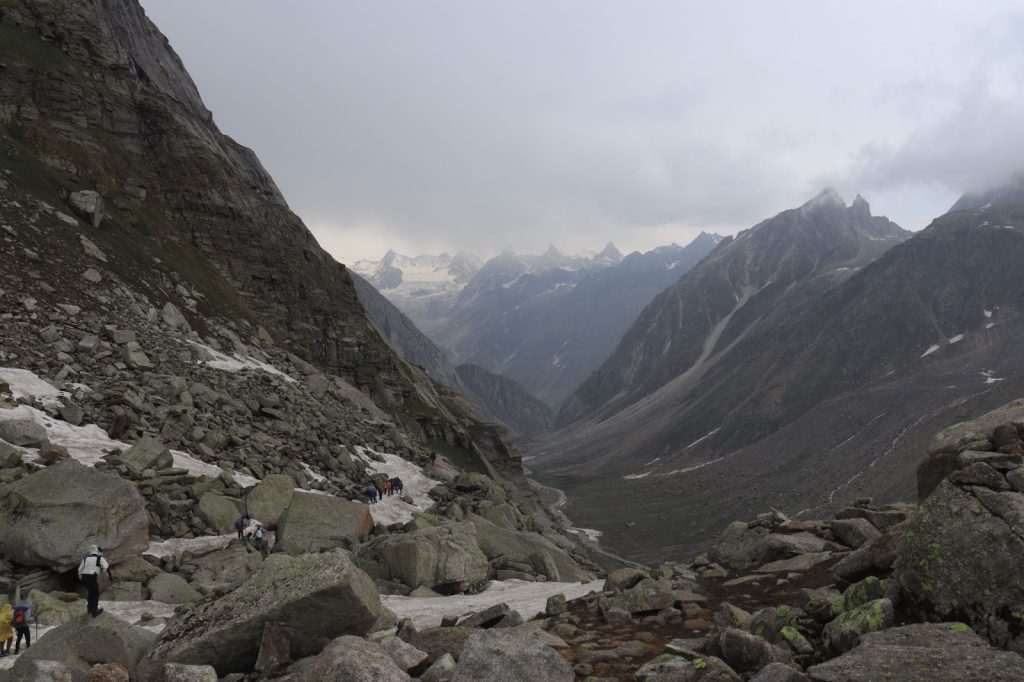
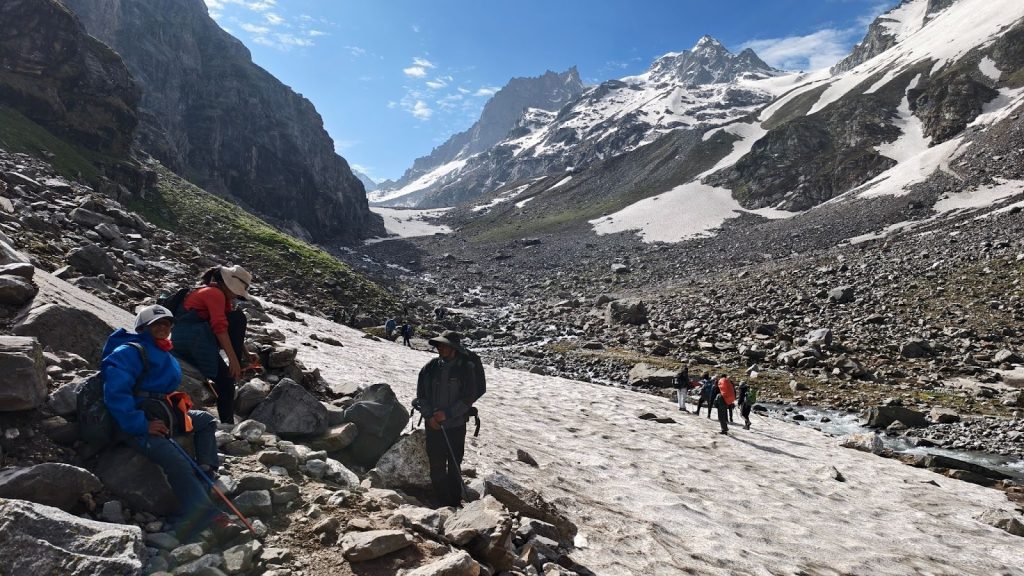
The descent from Hampta — steep, careful, and unforgettable.
Day 4: Despite sore muscles, spirits were high. We trekked 7 km to Chatru campsite (11,000 ft) and, in the afternoon, visited the mesmerizing Chandratal Lake, a glacial lake nestled high above the Spiti Valley. Its clear blue waters were the perfect reward and a poetic conclusion to our journey.
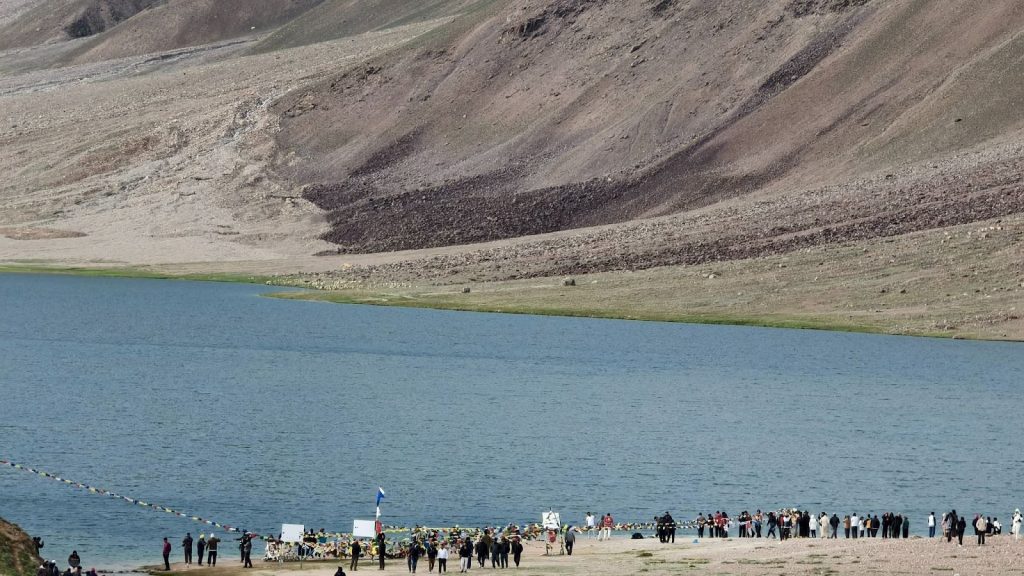
Chandrataal’s blue mirror – a quiet, reflective end to the trek.
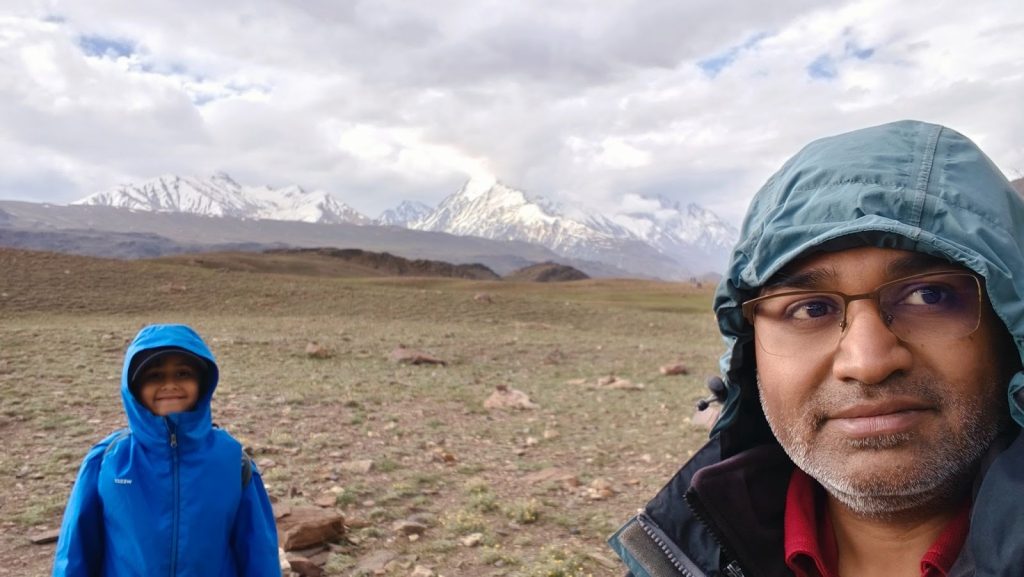
Trek Completed- At Chandrataal Lake
Day 5: Rain greeted us as if the mountains themselves were reluctant to let us leave. With heavy hearts, we made our way back to Manali and eventually to Delhi—our minds filled with humility and gratitude, and a promise to return.
Hampta Pass is an eco-sensitive region. Respecting the environment—carrying your own waste, and practicing sustainable trekking—is not just encouraged, but essential.
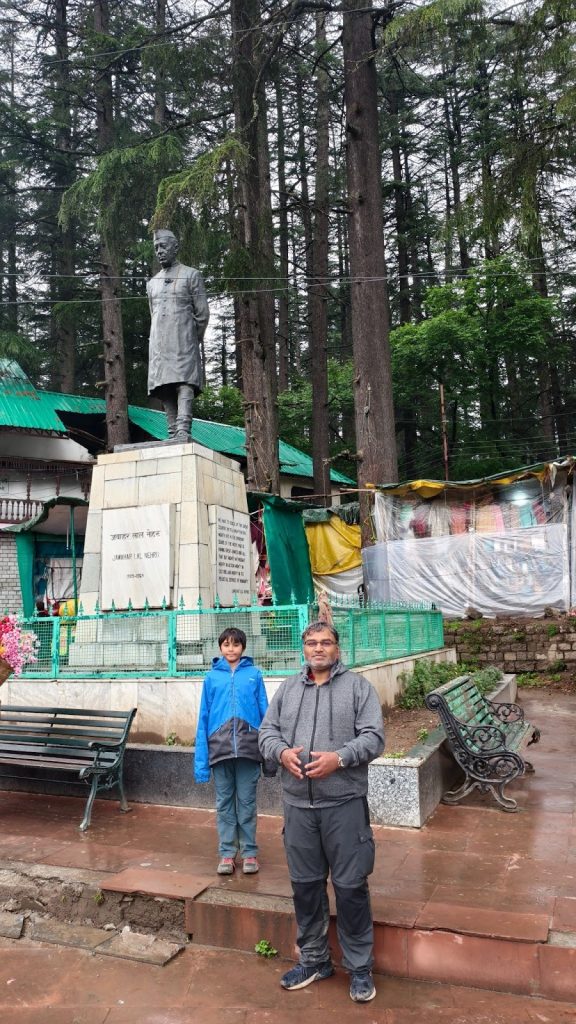
After Trek at Manali-Manish with his son Namish
Reflections: Management Lessons from the Mountains
While I didn’t embark on this trek seeking management insights, the mountains, in their silent wisdom, offered plenty. Here are a few that stood out:
1. Safety First
In both trekking and corporate life, safety and risk management are paramount. Never choose a vendor—or a partner—solely on price or image. Choose those who value your safety and well-being, even if it comes at a premium. It can make all the difference.
2. You Can Finish
We often overestimate obstacles and underestimate ourselves. I worried about the difficulty of the ascent, especially with my son. But with determination, support from our guide, and mutual encouragement, we made it. Sometimes, success begins with deciding that turning back is not an option.
3. One Step at a Time
Progress is not always about speed. It’s about consistency. In high altitudes, stressing yourself or rushing can backfire. The best strategy is steady progress—one careful step at a time. This is equally true for projects and deadlines in our work life.
4. Recognize Your Biases
At 45, Nandan and I were the oldest in the group. I wondered if we could keep pace. That doubt vanished when we saw a group of trekkers from Punjab, even older than us, confidently moving forward. And then there was a local porter, gracefully carrying a massive log uphill. The workplace, like the trail, is full of quiet strength in unexpected places. Age, title, or background should never cloud our respect for others—or ourselves.
5. The Journey Matters
The summit is spectacular, but it’s the journey—complete with its difficulties, joys, and shared moments—that truly transforms you. In work and life, results matter, but so does the process. Don’t forget to pause and appreciate it.
6. Success Breeds Aspiration
As we descended, I was already thinking about my next trek. Achievement creates hunger for more—but only if the experience has been meaningful. In business, too, a well-executed project not only brings satisfaction but builds confidence to take on bigger challenges.
To sum up, the Himalayas taught me lessons in perseverance, humility, resource management, and emotional strength—skills that no classroom or boardroom can fully replicate. Yet, these are the very traits we need to lead, manage, and grow in today’s complex world.
The mountains have a way of stripping life down to its essentials—effort, resilience, and purpose. And in doing so, they remind us what leadership truly means.
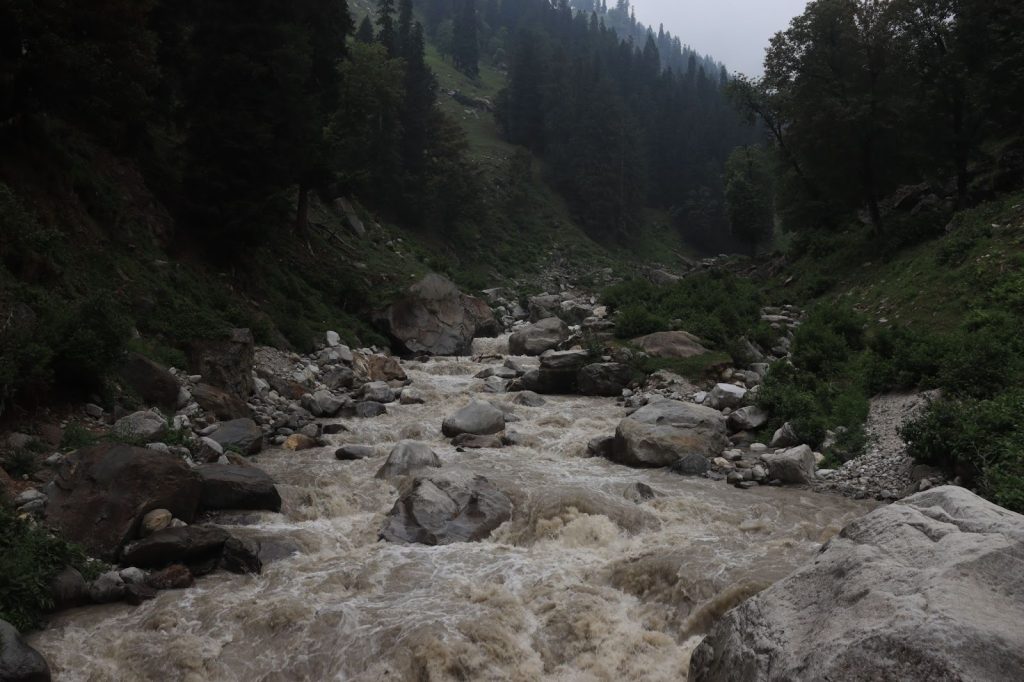
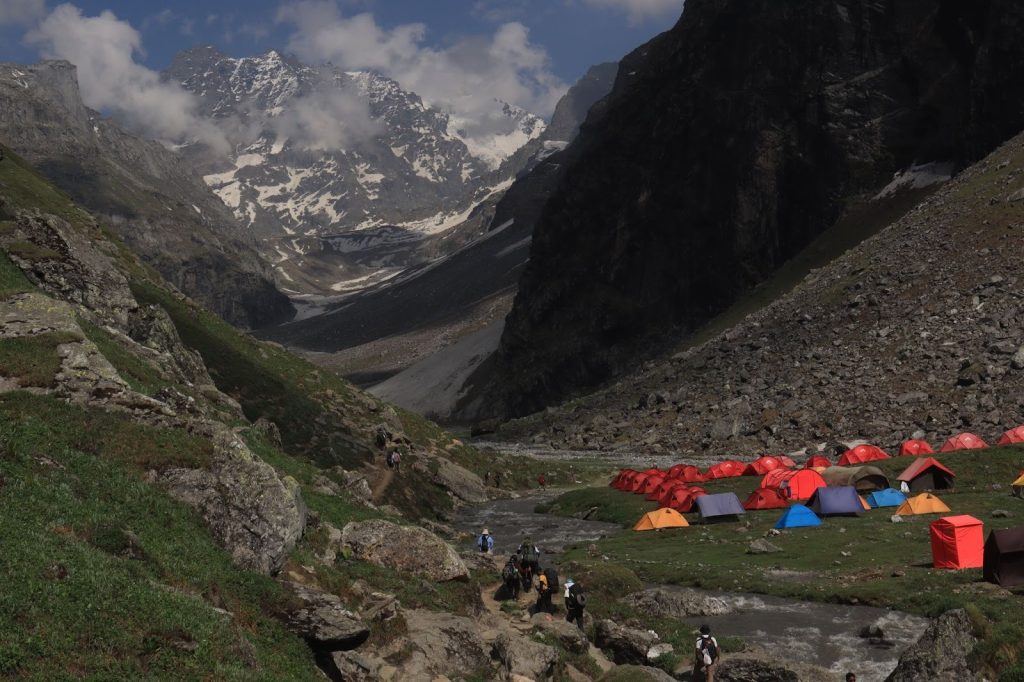
River cascading through a rocky gorge with alpine slopes around it.
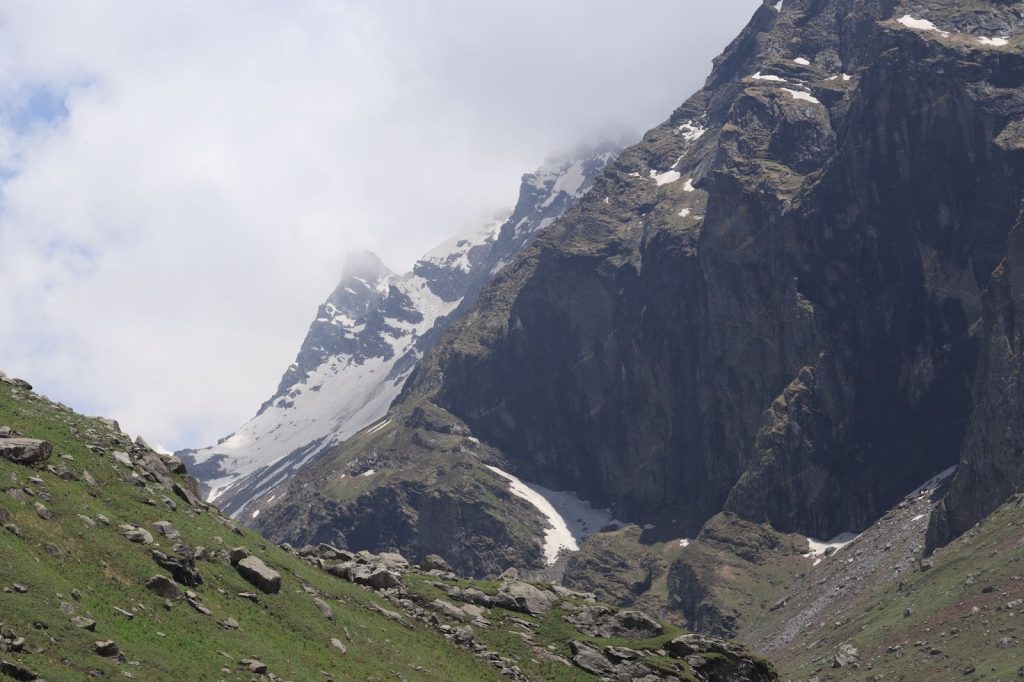
A surreal moment at the summit to take in the vast, snowy expanse before the descent.
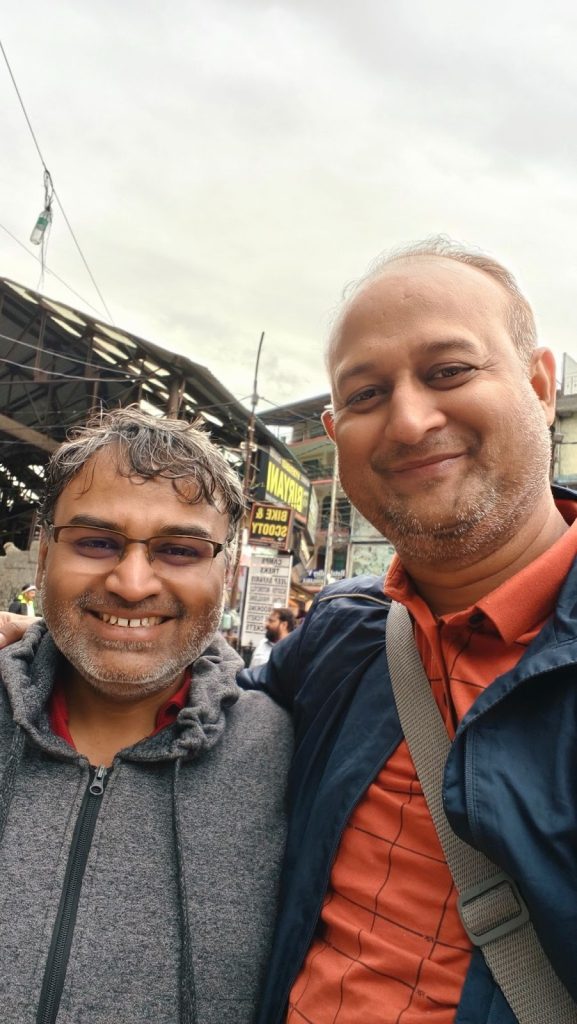
After Trek- All Weary and tired but happy- Manish and Nandan
All images courtesy of Manish Kumar Srivastava.
Authors Bio
Mr. Manish Kumar Srivastava, an alumnus of IIM Ahmedabad (SMP-02/2018-19) and is an expert in CSR and ESG. His Startup Samyak Innovations LLP specialises in CSR advisory, ESG, and social impact assessments. When not advising organizations, he seeks inspiration in the mountains and believes nature is the best teacher of leadership and resilience.
Mr. Nandan Baranwal is an alumnus of IIM Ahmedabad (SMP-02/2018-19) and a practising advocate based in NOIDA. He is the founder and Managing Partner of NuevoLex Office-Advocates Solicitors, one of the leading firms in commercial advisory, arbitration, and litigation in Delhi-NCR.