
A note for IIMA Alumni
By Arun Wakhlu, PGP 1980
We built the model. That is the uncomfortable truth we must sit with.
The frameworks that drive India’s development agenda — GDP growth as the primary metric of national success, infrastructure as the proxy for progress, exports and production as the measure of a thriving economy — were designed, championed, and implemented by people trained in institutions like ours. We are not bystanders to what India has become. In many ways, we are its architects.
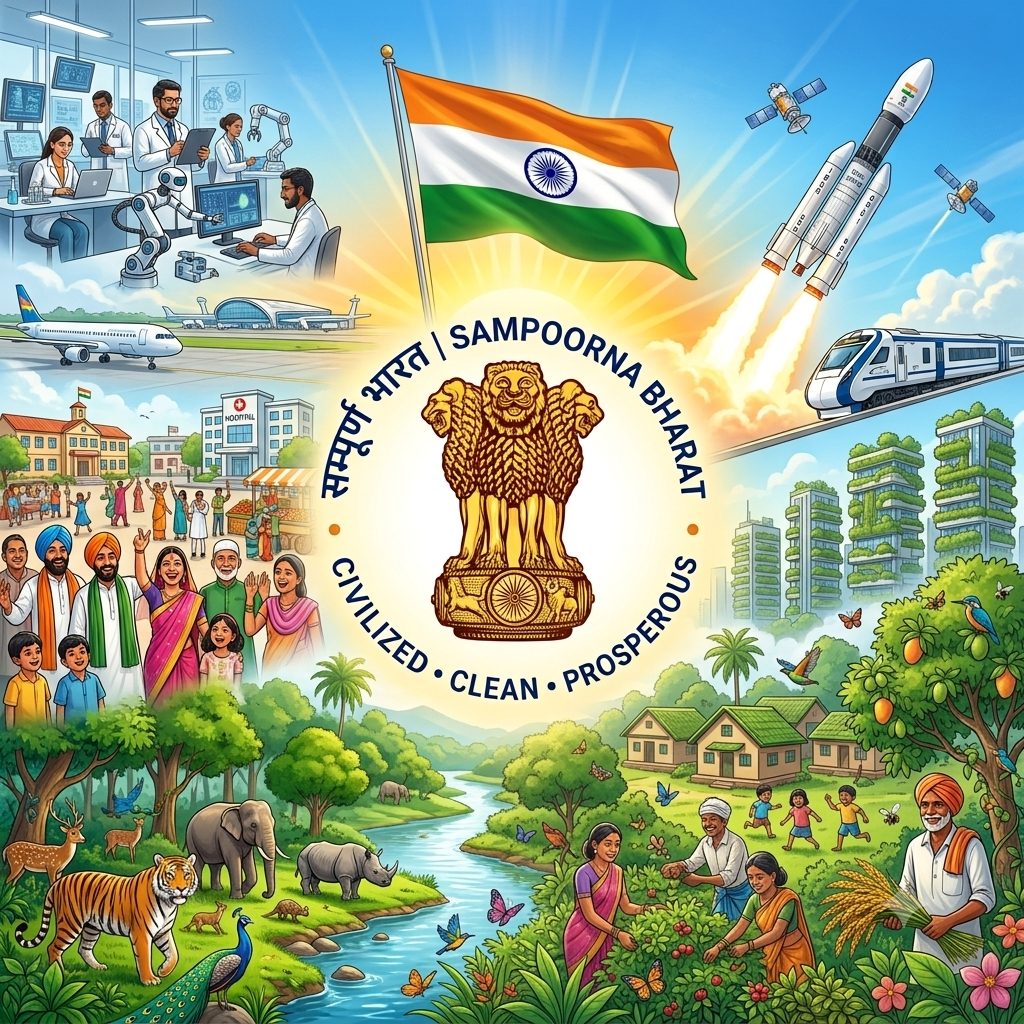
And what have we built?
A country where 66 of the world’s 100 most polluted cities are Indian. Where the Yamuna, the Ganga, and hundreds of rivers we were taught to revere have become open sewers. Where forests vanish in the name of connectivity, and farming communities are being pushed off Viksit Bharat — “Developed India” — as currently framed, is largely a material ambition: higher GDP, more manufacturing, greater global exports, expanded infrastructure. These are not wrong goals. But they are incomplete ones. And this incompleteness is no minor technical gap. It is a civilisational error, plain and simple.
Development that produces GDP but destroys rivers is not development. It is extraction with good branding.
The Indian tradition offers us a more demanding and more beautiful standard. The concept of Sampoorna — wholeness, completeness, integrality — is not a spiritual luxury. It is a design principle. A whole society is one where material thriving and inner flourishing do not compete, and where dharma — righteous order, ethical governance, ecological harmony — is the operating principle of public life, not a festival sentiment.
Sampoorna Bharat is a Bharat where a child in a Jharkhand village breathes clean air, drinks clean water, and attends a school where the teacher actually shows up. Where a farmer in Vidarbha is not dying by suicide but living with dignity on regenerative land that returns more than it takes. Where a city dweller is not merely economically productive but socially connected, emotionally nourished, and spiritually at home in their own culture. Where those who govern us are measured not only by the growth rate they deliver but by the integrity they embody — by their capacity to serve something larger than their own tenure.
This is not utopian. It is simply what wholesome governance looks like, and examples of it already exist — in cities, in districts, in organisations — wherever leaders of genuine character have been given the room to lead.
The problem is not that Indians don’t know how to build this. The problem is that we have accepted a definition of success that doesn’t require it.
As alumni of one of India’s premier institutions, we carry a particular responsibility — and a particular blind spot. We were trained to optimise systems, to think in markets, and to solve for efficiency. These are powerful capabilities. But optimisation in service of an incomplete goal produces a system that is excellently broken.
The invitation here is not to abandon what we know. It is to expand what we are aiming for.
Several frameworks — including the Wholesome Leadership work being developed in India’s leadership development space — argue that the inner development of leaders cannot be separated from the quality of governance and development they produce. Leaders who are whole — grounded, ethically conscious, connected to something beyond personal ambition — make different decisions. They stay. They protect rivers. They resist transfers. They create conditions in which others, too, can become whole and thrive.
Research on the Inner Development Goals (IDGs) now confirms what India’s own philosophical traditions have insisted upon for millennia: the deepest leverage point in any system is the consciousness and character of the people who run it.

Viksit Bharat, told as a GDP story, is only half told.
Sampoorna Bharat — whole, alive, just, ecologically thriving, governed by leaders of dharmic character — is the full story.
We have the intelligence and the networks to help write it. The question is whether we have the courage to become more than we currently are.
That question begins inside each of us.
Author Bio:
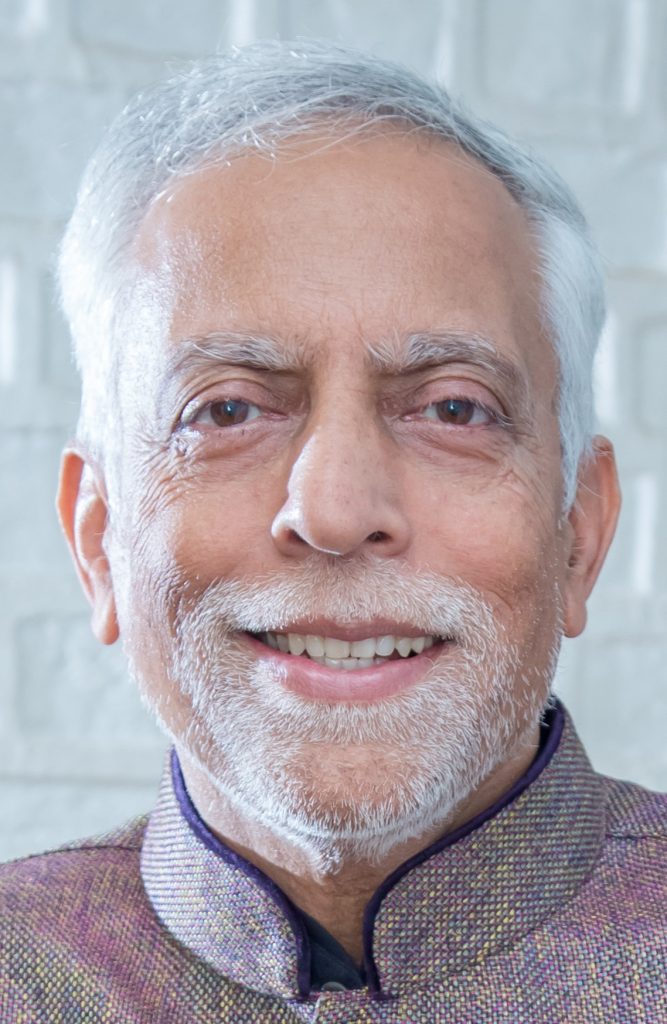
Arun Wakhlu (PGP 80) is a leadership facilitator and coach. He co-founded Pragati Leadership Institute and the Foundation for Peace and Compassionate Leadership. His books include Managing from the Heart, One Wholesome World, and Awakening Wholeness (with a foreword by H.H. the Dalai Lama).