
By Chiranjibi Panda | FDP 2014
When I am introduced today as the lead of the Forensic Data Analytics unit at a Big 4 consulting firm, the reaction is almost always the same. Eyes light up, and the questions fly: “That sounds like a movie plot! Are you basically a digital Sherlock Holmes?” or “What tools do you use to catch a criminal?”
I usually smile and lean into the mystery. But the truth is, my journey to this role wasn’t a straight line drawn on a corporate map. It was a series of pivots, a nocturnal obsession with the “unglamorous” mechanics of data, and one massive, terrifying leap of faith that most people, including myself at the time, thought might be a career-ending mistake.
The Healthcare Pivot
My professional journey began in 2008 with a Master’s in Public Health. I took a role as the administrator of a tertiary care cancer hospital. On paper, the blueprint was set: a steady climb through healthcare leadership. Yet, while walking those quiet, sterile corridors, a strange distraction took hold. It wasn’t just patient flows or clinical outcomes catching the eye; it was the hidden stories pulsing beneath the spreadsheets. A quiet fascination with the “why” behind the data began to outweigh the administrative routine.
In 2009, I made my first “out-of-the-box” move. I left the stability of the healthcare industry to join the analytics wing of a bank. My peers were confused. Why trade the noble mission of a hospital for the cold ledgers of a bank? The answer was simple: I had fallen in love with data modelling.
Choosing the “Shadows”
In the banking world, most analysts gravitate toward the “glamour” side; i.e., Investment Banking, marketing, or product innovation, where one could predict the next big consumer trend. But I found myself drawn to the shadows. I spent the next five years obsessing over risk modelling, fraud analytics, and the intricacies of Risk, and Compliance.
There is a unique thrill in being the person who spots the anomaly that everyone else missed. However, as the sophistication of financial crime grew, I realized that my passion had outpaced my formal training. I had a vision, but I needed a deeper academic foundation to execute it at the highest level.
The 2014 Leap of Faith
By 2014, I reached a crossroads. I was established in my career, due for a promotion. But felt a pull toward the academic side of the house. I was already spending my weekends conducting pro bono sessions at a B-school, helping them refine their analytics curricula. I knew I needed to go back to school, but I didn’t want a light touch; I wanted a transformation.
I took a bold, eighteen-month sabbatical to enrol in the Faculty Development Programme at IIM Ahmedabad, focusing on data science and strategy, while subsequently pursuing a Fellowship (FPM) in Analytics at IIM Mumbai.
Those 18 months became the most challenging period of my life. The “grind” returned with a vengeance, requiring the navigation of 16 intense modules at IIMA followed by another 12 in Mumbai, all while being buried under case studies, exams, and relentless academic rigour. Almost every day during those first few months, I sat in my room and wondered: Is this worth it? I was taking a significant financial hit. I had a persistent fear of missing out on the action in the corporate world. I worried that when I tried to return, the industry would have moved on without me. But looking back today, those were the best days of my life. That period was the crucible that forged my resilience and gave me the rock-solid conceptual understanding I rely on every single day.
Thinking Like a Fraudster
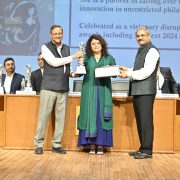
Today, that “leap of faith” has paid off in ways I couldn’t have imagined. In the world of Forensics, the old patterns rarely work for long. Every day brings a new kind of fraud: a sophisticated, multi-layered attempt to break the system.
As a consultant, I am expected to think like a fraudster and then think three steps beyond them. We use data not just to solve past crimes, but to predict and prevent future ones. It is a space where my background in healthcare administration, my years in banking risk, and my academic deep-dive at IIMA all converge. When I analyze a business case now, I’m not just looking at a spreadsheet; I’m applying a decade of varied, cross-sector exposure to see the “ghosts” in the machine.
Lessons from the Uncharted Path
Looking back at the trajectory of my career, I have come to realize that the most fulfilling paths are rarely the ones paved with conventional wisdom. My journey taught me that there is immense power in embracing the “unglamorous”; choosing the grit of risk and fraud over the flash of marketing allowed me to become a singular voice in the shadows rather than an echo in the light. I learned that a sabbatical is never a stop, but a high-velocity launchpad; the temporary financial hit was a small price to pay for the permanent conceptual clarity and confidence I gained in return. Navigating multiple gruelling academic modules while managing the visceral fear of being “left behind” required a resilience that logic alone couldn’t provide. It required a genuine obsession with the craft. My time at IIMA was a masterclass in audacity, proving that when I had the courage to follow curiosity over a predetermined plan, I stopped chasing roles and started creating them. In a world of forensics where my team and I hunt for truth amidst the noise, I have found that safety is often an illusion, but the rewards of a leap of faith are absolute. I now know that owning one’s unconventional moves and leaning into unpredictability is the only way to stay ahead, trusting that passion is the most reliable compass I will ever own.
Author Bio:

Director & Lead – Fincrime Analytics at a Big4 consulting firm.