Advancing AI in Healthcare | 22 August 2026 | IIM Ahmedabad
By Lalit Singla, EEP 2010
The IIMA Healthcare Alumni Special Interest Group (SIG) and the Centre for Management of Health Services (CMHS) organized the 3rd edition of the IIMA Healthcare Summit at the IIMA Campus. Building on the momentum of previous editions, this year’s summit brought forward the vision of Healthcare for India @2047 with a focus: “Advancing AI in Healthcare.”
| 500+ Participants | 400+ Alumni in the Healthcare SIG | 92 StartUp Applications | 5 Showcase Finalists |
A concise report of the conversations, ideas, and actions emerging from the third edition of the IIMA Healthcare Summit.
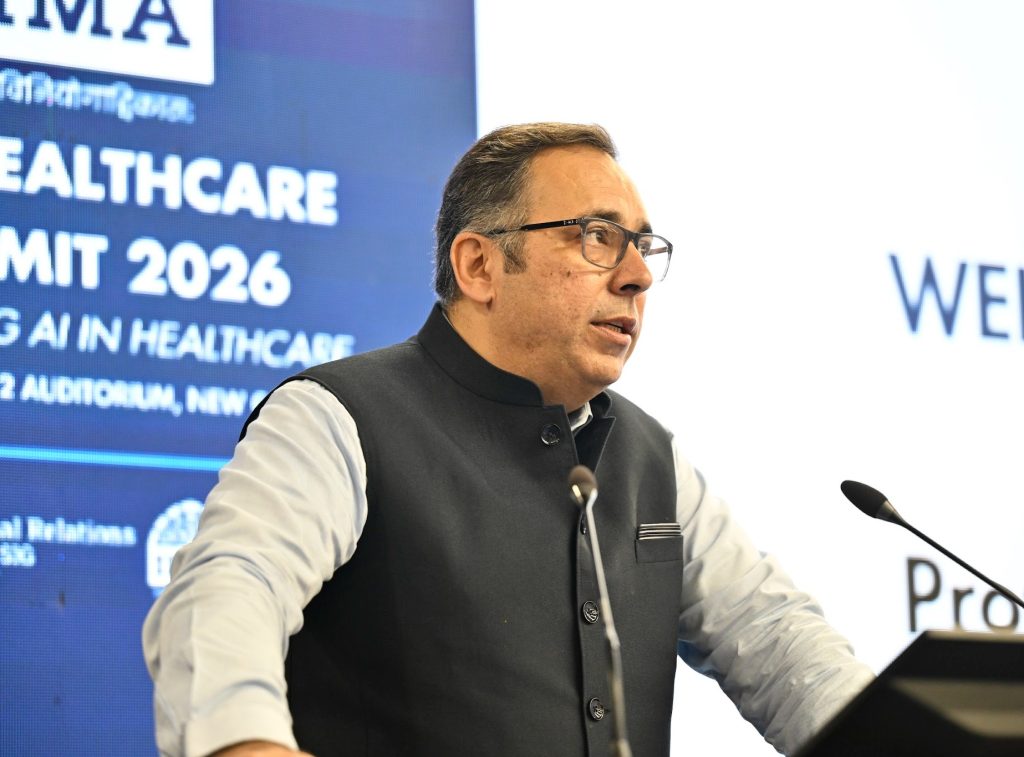
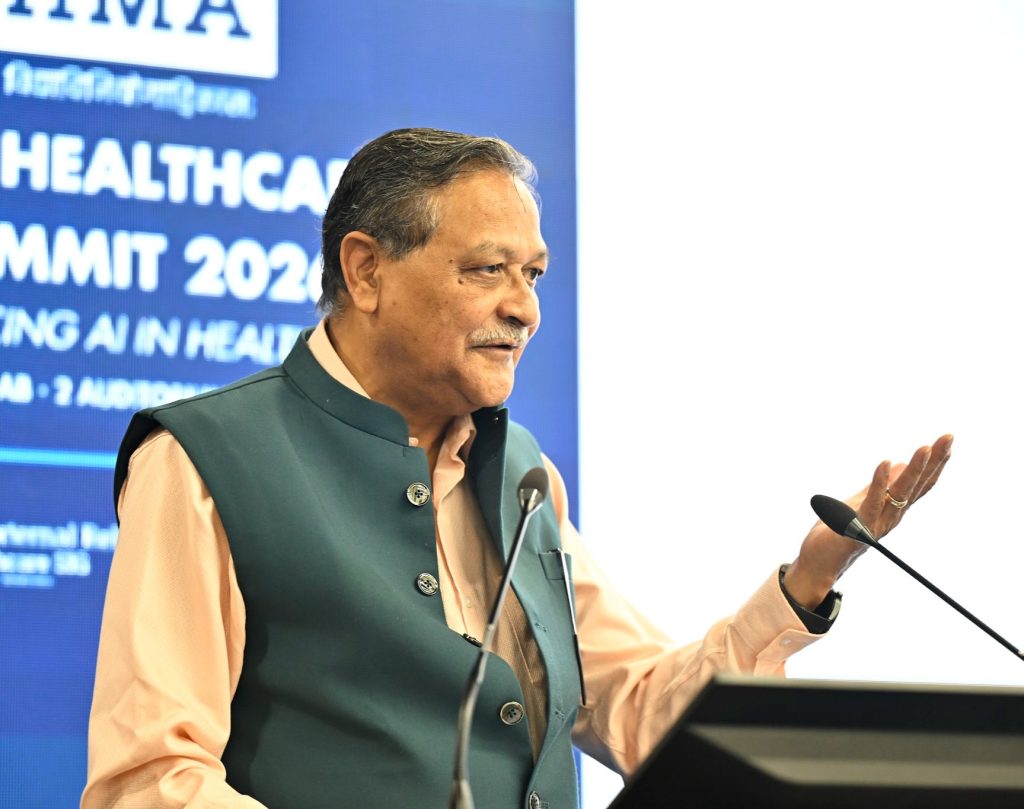
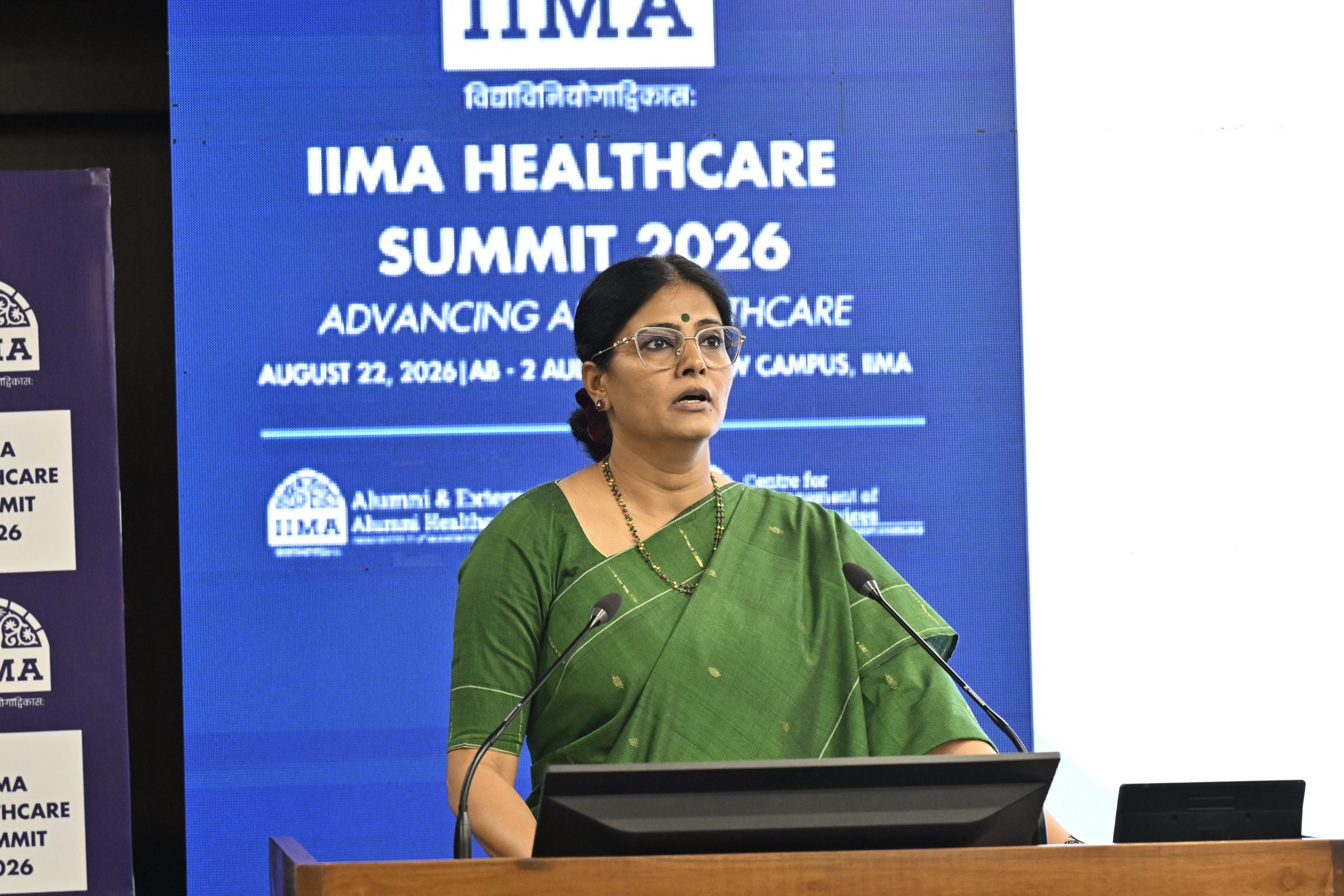
| The central question: From policy and digital public infrastructure to drug discovery, care delivery, startups and organisational transformation, the Summit brought the healthcare ecosystem together around one question: how can India capture AI’s benefits while keeping clinical evidence, human accountability, equity and trust at the centre? |
A day of ideas across the healthcare system
The third edition of the IIMA Healthcare Summit brought together more than 500 participants from government, regulation, healthcare delivery, pharmaceuticals, diagnostics, academia, technology, startups and the IIMA alumni community. The programme moved across the healthcare value chain, from digital foundations and drug discovery to diagnostics, care delivery, talent, entrepreneurship and regulation.
| AI as a force multiplier The Summit consistently framed AI as a way to extend scarce clinical capacity, accelerate research, improve productivity and support more preventive and personalised care, without being a substitute for human judgment. | From pharmacy to laboratory India’s strengths in generics, vaccines and manufacturing provide a platform. The next opportunity is to build stronger domestic capabilities in discovery, clinical research and globally relevant healthcare innovation at scale. |
Themes that cut across the conversations
01 Digital foundations ABDM and other public digital infrastructure create a foundation for interoperable health data. The harder next step is adoption, structured records and real-world use.
02 Practical AI Near-term value often comes from documentation, summarisation, screening, triage, decision support, safety surveillance and workflow automation, especially when AI is embedded in an end-to-end process.
03 Trust by design Clinical validation, representative data, explainability, calibrated alerts, clear accountability and post-deployment monitoring are essential to safe adoption.
04 India’s scale India’s diversity of patients, clinical settings and data creates an opportunity to build solutions relevant to Indian needs and to develop original healthcare AI capability.
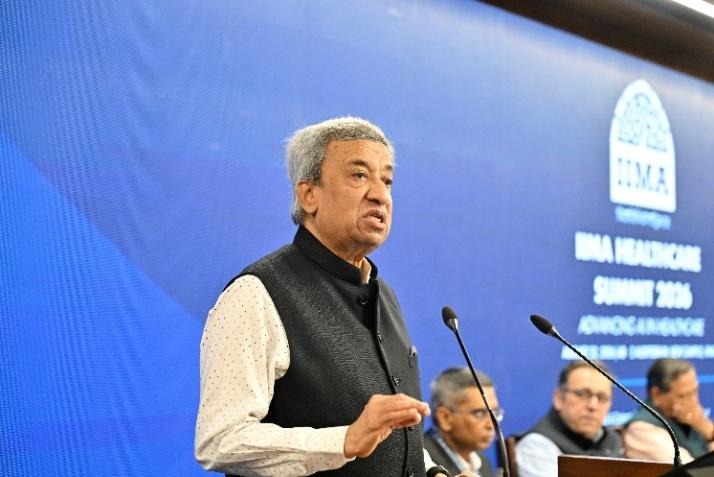
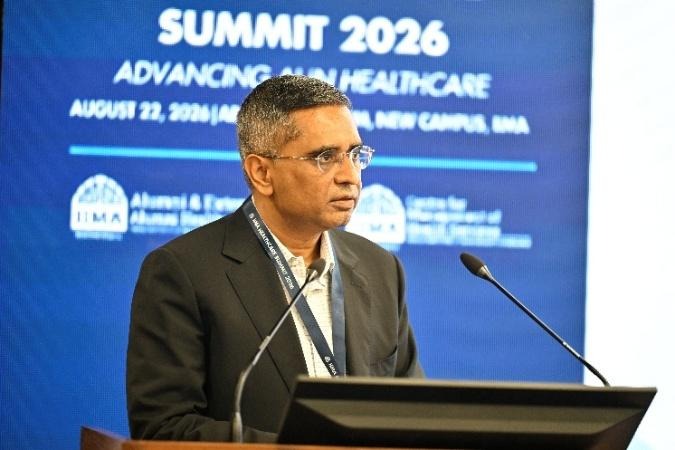
From promise to practical deployment
The strongest message from the Summit was that AI capability alone does not create healthcare value. Deployment depends on data, workflows, incentives, regulation, organisational readiness and trust.
| 01 Return time to clinicians AI can create capacity by reducing documentation and administrative work, allowing clinicians to spend more time on care. | 02 Build around existing behaviour Solutions gain adoption when they fit clinical workflows rather than requiring clinicians or patients to fundamentally change how they work. |
| 03 Move from pilots to scale India’s next step is validated deployment through national and state programmes, supported by privacy, responsible AI and cross-sector collaboration. | 04 Make regulation adaptive AI systems evolve as models and data change; regulatory frameworks need clear risk tiers, accountability and mechanisms for controlled improvement. |
| 05 Support Indian innovation Indian clinical, epidemiological and genetic datasets can become strategic assets when paired with strong governance, privacy and infrastructure. | 06 Help startups cross the adoption gap Clinical validation, hospital procurement, data, compute, legacy integration and trust remain practical barriers that need ecosystem-level support. |
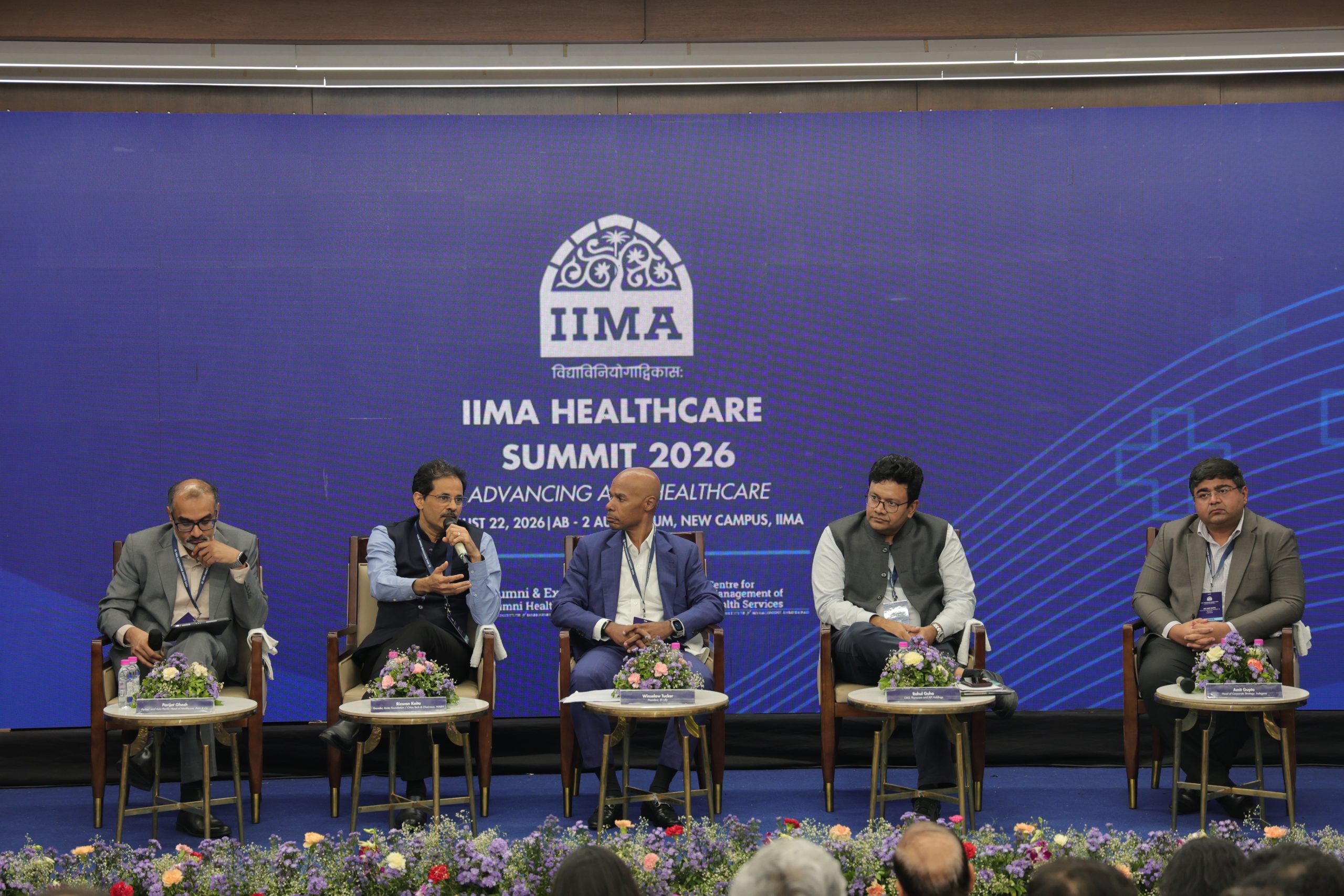
Panel Discussion: Reimagining Healthcare Value Chain and Talent: How AI is Reshaping Diagnostics, Pharma, and Care Delivery
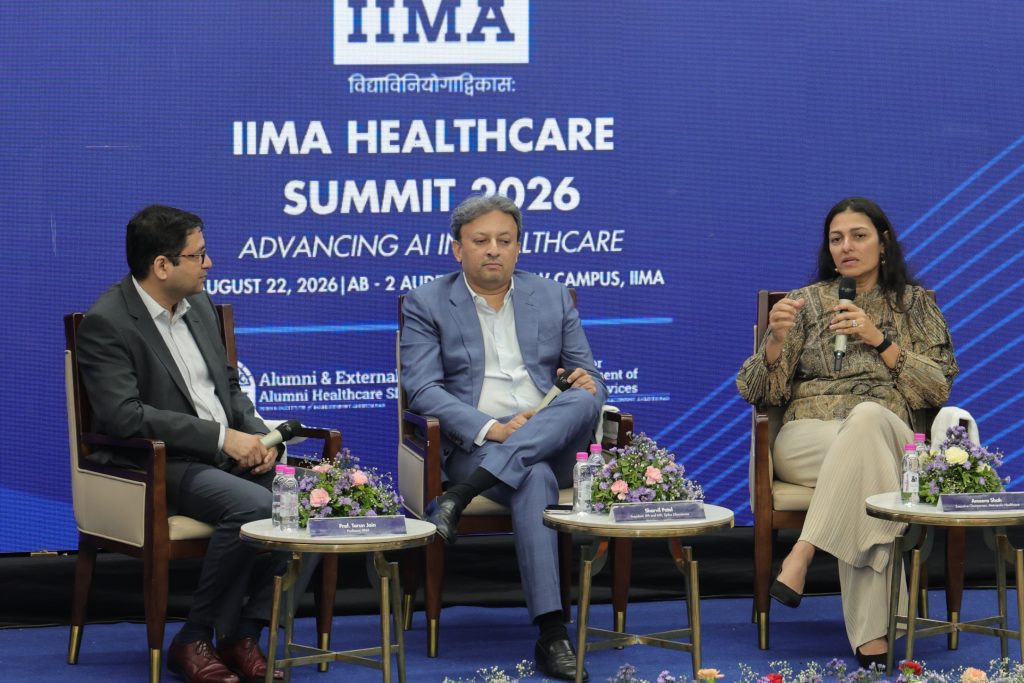
Fireside Chat: Leading AI-ready Healthcare Organizations, moderated by Prof. Tarun Jain
A glimpse of the innovation pipeline
The Healthcare Startup Showcase received approximately 92 applications, shortlisted 10 ventures, and featured five finalists on stage. NEMA AI, a neurotechnology startup, was declared the winner, followed by Improzo, an AI execution engine for life sciences, and Team Inog, an AI drug-discovery startup. Other finalists included CureMeAbroad, a cross-board healthcare platform, and IQ-Line, a clinical digitisation solution.
| What the showcase reinforced The common thread was augmentation, not replacement, of existing clinical and pharmaceutical workflows, with adoption improving when technology is designed around real-world behaviour. |
Alongside the Healthcare Startup Showcase, two additional milestones enriched the programme: the launch of the India Pharma Archives and the book: From Labs to Jabs: How agility, ability and adaptability led to the success of India’s COVID-19 vaccination program by Rajesh Chandwani / Vinita Sindhwani Satija / Ranjan Kumar Ghosh.
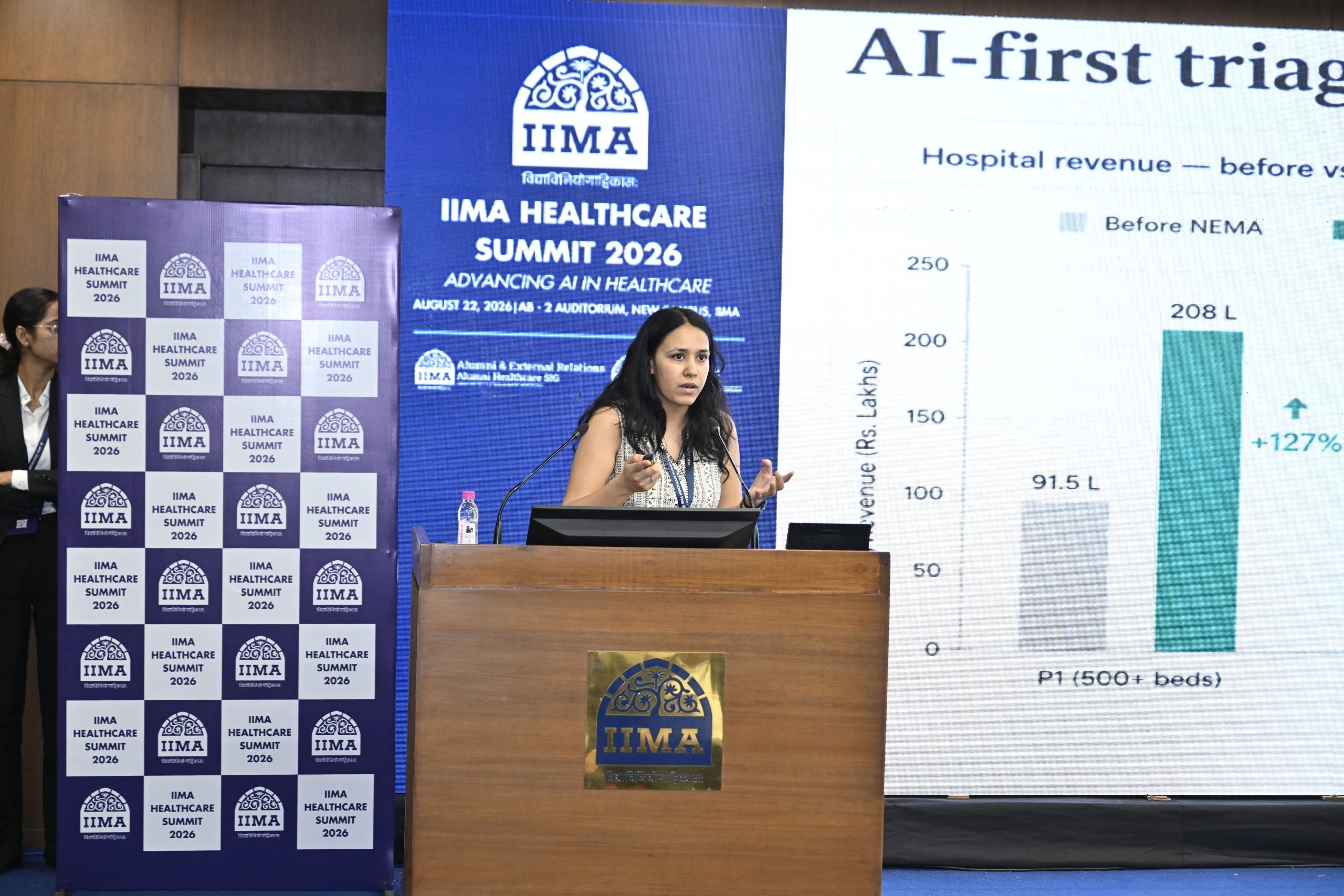
Startup Showcase winning team, NEMA.AI, featured at the summit
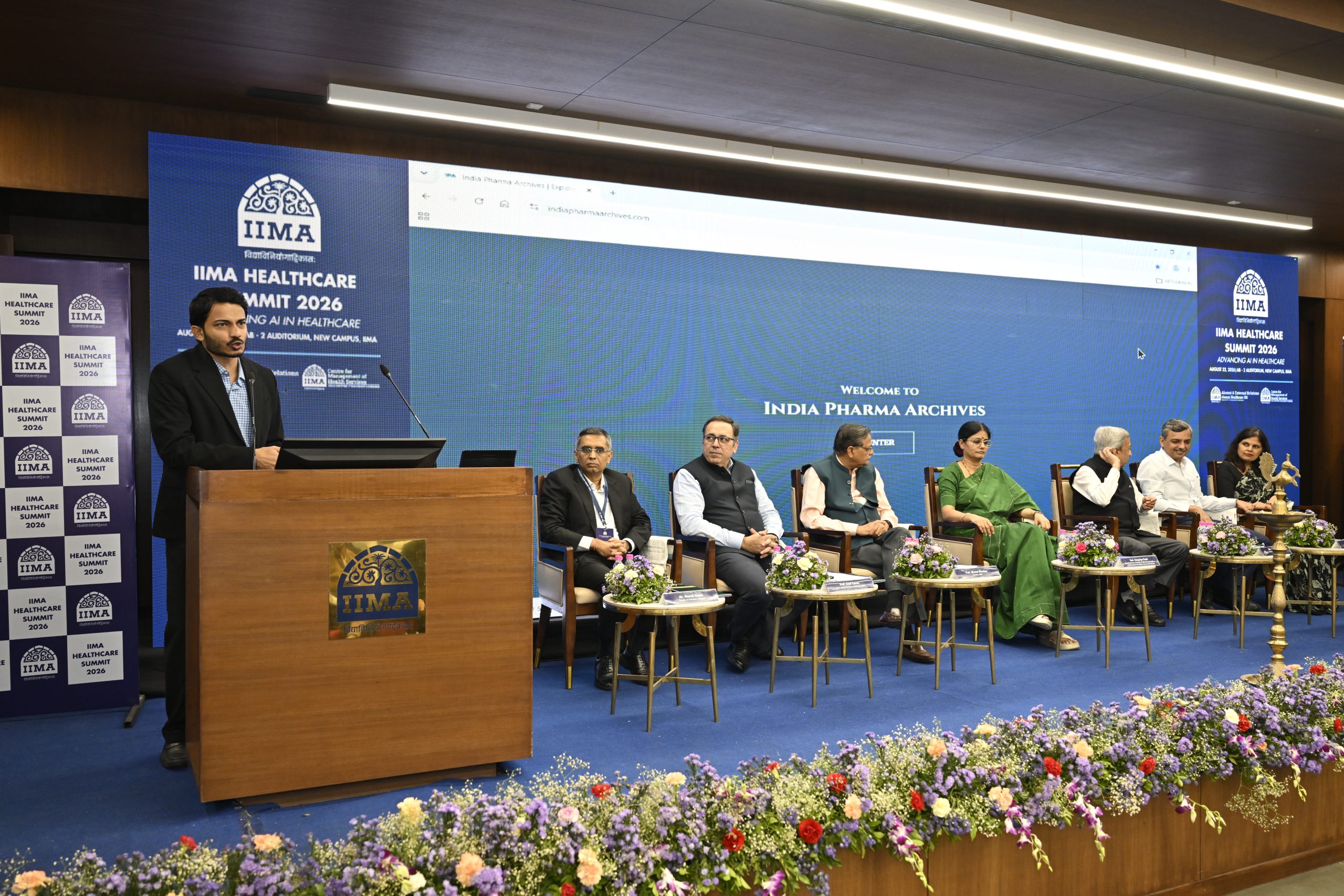
Prof. Chinmay Tumbe, IIM Ahmedabad during Indian Pharma Archives launch

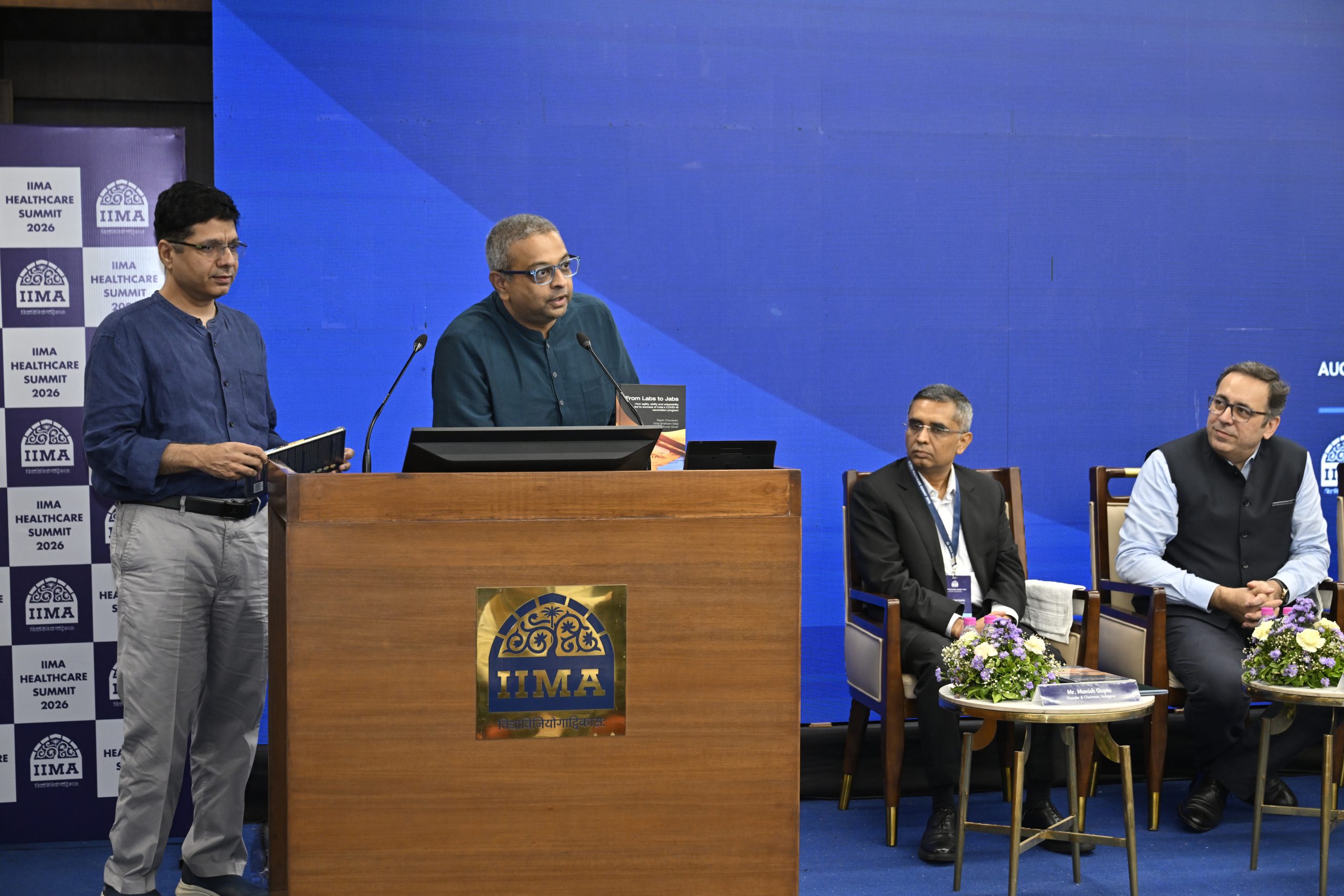
Prof. Rajesh Chandwani & Prof. Ranjan Ghosh launching From Labs to Jabs
| Indian Pharma Archives A digital repository documenting the evolution of India’s pharmaceutical industry over approximately 125 years. The initiative is a collaboration between IIMA Archives and the Indian Pharmaceutical Alliance (IPA). | From Labs to Jabs The organisational and operational story behind India’s COVID-19 vaccine development and deployment when speed, scale and quality had to be achieved simultaneously. |
From conversation to action
The Summit’s discussions converged on an agenda that extends beyond technology itself. The opportunity for India is to translate AI capability into safe, evidence-based and inclusive deployment at scale.
- Accelerate conversion of legacy clinical records into structured, interoperable digital data.
- Strengthen consent-based, federated data infrastructure for research and AI without unnecessary centralisation.
- Create clear risk tiers, accountability frameworks and validation pathways for healthcare AI.
- Align procurement, reimbursement and insurance incentives with measurable outcomes and operational value.
- Build and curate Indian clinical, epidemiological and genetic datasets while protecting privacy and data sovereignty.
- Design AI with clinicians, patients and caregivers, keeping accountable human decision-making at the centre.
- Prioritise applications that extend specialist capability to Tier-2/3 and underserved geographies.
- Support startups with access to clinical environments, compute, data, validation and procurement pathways.
- Measure enterprise AI by process-level outcomes: speed, accuracy, quality, patient experience and cost.
- Invest in AI literacy and change management to drive trust and responsible use of new systems.
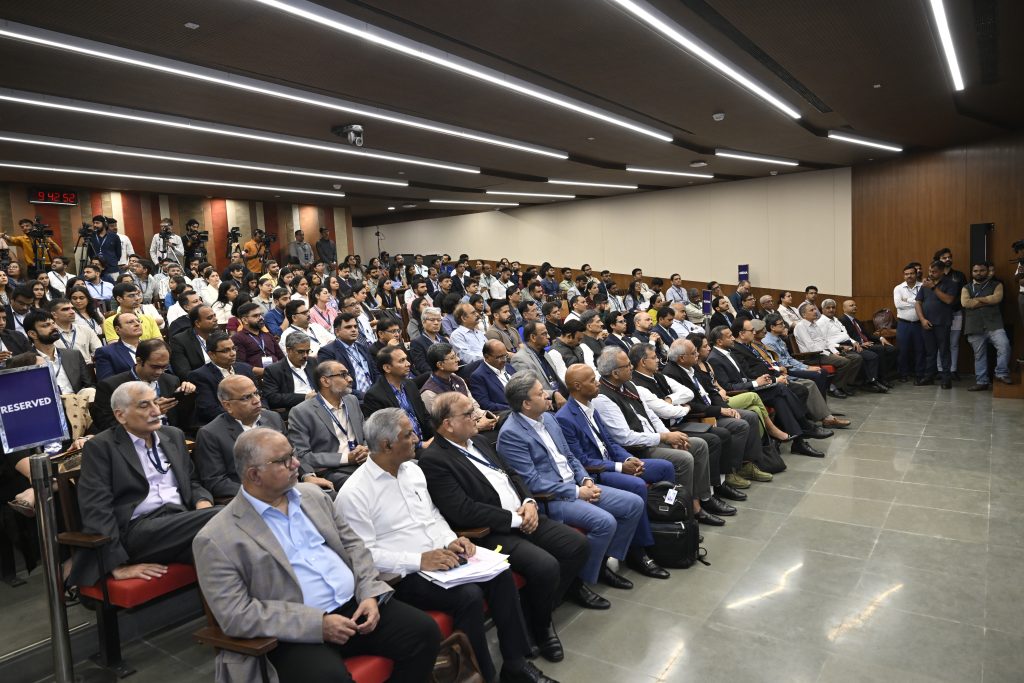
Audience absorbing insights during the IIMA Healthcare Summit, 3rd Edition.
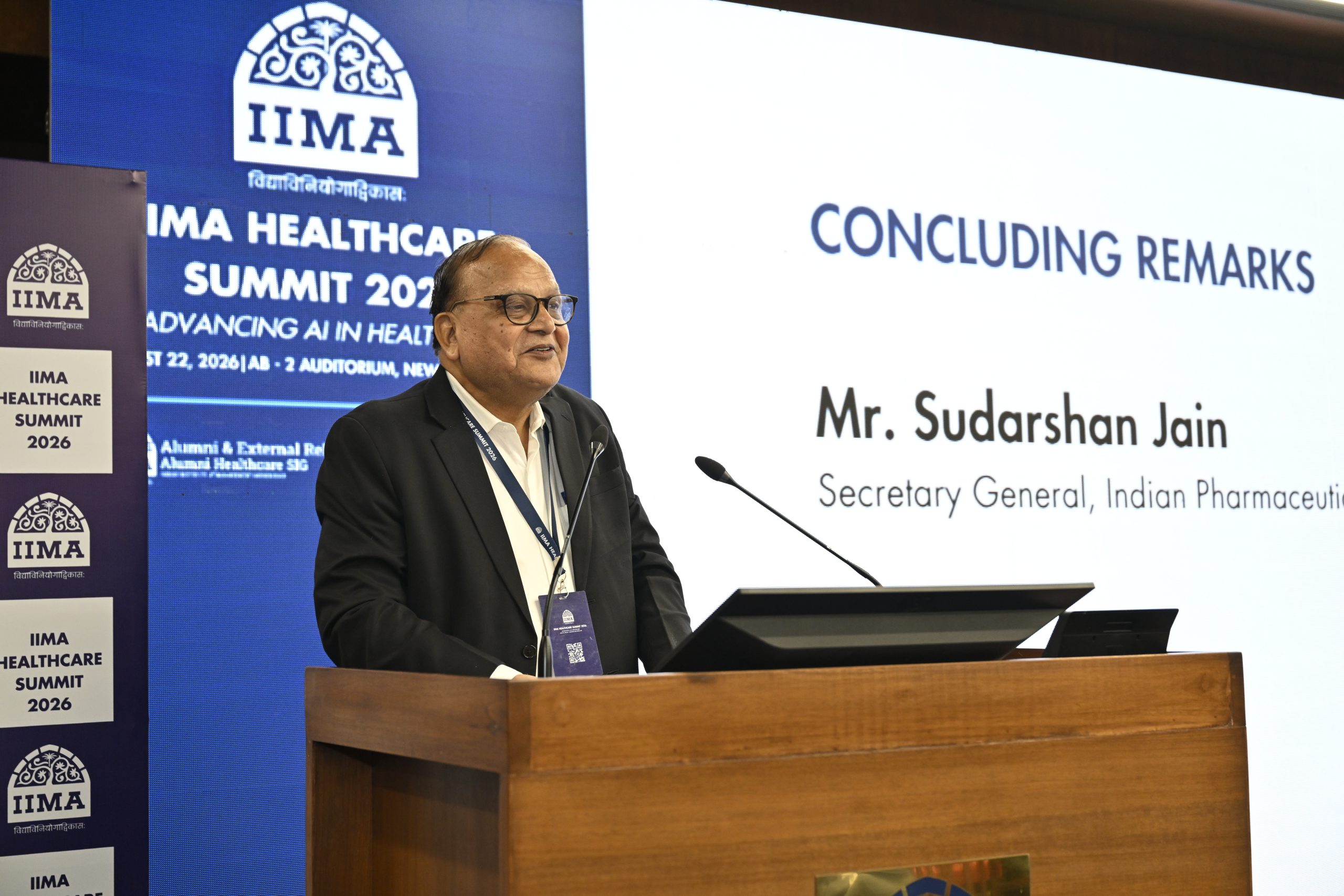
Concluding Remarks & Vote of Thanks by Mr. Sudarshan Jain, Secretary General, Indian Pharmaceutical Alliance (IPA).
India should move quickly, but not carelessly.
| The Summit’s lasting value lies in turning shared insight into shared action: connecting policy, research, industry, entrepreneurship and implementation to advance healthcare for India@2047. |
The success of the IIMA Healthcare Summit was made possible through the support of our sponsors: Cipla, Indegene, Abbott, Micro Labs, Torrent Pharma, Intas Pharma, Zopper Solutions, Novo Nordisk, and Sun Pharma.