
by Sirisha Bhamidipati, PGP 2004
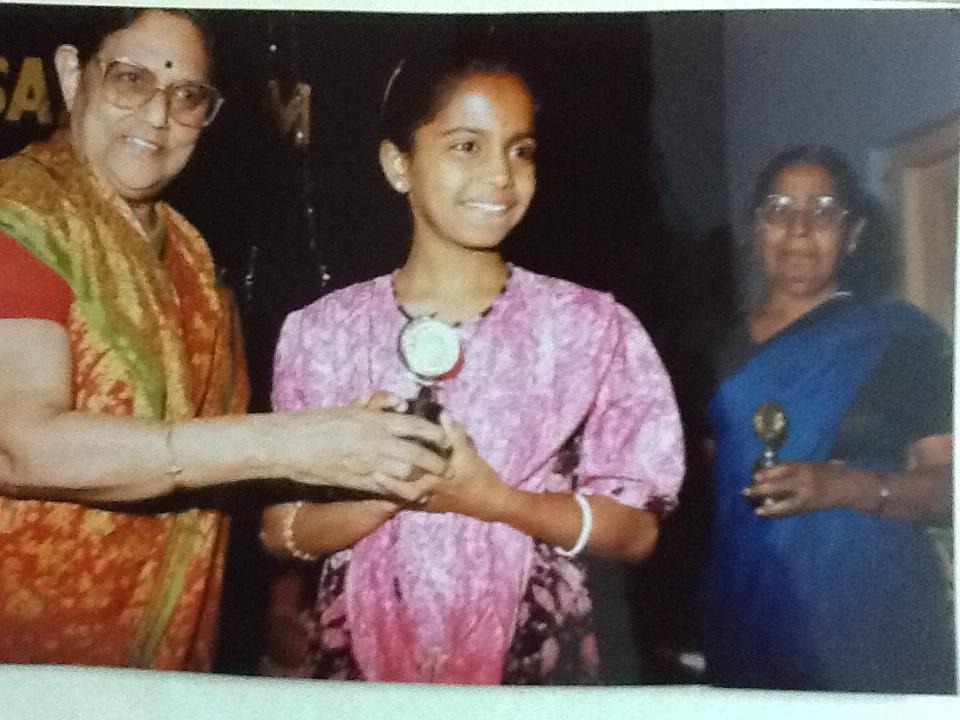
Caption: The author winning a prize for a Veena recital – just days before she fell sick.
When I was thirteen, I wanted to become a neurosurgeon. I used to sign my name as Dr. Sirisha, FRCS London in my notebooks. I played the Veena, cycled with my friends, studied hard, and dreamt big. Life was predictable in the way a teenager’s life often is; filled with dreams, complaints, and little victories.
Then, one day, without warning, I collapsed. A strange pain spread through my body, and within 24 hours, I could not move a single limb. I went from being fully active to fully paralyzed. The doctors had no answers. My parents were told I may not survive. I spent weeks in the ICU, tubes and machines doing the work my body had stopped doing. The only thing I could still move was my head.
The doctors gave me no hope, the diagnosis was inconclusive. Even after 60 days in ICU, they couldn’t find the cause and said it presented as a combination of Tubercular Spinal Meningitis and Guillain Barre’s Syndrome. But my parents refused to believe that prognosis. For two months, there was no progress. Then, a flicker. A sensation. A tiny victory. My parents clung to hope and action. My father refused to buy a wheelchair. He said, “You will walk again, and till then, I’ll carry you.” And he did. Everywhere. He carried my weight when I couldn’t. My mother pushed through pain without flinching. Together, they gave me not just care, but belief.
With 10-hour daily physiotherapy sessions, grit, and painful progress, I slowly learnt to sit. Then stand. Then walk again. After 8 months, I held a pencil. And I felt human again. I returned to school in a special cushioned chair. I couldn’t write, but I listened, absorbed, dictated answers, and topped my class. It was exhausting, physically and mentally, but it reminded me who I was. I had lost mobility, but not ambition.
My dreams kept evolving. The neurosurgeon dream gave way to becoming a physician. But the system shut the door. I was denied admission to medical college for not being able to use both my hands. I spiraled into depression. My world ended. I was 18 then, with limited mobility in my lower body, a partially working right hand and a fully paralysed left hand.
But slowly, I picked myself up. I joined a Bachelor of Computer Applications course, learning to type with one finger, practicing for hours, studying while managing fatigue and pain. Topping the university again. I learned how to fight.
And then came IIM Ahmedabad. This was supposed to be the arrival. The validation. But once I got there, I realized: this world was not built for me.
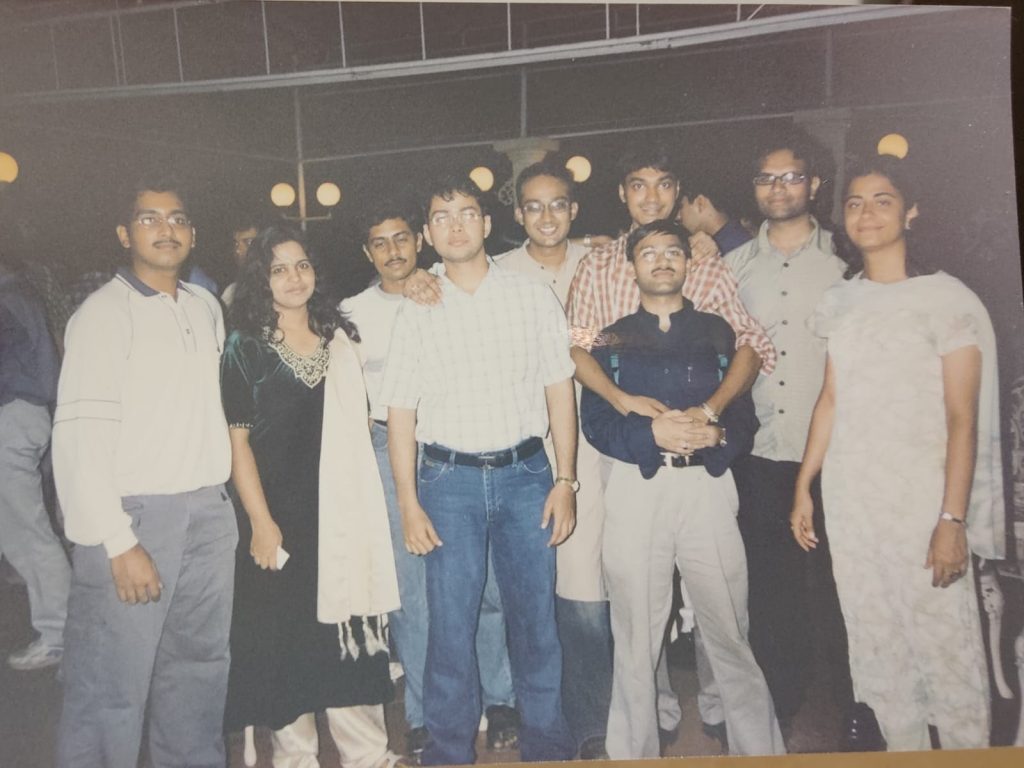
Caption: During Confluence – the annual B-school festival. The author is second from left.
At IIM-A, the campus wasn’t accessible. Every building required stairs. I missed parties, avoided dorm events because I found it tough to use the stairs. I struggled to eat in the mess because the layout assumed you had two fully working hands. For a year, I ate two chapatis and dry sabzi, day after day, because that’s all I could manage on my plate to lift it high enough to serve. I wanted to avoid embarrassment – so I tried my best to eat alone. Every event, every party, every mess line, every dorm gathering assumed you had two working legs and two strong arms. I didn’t. But I never said a word. I didn’t want pity, so I stayed silent. I didn’t want to explain, so I stayed distant. To others, I may have come across as arrogant or aloof. But inside, I was just trying to manage. I was alone and I was in a place that was extremely competitive – intellectually, socially, and emotionally. I didn’t come from a finance, quant, or accounting background, which made things even tougher. Not having a group to study with, or even people to discuss coursework with, compounded the isolation.
Prof. Abraham Koshy was my academic mentor. I still remember one particular conversation with him. I told him how I was struggling – not just with the subjects, but with the entire experience of feeling out of place. That’s when he asked me something I’ll never forget: “Are you here to study for grades? Or are you here to learn?” He said if I was here just to crack exams, I could figure out a way to do that. But if I was here to learn, then I had a far greater opportunity – to explore, to go deeper into areas I knew little about, and to expand the boundaries of my thinking. That shifted everything.
The library became my safe space. I began spending hours there, not just poring over case packs but diving into books and ideas far beyond the prescribed curriculum. I ended up doing eight independent projects in my second year – probably more than anyone else in my batch. I had the time, and a direction. I did well academically and even secured a campus job with Citibank.
From 13 to 35, I remained in a shell. Because it was invisible, most people never knew I had a severe disability. Only those who had to know, knew. I believed I had to fit in to be accepted. The world rewarded “normal”, so I learned to camouflage. I avoided close friendships, avoided asking for help, avoided anything that might show I was different. I desperately wanted to belong. The world judged. And I judged myself harder.
During this period, I achieved a lot – A great job in banking, then a shift to consulting, a Fulbright fellowship, I married a man who saw me for who I was, I became a mother, I raised a daughter and a son with half a working hand and a full heart, I led teams, built programs, changed lives. But through it all, I never talked about the thing I had spent so long hiding—My disability.
I wore competence like armor. I refused to ask for help. I refused to slow down. I refused to make others uncomfortable. Until one day, I broke that silence. It started slowly. A conversation, then a talk to a close group of people, then deeper reflection and a journey inward. What I found was not just pain but a truth buried deep inside.
I hadn’t accepted my story. I had tried to outperform it. To silence it with success. But our truth has a way of asking to be seen. And when I began to see mine fully, without shame, a lot changed. I was an emotional mess at first, feeling both angry and sad. I broke down every time I spoke about it and most days, I just wished I disappeared. I kept withdrawing to my safe space for sometime before I started speaking up again. I wasn’t consistent but I stayed at it and slowly I started seeing a shift. I sought opportunities to talk a lot more about my journey – not because I wanted sympathy but because I wanted change.
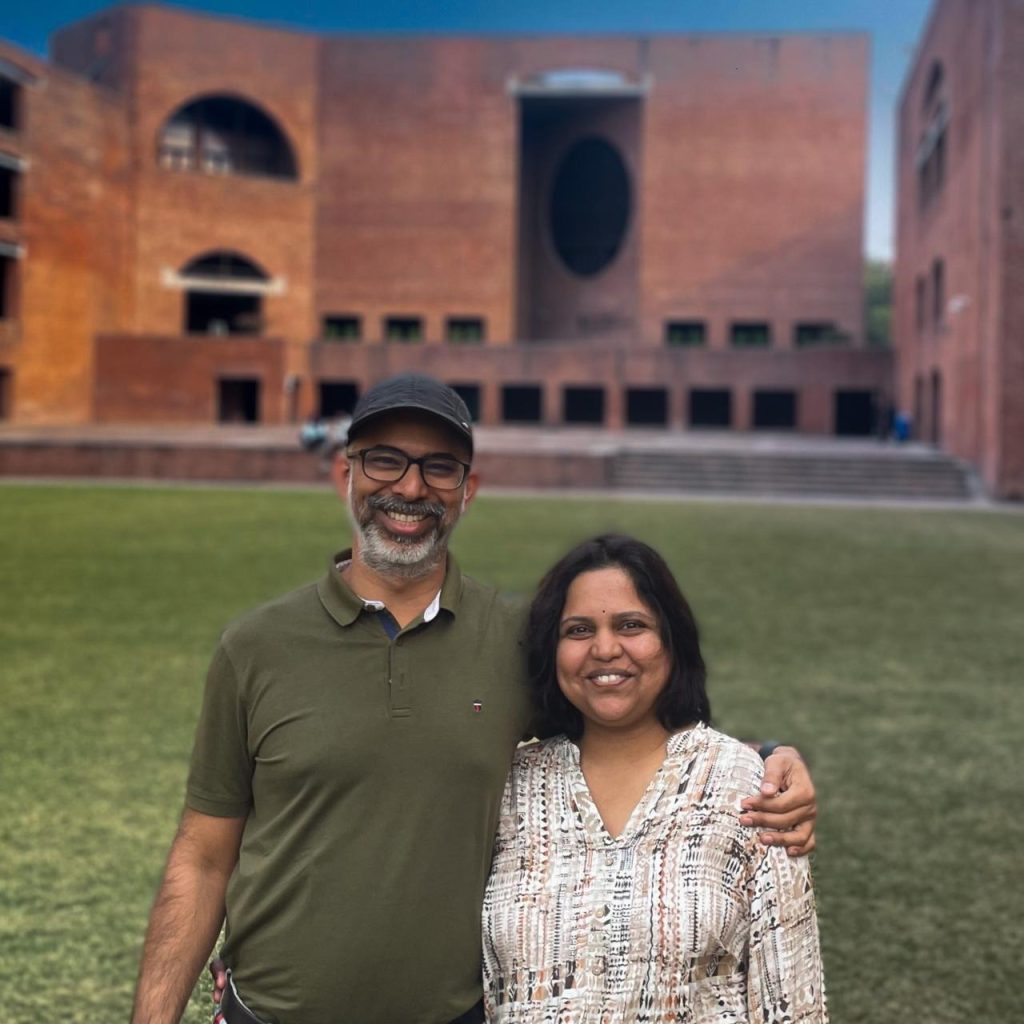
Caption: The author on Campus after 20 years with her husband and kids.
As I began sharing my story more widely, I noticed something odd. People applauded. They called me brave. They said I was inspiring. They nodded with emotion and then… they went back to the way things were. They went back to planning events in inaccessible venues. They went back to assuming two hands, two legs, full mobility as normal.
That’s when it hit me. Most people aren’t cruel, they’re just unaware. They don’t see the problem because they’ve never had to face it. And awareness doesn’t come from applause. It comes from sustained, uncomfortable, collective reflection.
So I kept speaking. I spoke at events. I wrote. I challenged people. I got invited as a speaker but got dropped from the list when I asked for an accessible podium. I got invited to an award ceremony and couldn’t receive my award because the stage had stairs. I let the organisers know. The next year, they built a ramp for me because I was getting an award again. The year after that, when I wasn’t receiving an award, there was no ramp. That’s not inclusion. That’s accommodation. That’s not empathy. That’s sympathy. Inclusion cannot be occasional. It cannot be reactive. It cannot be a favour. We can’t retrofit dignity. We must build it in and we all should collectively own it.
Why is it very important now?
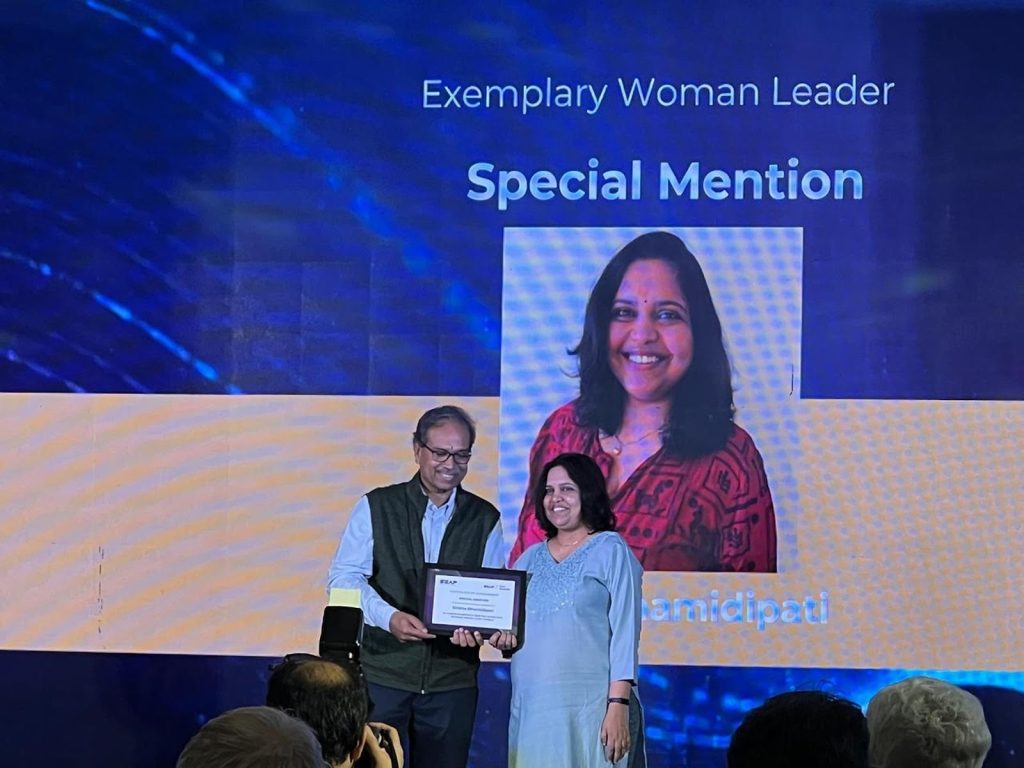
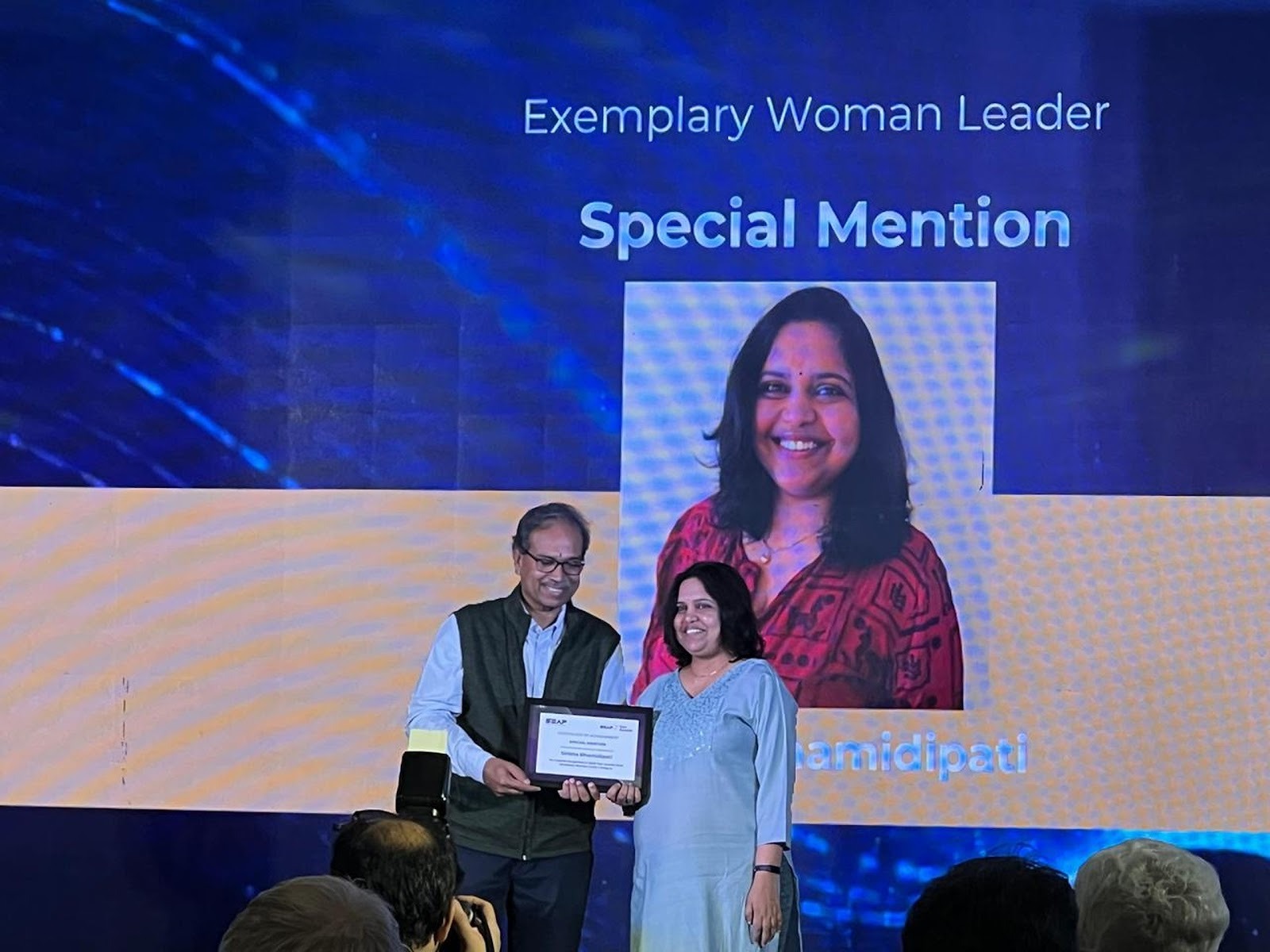
Caption: The author being recognised as an exemplary Woman Leader at a recent award ceremony.
India is changing. We are living longer, working longer. The future will have 20-year-olds and 70-year-olds working side by side. In this world, accessibility won’t be a special case; it will be a default necessity.
Disability is not just about wheelchairs or walking aids. It’s old age. It’s a chronic illness. It’s a temporary injury. It’s invisible. It’s mental health. It’s fatigue. It’s one hand not working. It’s hearing loss. It’s neurodivergence. It’s grief. It is someone who cannot function the way society expects. It is all of us, sooner or later. For a year, a season, or a lifetime. But when we don’t plan for this reality, we exclude people – slowly, silently, systematically. We exclude them from events, jobs, friendships, opportunity, dignity and that exclusion could be devastating for the society.
What I want to see:
I commit to building SAMAVESHI BHARAT – A citizen-driven vision of Belonging and Dignity. I want to build an India where accessibility is not an afterthought but a prerequisite; it is non-negotiable and not a checkbox, not a favour. The rule, not the exception.
Where no child grows up hiding. No adult is denied opportunity because of infrastructure. And no woman has to type with one finger and prove her worth ten times over just to be seen as enough.
I want an India where ramps are not rolled out when I enter but they are always there because they’re supposed to be because someone might need it. Because all of us will, someday.
Where DEI is not a tick-box in boardrooms, but a lived value felt in classrooms, offices, auditoriums, buses, footpaths, swimming pools.
How I think we can get there:
This change is not complex. It’s not even expensive. It just requires intent. Here’s what I believe we must do collectively:
- Change how we approve Infrastructure: No public or commercial space, school, office, hospital, apartment, theatre, should be allowed to register unless it meets basic accessibility norms. Not as a CSR initiative but as law. Make roads and public transport more accessible for all forms of disability
- Hold Leadership accountable: Leaders who rent office space, event organizers, school leaders – must be accountable for accessibility. Every time you select a venue, hire a designer, ask: Can everyone be here? Can everyone belong here? If not, why not?”
- Make ‘Accessibility Audits’ routine: Make inclusion a compliance checklist. And not just for visible disabilities. Do you have quiet zones for neurodivergent employees? Do your digital tools accommodate screen readers? Do your cafeterias allow one-handed serving? Are restrooms usable?
- Start young: Teach school children about disabilities. Build it into the curriculum. Show them that difference is normal. Empathy cannot be taught at 25. It has to begin at 5.
- Build awareness: Speak. Share stories. Use language that reflects dignity, not deficit. Don’t glorify survival. Normalize access.
- Shift the narrative – from pity to policy: I don’t want people to cry when they hear my story. I want them to act. Create guidelines. Push for policy. Hold institutions accountable.
This is not my fight alone
I’m not trying to be a hero. I’m just someone who lived through what the world doesn’t talk about enough. I am extremely lucky to have a husband who supports me unconditionally and to be surrounded by a loving family. I also want to be the voice for the tens of thousands out there, silently suffering while trying to ‘fit in’; or even better, get their voices heard. I believe we have a chance, right now, to reimagine what it means to be a society.
This is about building a country that truly belongs to all of us. Inclusion is not about grand gestures. It is about everyday choices. It is not about inspiration. It is about infrastructure. It is not a movement for a few. It is a mindset for all. The India I want to grow old in is the one I feel I belong; not one that waits for people like me to ask.
If you were moved by my journey, don’t stop at emotion. Align. Let it move into action. Audit your spaces. Call out exclusion. Make inclusion your default.
We have started on a plan and are working on some of the ideas. But this needs to be a movement for real change to happen. If you want to be a part of this change, do drop me a note at mailtosirisha@gmail.com. There is something for everyone to do.
Sirisha is the Co-founder and Managing Partner of a Management Advisory firm, Align by Design, where they help companies minimize the “Think- Say-Do” gaps by driving alignment and helping build repeatable systems and processes.