
By Prasad Ashok Thakur | PGP 2016
During placements season, most of MBA graduates aim for corner offices in the corporate world. I chose four million bosses — and looking back, it was the best decision I ever made. I was headed to Pune Municipal Corporation (PMC). What I could not yet say — what only the next two years would teach me — was that I had enrolled in the most rigorous, unforgiving, and ultimately transformative leadership programme of my life. No fees. No faculty. Only megacity-sized aspirations, and the question of whether a fresh MBA graduate could do anything meaningful to realize them.
I. NAVIGATING THE MINDSCAPE FOR THE CITYSCAPE
An MBA programme primes students to navigate the present and future of corporate landscapes. What no case study prepares you for is standing before seasoned politicians, astute bureaucrats, social leaders, and a vibrant and dynamic media as the youngest person in the room. Equipped only with an analytical mindset and a conviction to make a difference. That was my reality. There was no precedent for an MBA recruit at a municipal corporation. There was no playbook.
The first instinct of a freshly minted business school graduate is to optimise for quarterly performance metrices. Though this mindset is important, there is more to it in the municipal corporation context. The wiser instinct — one I had to cultivate deliberately — was to understand the system from a medium to long-term socio-economic and political lens before attempting to transform it. Contrary to popular portrayal, not all municipal corporations are dysfunctional; they are optimised differently, chiselled by the incessant impacts of political economy and resource constraints. Every conversation with Pune’s members of parliament/state legislature, the mayor, the commissioner, elected general body members, ward officers, citizens and the media – every site visit to water treatment plants, municipal schools, government hospitals brought a profound understanding of what it takes to keep a megacity going. The career I had chosen was, by every conventional metric, the road not taken. What I did not know during my tenure was that it would ultimately lead me to changing in the very mindset of city representatives and officials, for the better.
II. MARKETS, MANDATES, TRUST
“Public finance teaches you to spend others’ money as if it is your own. Every basis point shaved off that coupon rate was millions of rupees that remained with the citizens.”
In June 2017, PMC launched India’s first and largest listed municipal bonds programme (INR 2300 Crore). The first tranche of INR 200-crore, listed at the Bombay Stock Exchange (BSE), was oversubscribed six times. It attracted over twenty institutional investors at a coupon of 7.59% — a remarkable outcome for the third tier of our government, in a market deeply sceptical of urban local body finances. The numbers, however, do not fully depict what went behind the scenes.
With counsel from the United States Department of the Treasury, PMC’s accounting practices were benchmarked to global standards. Thereafter, India’s first three-layered debt capacity analysis was completed, and a unique debt servicing framework was designed to instil the confidence to sustain the projected borrowing over fifteen years. Credit enhancement measures pushed the bond rating to new highs (AA+), the first for a municipal corporation. This was verified and re-ascertained by two reputed, independent, rating agencies. All these measures unlocked investor appetite for these bonds. Leveraging the capital markets, a path to public accountability was paved.
The Asian Development Bank Institute (ADBI) featured PMC’s bonds issue as a landmark development in India’s urban finance saga. My book on this pathbreaking initiative, was published by the Ministry of Housing & Urban Affairs, Government of India for other cities to consider and emulate.
The lesson was unambiguous: analytical rigour and socio-political expectations are not opposing forces. The most elegant financial structure fails without stakeholder trust. The most popular mandate collapses without rigorous architecture. At PMC, I was able to hold both, simultaneously.
III. DIPLOMACY AT THE WARD LEVEL
“Credibility is conferred by a degree. It is sustained, arduously, in the field — one difficult decision at a time.”

Municipal corporations are most visible while performing functions like repairing roads, issuing building permits, manage urban waste etc. The idea that a city can maintain structured technical collaborations with foreign governments and multilateral agencies was, in India, entirely without precedent. Establishing the country’s first ‘foreign relations’ cell at a municipal corporation was therefore as much an act of institutional reimagination as it was strategic foresight.
The results surpassed all expectations. Partnerships with the UK’s Foreign and Commonwealth Office shaped the master plan for Pune’s smart-city area. Collaborations with United States Department of the Treasury helped infuse credibility in the municipal bonds program mentioned previously. The Rockefeller Foundation’s 100 Resilient Cities programme created the position of Pune’s first Chief Resilience Officer. Collaborations with Canadian institutions spanning cybersecurity, environmental sustainability, and public health exchange enriched decision making. India’s first City Digital Strategy, built on the PMC’s partnership with Tel Aviv and Barcelona, became a national reference document. These exchanges created capabilities for Pune that allowed it to be rated as amongst India’s top three most liveable cities. Globally, Pune had made a mark as a city open to bold new ideas. It became a preferred city to stay, work, learn and enjoy.
The ADBI featured this amalgamation of cultures, continents, and urban-development agendas as a practice for other cities to emulate. The outcomes of the foreign relations cell proved something harder to quantify – that balancing of expectations in a coalition of foreign specialists, multilateral banks, and local stakeholders, simultaneously, is as much an exercise in analytics as it is in art.
To anyone who feels the pull of contributing to the urban transformation saga of our country: The megacity city was my boardroom, my laboratory, and my professor. It gave me a training that is one of a kind — the confidence of having navigated genuine uncertainty, at genuine scale, on behalf of four million aspirations. If you yearn for such an experience, our cities are waiting.
Author Bio:
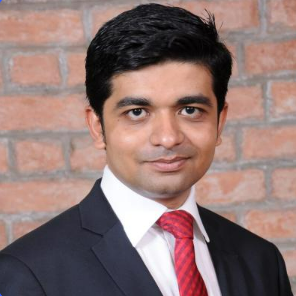
Prasad Ashok Thakur is a business leader and influences the interplay between technology, business, and policy in achieving global net-zero and energy transition targets. He is an author of 2 books, and his insights are regularly published by multilateral agencies, global think-tanks, and popular digital/print media. His interventions towards bridging the gap between ideas and execution have received several awards. He advocates the infusion of digitally smart attributes in climate solutions to accelerate global partnerships. He is a CIMO scholar, and an alumnus of the Indian Institute of Management Ahmedabad, Indian Institute of Technology Bombay, Indian School of Business and Aalto University.