
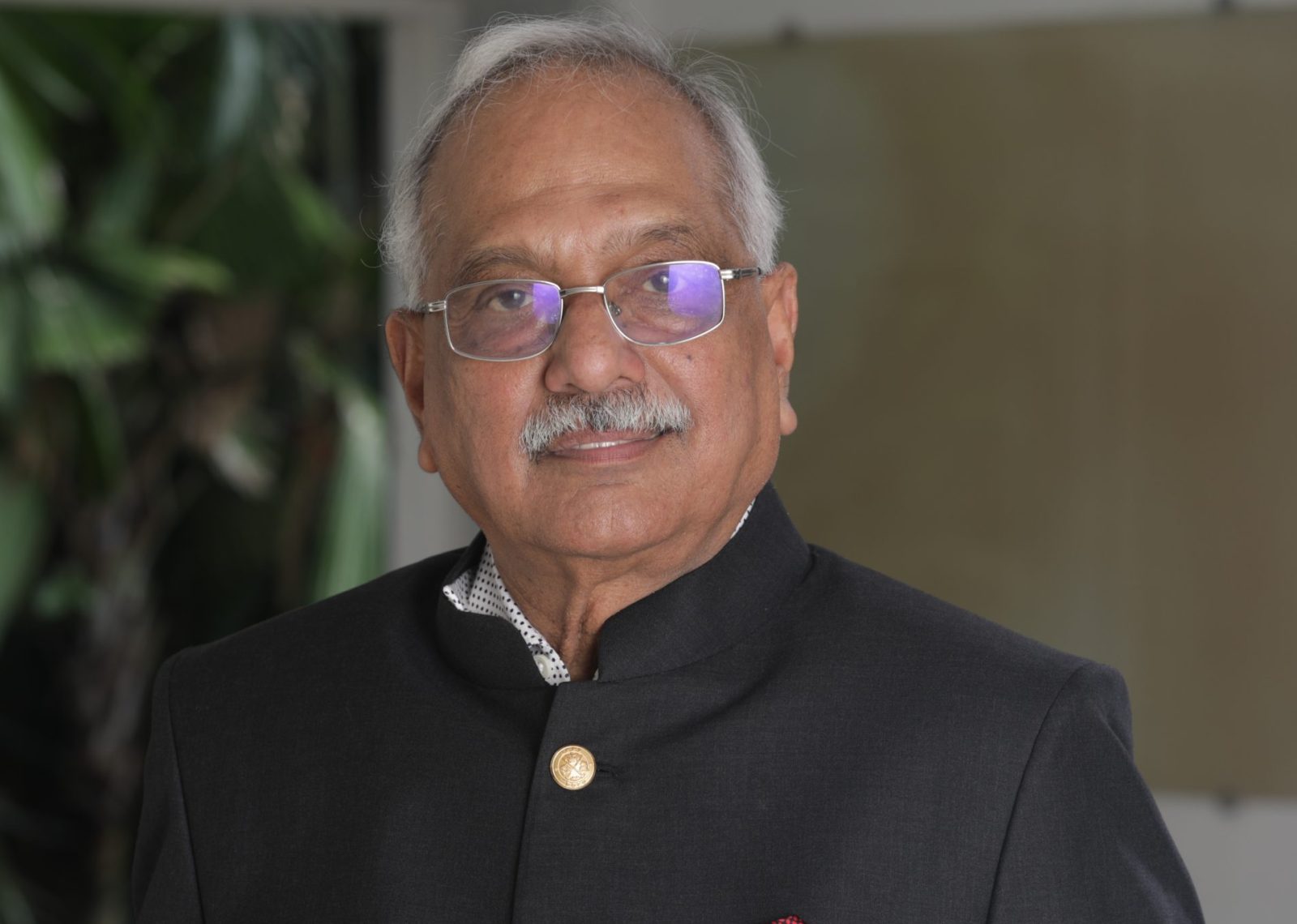
By Madan Mohanka, PGP 1967
Micro, Small and Medium Enterprises (MSMEs) are vital to India’s economic and social progress. They generate employment, support local communities, strengthen supply chains, foster entrepreneurship, and contribute to manufacturing and services. Beyond business activity, they create opportunity, encourage inclusive growth, and help translate economic progress into widespread prosperity. As India advances towards Viksit Bharat, the success of millions of MSMEs will help shape that journey. The stakes are national, not merely commercial.
Viksit Bharat is more than an economic target; it is a national aspiration that calls on people and communities across India to contribute their ideas, energy and enterprise. When MSMEs have the support, stability and freedom to grow, they can turn this promise into everyday reality. They transform ideas into businesses, create livelihoods, encourage innovation and keep supply chains moving, driving growth from the ground up.
The story of Viksit Bharat will not be shaped in boardrooms alone. It will be written every day by millions of enterprises across the country.
For growth to create opportunity everywhere, MSMEs must thrive beyond major cities–in districts, small towns, and rural communities. They help bring industry, investment, and livelihoods closer to people, enabling them to move from seeking opportunities to creating them and opening doors for others. Every entrepreneur who creates a livelihood is also helping to build the nation.
Yet growth cannot be taken for granted. Natural disasters, climate-related disruptions and changing economic conditions can affect suppliers, customers and access to credit at the same time. Resilience is therefore as important as expansion. Enterprises that anticipate change, strengthen their foundations and adapt quickly will be better positioned to create long-term value.
Our ambition must move beyond Made in India. We should build products that are Designed in India, Made in India and trusted around the world. India’s competitive edge will depend not on scale alone, but on innovation, quality and trust. Businesses that keep learning and adapting will need to use technology, improve design and productivity, and make innovation part of everyday work.
Creating capability must become as important as creating capacity. Expanding production alone may not be enough for MSMEs aspiring to compete nationally and globally. Sustainable competitiveness requires investment in skills, product development, quality systems, innovation and customer value. Enterprises that move up the value chain can build enduring global relevance.
Technology is no longer out of reach for smaller businesses. Digital tools can help MSMEs work smarter, reach more customers and expand with greater confidence. Artificial Intelligence can build on this advantage by helping them interpret information, make faster decisions, raise productivity and explore new markets. Technology can be a powerful equaliser, giving even the smallest enterprise greater confidence to compete globally.
The next chapter of MSME growth also depends on formalisation. India can build a strong manufacturing economy only when its MSME base is resilient, credible and properly supported. Many enterprises are still unable to fully use the financial, regulatory and developmental assistance available to them. Greater awareness, practical training and stronger engagement with formal institutions can bridge this gap. Early, lasting relationships with banks can improve access to finance, strengthen governance and provide a more stable platform for growth.
Growth must also be responsible. Economic progress and environmental care are not competing goals; sustainability must be embedded in how businesses operate and expand. Women entrepreneurs will be vital to this transformation, bringing experience, skills and fresh perspectives to India’s growth story. No nation can fulfil its potential if half of its talent is left on the sidelines.
Continuity is another challenge. Many enterprises are navigating generational transitions, and attracting the next generation to manufacturing and small-business ownership will help preserve valuable knowledge while creating new pathways for innovation and growth. Entrepreneurship must be encouraged as a long-term aspiration.
Not all MSMEs follow the same growth path. Sectors face different opportunities and constraints, so support mechanisms must reflect these realities. Identifying high-potential enterprises early, offering targeted guidance, and helping them scale responsibly can accelerate their contribution and strengthen India’s long-term development.

Viksit Bharat cannot be built by government or large corporations alone. It will take millions of entrepreneurs, innovators, and people willing to take thoughtful risks and create something enduring. MSMEs are more than economic units: they are partners in nation-building, rooted in the communities they serve. The strength of Viksit Bharat will be seen not only in the size of the largest companies, but also in the ambition, productivity, and success of the smallest enterprises.
As India’s MSMEs become more productive, innovative, digitally capable, sustainable, and globally connected, their collective impact can reshape the country. The road to Viksit Bharat runs through every workshop and factory, start-up and family-run business, and entrepreneurial venture across the nation. That journey has begun, and India’s MSMEs are ready to help lead the way.
Author Bio:

Mr Madan Mohanka, an esteemed alumnus of the second batch of IIMA (PGP 1965-67) and one of the first alumni entrepreneurs of IIMA. He is the Chairman and Founder of Tega Industries Ltd. He has published two books, Professor Extraordinaire, about his mentor, Prof. V L Mote, and I Did What I Had to Do, a biography by Anjana Dutt tracing the history of Tega Industries Ltd. He lives in Kolkata and can be reached at madan.mohanka@tegaindustries.com.
The book was launched by Mr Narayana Murthy, Chairman Emeritus of Infosys.
Mr Mohanka also helped to create a case center, namely the Madan Mohanka Centre of Excellence in the case method of learning at IIM Ahmedabad.