

Arts/ Entertainment/ Sports
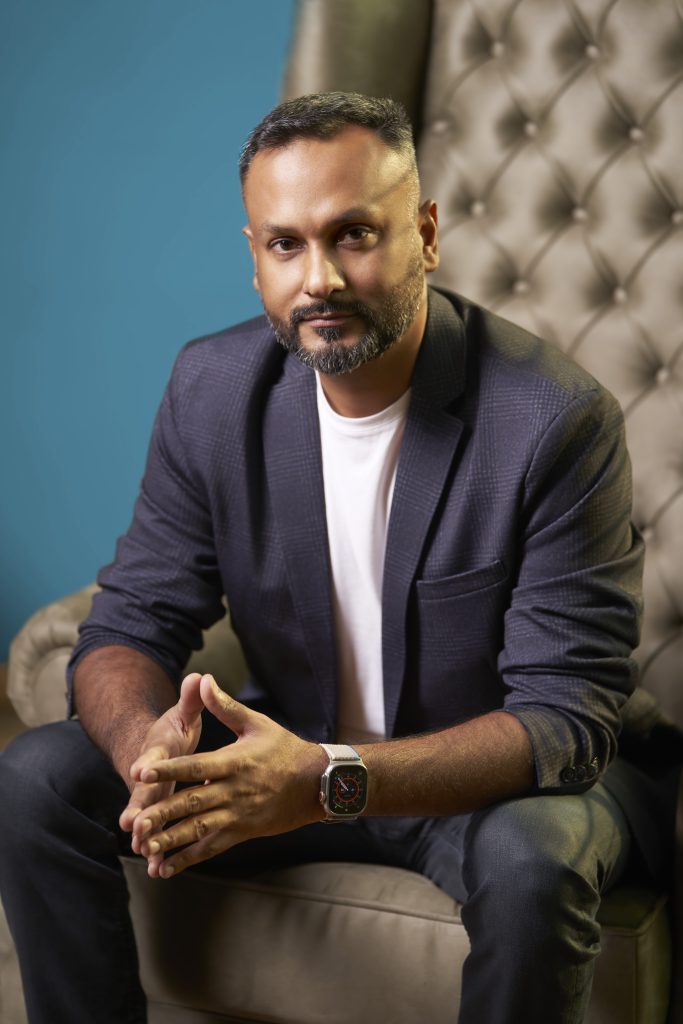
Ankur Garg is a film producer with a blend of an innovative mindset and sharp business acumen. Hailing from Ghaziabad, Uttar Pradesh, Ankur’s journey has been unconventional.
A graduate of Pune University and an alumnus of the prestigious Indian Institute of Management Ahmedabad, Ankur laid the groundwork for a robust career with a formative stint at Microsoft Corporation. In 2012, driven by a desire to create, he transitioned into the world of films — co-founding Luv Films with his childhood friend and celebrated filmmaker Luv Ranjan.
Over the next decade, Ankur played a key role in shaping Luv Films into a prominent production house, known for commercial hits and content-rich narratives alike with movies such as Sonu Ke Titu Ki Sweety, De De Pyaar De, Tu Jhoothi Main Makkaar, Vadh, Malang, Chhalaang and most recently the Marathi film Devmanus.
Simultaneously, Ankur’s entrepreneurial drive led him to establish IFI Techsolutions, a cloud and managed services company that earned global recognition— including being named a Microsoft Partner of the Year Finalist in 2020.
Recently in 2024, Ankur was conferred with the prestigious Spanish Knighthood honour – la Cruz de la Orden del Mérito Civil as a recognition of his contributions to cross-cultural cinematic collaboration on Tu Jhoothi Main Makkaar.
Ankur continues to lead a slate of upcoming movies, including De De Pyaar De 2, a biopic on cricket legend Sourav Ganguly, Vadh 2, and other highly anticipated ventures.
From the corporate world to creative landscapes, Ankur Garg’s consistent focus on building with intent — and his commitment to distinctive, original work — reflect the evolving spirit of today’s entrepreneur.
How does it feel to receive the Young Alumni Achiever’s Award?
So to be very honest, I have received multiple team and individual awards while at Microsoft, and our film industry is full of awards, but this Young Alumni Achievers Award just hit very, very differently. I very clearly remember a few weeks back, when I got an email from the director intimating me about this award, I was just going to get on my horse in the London countryside for my ride. And I am generally very focused when I am riding. But for some reason, as soon as I saw the email, I found myself frozen for at least a few good seconds. While on the ride, I could not think of anything else. It’s dangerous when you are on horseback to be thinking of anything other than the ride. But what it means for me is that it’s probably a validation of a lot of decisions that I have taken in life, and I think also acknowledging the contribution of the role that a lot of people have played in my life. So that’s how I see this award. I don’t really see this as an individual award for myself, but you know, a lot of different people that you meet at different walks of life who play some part or the other in your life.
You transitioned from a corporate career at Microsoft to co-founding Luv films. So what motivated you to shift industries?
More than ‘what’, it was ‘who’ that motivated me. My childhood friend, who is now my business partner and a very accomplished filmmaker Luv Ranjan. He’s the one who really came after my life, convinced me, brainwashed me, “Let’s do this. Let’s do this together.” He had already directed one film and was on his next, that’s when he said, “We both can really do it”. So that’s how the seed germinated. I am talking about 2012, when the whole concept of startups and fundraising was not really common and well-known. Our generation was really coached or schooled to look at stable careers. But after a few years at Microsoft, I was confident that I am pretty good at my job, and if I were to quit my job, try out something, I can always get back to a tech career. I think that made me a little confident about being able to take the plunge of leaving Microsoft. On top of it, my manager and my mentor, Mr. Ramkumar Pichai, told me a very, very simple line, “Ankur, I am sitting here. I am not going anywhere. You do whatever you want to. As long as I am here, there will be a job waiting for you”. He did say, “I am very confident that you would not have to take that path. But don’t worry about this, I am here.” I think that made it very simple to be honest. I was not really a film buff at that point in time, but the whole business of films, of cinema, was very enticing.
As a producer, how do you balance creative vision with business strategy to ensure both critical and commercial.
At the end of the day, it’s a teamwork and a good understanding of the market, of the industry and a lot of people coming together. That helps us being able to really form this right balance.
I would not call it just me as a producer, but I think it’s the team of me and Luv as producers, where we are able to play a balanced role. He’s a writer, director, first, and producer later; I’m a producer, so he is the one who is able to imagine a lot of stories. He is able to bring a lot of creative element into our stories, whereas the whole business aspect of it, when combined with this creative vision, we are able to imagine stories. We are able to tell stories which are not just critically acclaimed, but also commercially feasible and commercially successful on box office. At the end of the day, it’s a teamwork and a good understanding of the market, of the industry and a lot of people coming together. That helps us being able to really form this right balance.
There is a rapid change in the rise of digital and OTT platforms with evolving audience preference. So how do you see the role of producers evolving in this new landscape?
Let’s think from an audience perspective. The audience today has the choice of content from a 30 seconder Instagram reel to maybe a two hour film to hours of binge watching of a TV show that too scattered across a screen as small as a mobile device, maybe a bigger screen TV in their living room, or a full theatrical experience. That’s the choice the audience has. These days they can decide what to watch, where and based on the amount of time they have. So what this does is it puts a lot of pressure back on producers like us. We are no longer only a traditional investor or a financer in a project, while that is one part of what we do, but it does come with a very significant responsibility to be able to figure out the right stories, right medium for these stories and the right audience for the stories. There could be stories which are fit for only a very specific segment of audience and tailored for a specific screen, whereas there are stories which could be a lot more universally appealing to all the audience, can be consumed on any of the screens. So that is how things have changed. That is what, that is, the responsibility that we as producers have today. It’s no longer about just putting money on a project. It is also about being able to figure out that story, figure out that film and the medium and the audience we want to make it for.
Let’s think from an audience perspective. The audience today has the choice of content from a 30 seconder Instagram reel to maybe a two hour film to hours of binge watching of a TV show that too scattered across a screen as small as a mobile device, maybe a bigger screen TV in their living room, or a full theatrical experience. That’s the choice the audience has. These days they can decide what to watch, where and based on the amount of time they have.
What personal philosophies or habits helped you sustain your drive?
This is a business which, without having a fair amount of risk appetite, will probably not take you anywhere. So I think what this does is as a personal habit, it does inculcate a characteristic in you to be able to take a calculated risk or a well-hedged risk. This is a business or this is an industry with a fairly low success rate if you’re trying to judge yourself or your business based on a single failure, or maybe a couple of them, or a single success, or maybe a couple of them, that probably will be an incorrect way to do it. This is a business that you have to see over multiple films or multiple projects. So what this means is, as an individual, you need to have that ‘never let-go’ attitude. It comes with a certain amount of discipline, which is very important. I think every entrepreneur needs to have a certain amount of discipline. But this business does require a lot more discipline.
What would be your advice to somebody who wants to pursue a creative field like yours?
I think this is probably a perfect time where the industry is not only about superbly creative people but the overall industry has expanded. It requires people who can come with a very different mindset and exposure as well. The creative roles are important but even the business roles are now equally important. So people or students who think about being part of media and entertainment industry, this probably might be a good time, even if you feel that you’re not superbly creative, or you’re not someone who’s a writer or who wants to be a director, but you could still wear multiple hats. With your business sense over a period of time, you can probably also sharpen your creative skills. So like I said, there is [space for] different type of content and mediums. So that that gives an opportunity for a lot many different roles and a lot many different type of jobs and basically a diversity of thinking. I think this industry can probably do with having a lot different views and thinking that can help us go a lot forward.
Watch on YouTube: https://youtu.be/QnsxlsnLKes?si=eWB8B41T2sK8gNfb