
CORPORATE LEADERSHIP

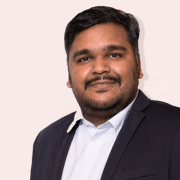
Ashish Lakhotia is a forward-thinking professional with over 20 years of experience in the Agri-inputs industry spanning fertilizers, crop protection, seeds, and farm implements. He is currently the CEO, Fertilizer and Agri Inputs, ETG, Dubai, leading a company of over 1,600 employees, generating $1.5 billion in turnover, and impacting more than 20 million farmers across 30 African countries. He is now expanding the business beyond Africa into Latin America, Europe, Asia, the Middle East, and North Africa.
Mr Lakhotia is committed to transforming farmers’ lives through innovation and sustainable practices. Through digital innovation, integrated agri-solutions, strategic acquisitions, and cross-border expansions, he is committed to making agricultural inputs more accessible and creating a sustainable future for farmers worldwide. In recognition of his contributions, he received the Golden Frame Award for Agri-Business Leader of the Year at the Gulf Business Awards 2023. Mr Lakhotia also plays a vital role in shaping the global fertilizer industry through his involvement in the International Fertilizer Association (IFA) where he was the Chairman till 2024.
Mr Lakhotia is a Chartered Accountant (CA) from ICAI and holds a Master of Management Studies in Finance from VESIMSR, Mumbai. He is also an alumnus of IIMA (AMP program) and INSEAD.
Congratulations Ashish on winning the Young Alumni Achiever’s Award. How does it feel to be back in the campus and receiving this award?
Firstly, thank you to IIMA and to all of you for organising this. Coming here after seven years, I can still relate to some of the old memories, and getting an award from IIMA is not even a dream that I had. So I am really humbled. I am honored. I thank everyone who became part of this journey for me to receive the award.
Looking back over your 20-plus years in the Agri-inputs industry, what have been the most transformative moments in your career?
Wow, 20 years looks like a flash, but there are a couple of areas which become transformative for what we are today. Early in my career, we thought that the current model in which the agrarian foods got distributed in Sub-Saharan Africa needed a redefining role. Therefore, that directly connects to the farmers, and having a two-way supply chain makes an impact, showing the value to the farmers, seeing that they grow, because when they grow, we grow too. Those are things that really helped shape our business. We also had moments where we added multiple product baskets, not just fertilisers, but then we started with seeds and crop protection items, and farm implements, so that we bundle the full solutions to the farmers. That sort of became another big thing. We went into expansion from one or two countries to multiple countries are now global. Every time you expand, it comes up with its own set of challenges. So taking up that opportunity is something that becomes transformative, leading in uncertain times, particularly since the COVID-19 supply chain got disrupted, and everything got impacted and touching the livelihoods of millions of people, because we are in the agriculture business. So, navigating that, navigating the Russia-Ukraine war, which is a big component of the supply of fertilisers. Again, we grew during that time and recently, now, with the current tensions that is surrounding the Middle East. How we navigate every time there is a crisis, which comes up with its own sort of challenges and opportunities, becomes an important aspect of this growth journey.
That directly connects to the farmers, and having a two-way supply chain makes an impact, showing the value to the farmers, seeing that they grow, because when they grow, we grow too.
Can you talk about your career journey and how did you ended up here as a CEO?
It was an accident. So I come from Mumbai, and I am a chartered accountant. I did MBA from Swami Vivekananda College, and then I wanted to go abroad, to basically make more bucks. Then I landed up in Dubai, and then in Tanzania. It was by fluke. I didn’t know that I was going to be posted in Tanzania when the offer letter came, and I went there. There was not too much known about Africa at that time, 20 years back, when there was no internet, and not much communication. We went there, we explored, and we kind of liked the place. So for two years, I worked with the Aditya Birla group there, and then ETG was the prominent name, and I started the fertilizer desk that was in Dar es Salaam, Tanzania. So I joined them in 2006, and since then, it has expanded. In 2012, we decided we move our headquarters to Dubai. And then in 2015-2016, we got a Pension Fund from South Africa to invest in the company. And 2020-22, we got SABIC Agri nutrients, which is a subsidiary of ARAMCO, to then buy the shareholding of PIC. So, since 2016, I have been the CEO. And in this entire journey, going to the farms, learning on the farm, learning on the job. Coming from Mumbai, you don’t go to farms, don’t see fertilizers, but being in Africa, the job really rewarded me with a lot of rich experience.
What are the rapid changes in global agriculture? What trends do you think will shape the future of food security?
Food security is a very critical aspect of most governments, whether it is the Arab world, where the land is largely deserted, or whether it is Europe, or whether it is the U.S., we see food security being talked about increasingly. In the last 100-150 years, there has been a lot of research that has happened in this space. Talking about the food ecosystem, from an agri-inputs perspective, let me talk about seeds. And there is a lot of research that is getting done on seeds, creating seeds that are high-yielding varieties, creating seeds that are drought-resistant. A lot of historical chemicals, which are not environmentally friendly, are increasingly phased out. There is a big push moving towards a greener type of fertiliser, the circular economy in the agriculture sector. More and more, we will get into those areas where, when you want to produce food, you produce food with less inputs, with less climate impact and something that is more sustainable and rewarding for the farming community.
Is there also a movement towards the local economy and local kinds of food that grow locally for the local market?
Oh, yeah, quite a few economies have done pretty well there. India, for example, we see a huge revolution and change from what 1960s-70s to now, when we are a net exporter of food. I see the same trends in other places, whether it is Asia or Africa, where they were predominantly importing food, now they are more or less self-sufficient in most cases, even Middle East countries like Saudi they are promoting food production. So, irrespective of the cost of producing food, the trend is that the more local the food is grown, you’re creating that entire ecosystem for farmers, for traders, for Ag dealers, for transporters, for port operators, for government organisations. So it’s beyond just demand and supply. It’s creating that whole circular economy.
How did your experience at IIMA influence your approach to leadership, strategic thinking, and global business expansion?
IIMA came to me at a point when our business was growing rapidly and we were chasing growth. This was 2018-2019, when our ambition was to grow more. We had corporate shareholders, and immediately after that, we had constantly seen a shake-up in the global economy, whether it was COVID or whether it was Russia-Ukraine war, or whether it was international trade war. The frameworks, the tools that we have learned at IIMA they are now handy. They taught me that a crisis can be an opportunity, that a growth mindset should be prevalent even when there are cases of disruption. I think my learning was to still lead and grow in a multicultural context, focus more on people, especially in our kind of business where we touch the lives of people, directly and indirectly, and still be empathetic and agile in the ecosystems that we are in. So I would think that those are my greatest learnings coming out of IIMA right after 2018-2019.
The frameworks, the tools that we have learned at IIMA they are now handy. They taught me that a crisis can be an opportunity, that a growth mindset should be prevalent even when there are cases of disruption.
What advice would you offer to the current students who are aspiring to make a difference in agribusiness, or even have global leadership roles?
For current students who are at IIMA? In our agriculture business, we say if the seeds are grown properly and if you have the right kind of seeds, then job is half done. The fact that students are already in IIMA, I think job is half done. But what is going to make a distinguishing factor between the current students and the rest of the cohort is that, firstly, what we learn as tools and practices and case studies in the classroom may not be exactly the same when you go into the field. Therefore, going on the field, understanding the grassroots reality, and staying connected with what is the real sense or the real pulse of the market, becomes extremely important. Second, there is a constant case of unlearning, learning, and relearning. The trends that we just spoke about on global agriculture, whether it is AgTech, whether it is improved seeds, improved agri-nutrients, are going to be the case. And I believe that organisations and individuals who are going to champion that with the low-cost solutions are going to be more competitive. Thirdly, these days, everything is available as far as information is concerned. What is going to make a difference to the incumbent students is to live with those values that connect people, like empathy, like being agile, showing the trust quotient, which I think sometimes is missing in our space. If the students are going to be closer to these human values, then they may make a good professional career. Then take a risk, be bold, be ambitious, relook at the current models, and come up with something that is really revolutionary. Although we have revolution and we have incremental growth in the agriculture sector, I think there would still be a solid case of somebody coming up with a real case of revolutionising the whole agri-input business. Those are the kind of opportunities for the new students.
Watch on YouTube: https://youtu.be/tbIHnI5-BCw?si=ZxvFqNRIVtpYERQP