SOCIAL SECTOR / PUBLIC SERVICE
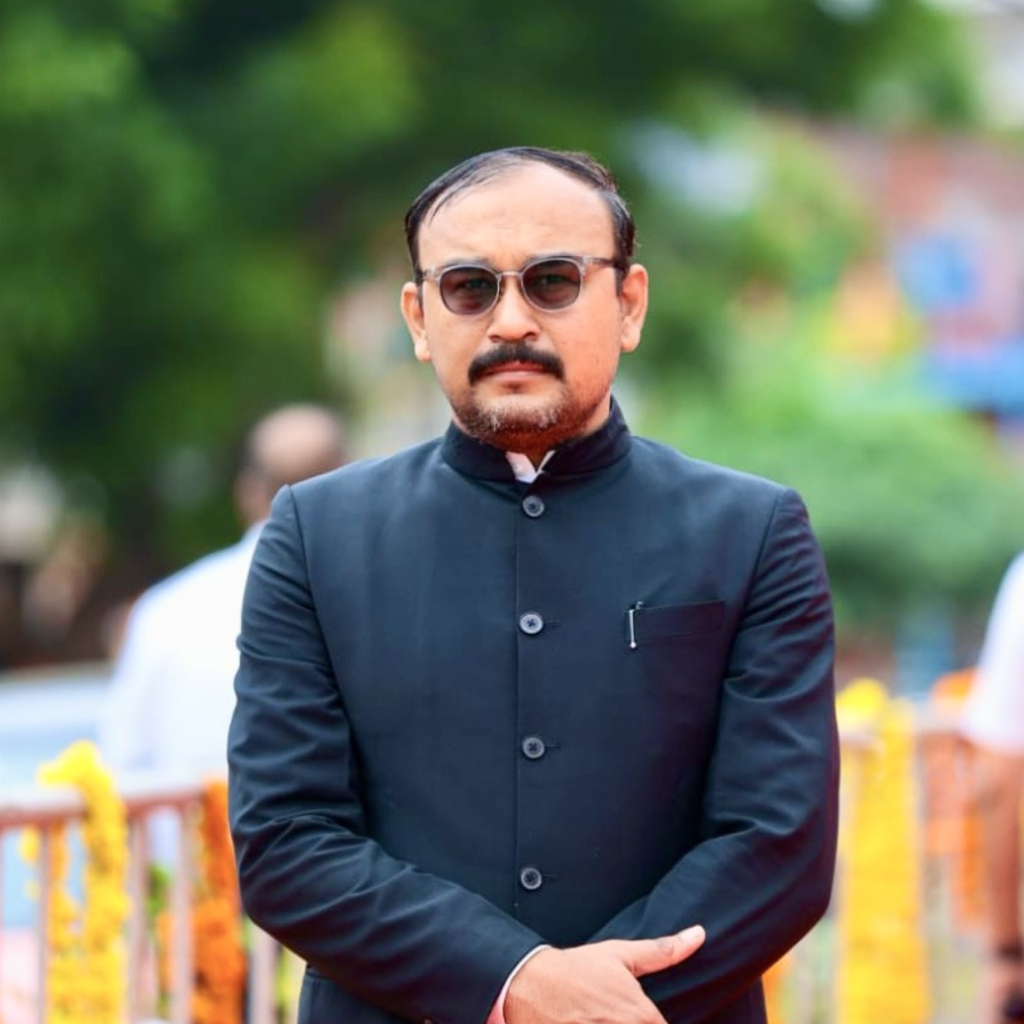
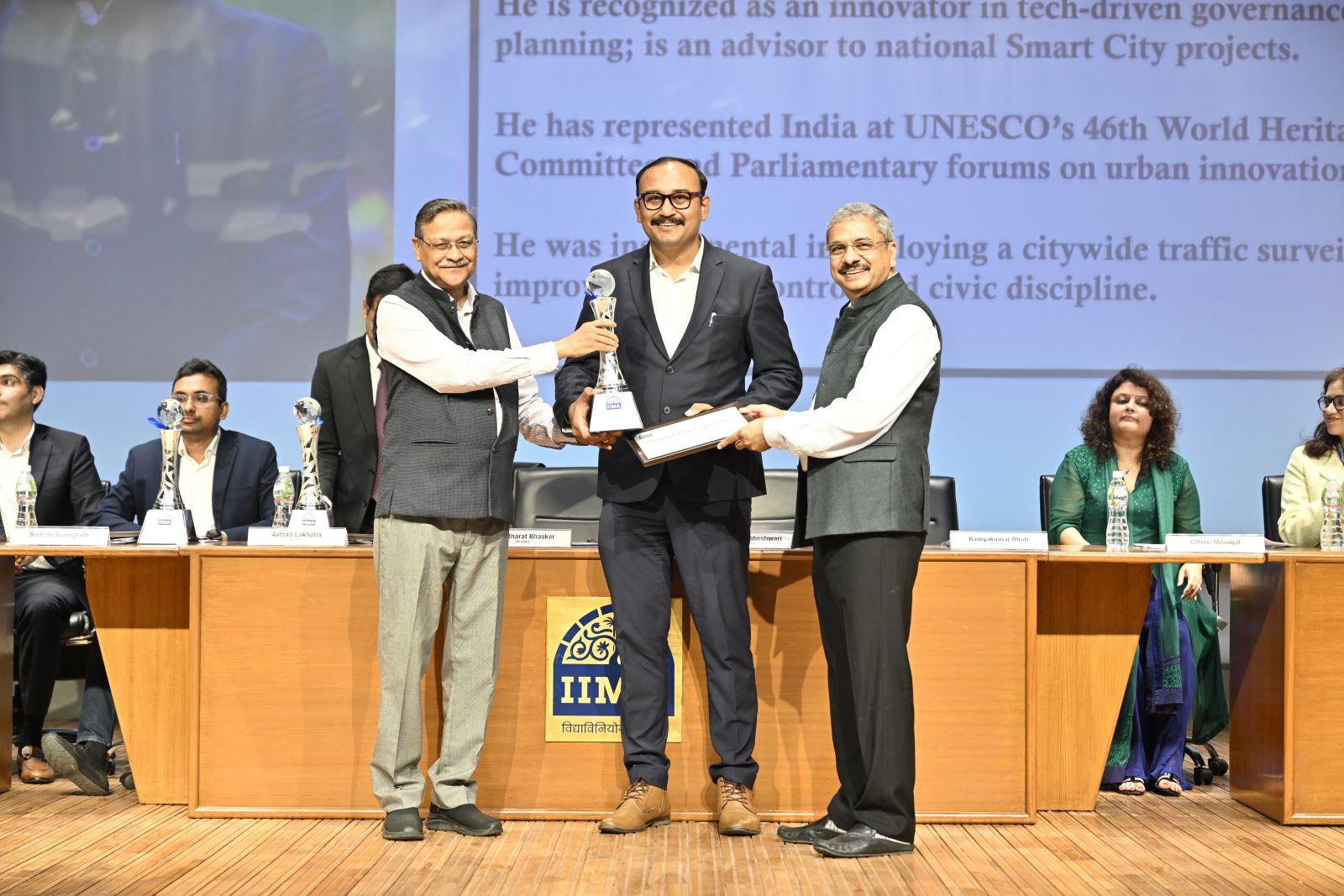
Ramyakumar Bhatt currently serves as the Deputy Municipal Commissioner, Ahmedabad Municipal Corporation, where he leads the municipal administration of the World Heritage City of Ahmedabad, encompassing the historic old city and its surrounding areas.
Since joining the Ahmedabad Municipal Corporation in 2009, Mr. Bhatt has held several key roles and contributed significantly to the city’s urban development through initiatives like the Sabarmati Riverfront Development and Smart City Ahmedabad Development Limited (SCADL). One notable achievement under his leadership was the deployment of a citywide traffic surveillance system, which significantly improved traffic management and civic discipline in the city. During the COVID-19 pandemic, Mr. Bhatt played a critical role as CEO of SVP Hospital, the largest and most advanced municipal COVID-19 facility in India.
A problem-solver at heart, Mr. Bhatt has consistently demonstrated a strong inclination toward innovation and technology-driven governance. He has mentored startups, guiding them in product design and go-to-market strategies. Mr. Bhatt has represented the Ahmedabad Municipal Corporation at several prestigious national and international forums, including the Parliamentary Committee on the Smart Cities Mission and the 46th World Heritage Committee meeting organized by UNESCO. In recognition of his expertise, the Ministry of Housing and Urban Affairs, Government of India, appointed him as a mentor to other Smart Cities across the country.
Prior to his public sector career, Mr. Bhatt worked with GE Healthcare in Bengaluru, where he was part of the MRI Division, contributing to advanced healthcare technologies. He holds a Master’s in Management from IIM Ahmedabad (ePGP, 2019–2021), a Master of Technology from IIT Bombay (2007), and a Bachelor’s in Engineering from Saurashtra University (2005).
What does this kind of recognition from the institute mean to you?
It is a really humbling experience for me. Receiving an award from IIM Ahmedabad is not a small feat. After thorough investigation and everything, I am sure the committee has chosen the candidates, and I am really, really thankful for the committee for selecting me for this award. Getting an award in public service is something that we never dream of, because public services are such a large area, and getting recognised for the work that we do, day in and day out, is really very fortunate. I am very thankful to the Institute and the committee for this award.
You have consistently championed the use of technology for better governance. So what inspired your passion for digital transformation in governance?
I had completed my studies from IIT Bombay on the technical side and was working in a corporate job in Bangalore. From there, I joined this job when I saw that there are tremendous opportunities in creating impact in citizens’ lives. So every time there was some problem, I used to think about how we can solve this problem with the use of technology. And because of that, with my passion in technology and continuous efforts to gain new knowledge, the administration was really helpful and provided me the opportunity to work on projects that would change lives through technology. So that way, I got an opportunity to work on departments like e-governance and Smart city, and we did projects which really changed the lives of the citizens of Ahmadabad.
You have experience in both a Multinational Corporation and the government. How have these experiences shaped your approach to leadership and problem-solving in the public sector?
So when I was working in the private sector, it was fast-paced, result-oriented, and target-driven. When I came to the government sector, I realised that here, they can never achieve 100% consensus on many of the decisions, because it is a democracy, and there will always be another voice in the field. So even if you try to take a decision for the greater good, there will be certain people who will always oppose. So from that, what I learned is that the best way is to have a compromise across both parties and move ahead slowly by taking everybody on board. Okay, so that was a change as compared to the private sector, where the decisions are always in consensus with the guidelines and directions from the top.
You have led high-impact e-governance projects at AMC, including the ERP system, the Citizen Grievance Redressal System, Mobile Field Reporting, and the Common City Payment System. Which project are you most proud of and why?
As I told you, during my tenure of the last 16 years, I got to work on different types of projects. I have seen the technology landscape evolve, starting from the early 2000s-2010, when people started using smartphones. So initially, we did a project where we wanted to remove the jurisdiction burden from the citizen, and we wanted to make sure that the system should be able to identify who was responsible for a particular grievance. So we did a project in 2012-13 where we wanted to make the Citizen Grievance Redressal system online, so with the help of technology that was available at that time, we did this and the onus of knowing the jurisdiction of any complaint, we shifted it from the citizen to the system, and it was really helpful, and people started using it. Then I got an opportunity to work on the City-wide Traffic surveillance system in the Smart-Cities project there, and we created a system which would enforce the traffic rules in the city. I am sure that everybody can say that after 2016, the overall traffic across the city has improved, and we have seen people waiting at this traffic signal even at two o’clock in the night. So that was also something that I could see, the impact I could make on people’s lives. But the most important project that I could say that I worked on was the Common Card payment system. That was a very unique and complex project. It was a Fin-Tech project where we had to work with the banks, the regulators, and also with the technology providers. There were teams across the geography. We used to work till late at night to make sure that we met the deadline. We worked with NPCI because it was the first of its kind project. So we were drafting the rules, the policies, and at the same time, we were implementing on the go. And then NPCI worked with the government of India to roll out the national common mobility card. So for me, the City Card Payment System was a really important project and it was not done anywhere else in the country at that time.
After 2016, the overall traffic across the city has improved, and we have seen people waiting at this traffic signal even at two o’clock in the night. So that was also something that I could see, the impact I could make on people’s lives.
What propelled you to join IIMA?
So back in 2019, I was looking forward to do an MBA, so I was searching for various options available. Given the scenario at that time, I could not take a sabbatical. So this opportunity came up of e-PGP, where the IIMA was allowing us to do a blended course, where sessions were online most of the time, three days a week, and then there are 15 days of campus time. So it suited me, and I applied, and I was lucky to be part of the batch.
How was that experience also changed or shaped your way of working?
Oh, it was totally amazing. See, I had also been to IIT Bombay before, but being in a Technology Institute and being in a Management Institute is completely different. The rigour, the case-study-based methods, and the classwork or homework, everything was different. And while working, we have to complete everything else. So many of our batch-mates used to have online discussion sessions, and it was really amazing. We had to juggle [our work with the studies], and unfortunately, the course was running during COVID, and I was managing the largest COVID hospital in the city at that time. So with that responsibility and managing this put together, it was really a strain on the time schedule, but with the grace of God, both things happened well.
While most of the time IIMA prepares you for the corporate lifestyle, government work ethics are a little bit different. Sometimes you find it to be slow-moving. Changes are gradual, but once it does, it impacts millions of people.
What would be your advice to the next generation who wants to follow your path and work in the public sector?
So there are many, many ways to get into the public sector, right? The best is to come through UPSC. The second one is to join any other organisation, NGO, or something like that if you are into that kind of social service or something like. There are also state PSCs [public service commissions]. But one important thing that people should be able to understand is that working in a government and working in a corporate is different and while most of the time IIMA prepares you for the corporate lifestyle, government work ethics are a little bit different. Sometimes you find it to be slow-moving. Changes are gradual, but once it does, it impacts millions of people. So if you are into that kind of mode of life, that you are ready to be persistent, you are ready to be patient, then I think government jobs and Public sector jobs are really good.
Watch on YouTube: https://youtu.be/O51-5KUTR5M?si=QhVOWuukNRwzc2YE