

Corporate Leadership
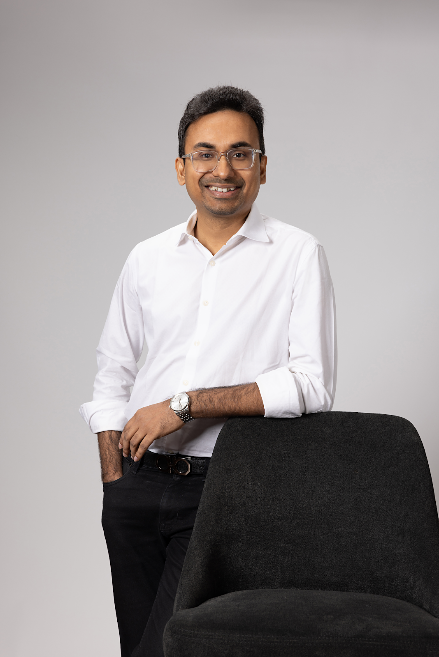
Sudipto Sannigrahi is Managing Director at Z47 (formerly known as Matrix Partners India), one of India’s leading venture capital firms with ~$3B in assets under management. At Z47, he leads investments across B2B Commerce, Advanced Manufacturing, and Deep-Tech sectors including AI, Semiconductors, EVs, Renewables, and Space-tech. He joined the fund in 2016 and became Managing Director in 2023 and is among the youngest to become MD across leading PE & VC funds in India. Over the past nine years, he has invested in more than 15 technology companies at both early and growth stages. Some of the companies he has backed include Captain Fresh, Krutrim, Vegrow, and Farmart, among others. He has also played a key role in expanding the firm’s presence by building its Gurgaon office and community ecosystem.
Sudipto founded and organises one of the largest B2B and deep-tech conferences in India along with an annual report called Digitizing Make in India which is widely referenced in the sector. He works closely with government bodies like CII, MEITY, and DST to catalyze entrepreneurship in manufacturing and deep-tech sectors.
Sudipto is passionate about teaching and also collaborates actively with academia. Since 2023, he has been teaching the course Technology Investing Seminar at IIMA in collaboration with IIMA Ventures and is a guest faculty member at multiple other institutions.
Congratulations, Sudipto for winning the Young Alumni Achievers Award. How does it feel to receive this recognition from your alma mater?
Well, to be honest, it’s truly, deeply humbling. Such kind of recognition from the alma mater makes you feel proud and reflective, but to get it from an institute like IIM Ahmedabad, because of its stature and how formative it has been, it’s deeply gratifying and humbling.
Can you tell me more about Z47? How did that come about?
So, quick background. When I joined from campus, it was called Matrix Partners India. Matrix started in the US in the 1970s. It’s actually one of the oldest VCs in the world and one of the first on the East Coast. We were early backers of a lot of marquee companies, companies like Apple, Sanders, Xilinx, Oculus, software companies like Canva, HubSpot, Zendesk. India started around 2005-06. We have been in India for around 20 odd years. We have been fortunate to back a lot of marquee companies in India. So companies like Ola, Razor pay, Ofbusiness, Ola electric, Five Star finance, One Card, Country Delight, Captain fresh Krutrim. And during the journey, I think we felt at a certain point of time that at least the India team, the brand name and ethos should reflect the aspirations of India, which is why, last year, we rebranded from Matrix Partners India to Z47 as I said, 47 is for 2047, 100 years of India’s independence, developed India and Zee is Zen, which is hopefully it enables us to become in this journey and make the right decisions over the next 22 odd years till 2047 so that’s the focus.
How closely do you work with policymakers? This is about India and a vision for the next couple of decades.
A lot of these industries can’t be built without a favourable policy. For example, if I look at Ola electric journey, it would have been very difficult to be built without conducive policies for EV both through PLIs, which is production linked incentives, so that if you do Capex in the country, you get incentives from the governments, you can actually set up a two wheeler factory, a Gigafactory and FAME subsidies, which subsidize the Adoption of EVs, right? Similarly, if I look at the Ministry of IT, there has been a significant push on semiconductors, and you are in Ahmedabad, and we are creating Dholera right next door, right for semiconductor manufacturing, there are policies called DLIs, which are design-linked incentives, to incentivise startups to actually do Chip design. If you look at India’s AI mission today, and the amount of support that the government is giving to essentially build indigenous AI capabilities for India, so a lot of it is sort of policy backwards, because these are Capex-intensive, long-term sectors, and can’t be built in isolation. If I look at how China was built, it was also policy-driven. Today, the way the US is with its Make America Great Again (MAGA), it’s also significantly policy-driven. So you need to work closely with government and policy, at least in some of these critical sectors.
If you look at India’s AI mission today, and the amount of support that the government is giving to essentially build indigenous AI capabilities for India, so a lot of it is sort of policy backwards, because these are Capex-intensive, long-term sectors, and can’t be built in isolation.
How did your time at IIMA shape your approach to investing, leadership, and ecosystem building?
First of all, when you enter IIMA, it’s chaos. I think most PGP students will tell you that the first few weeks are crazy on campus, right? And when I look back and reflect, it was not what I wanted to learn from the campus, but what I needed to learn from the campus that the campus taught me. What does IIMA PGP fundamentally teach you? I think it teaches you 2-3 things. The first thing is being calm under pressure, because the first few weeks just put you under so much pressure and chaos and running around, but being calm under pressure, showing up every day at 8:45 am, without fail, because the doors will close, coming to class prepared, because you don’t know what quiz you will have, right? So just being mentally prepared, I think that’s the first thing that campus teaches.
Second, what the case study pedagogy teaches us is first principles, thinking, and the ability to think rationally in an ambiguous situation, right? I am exposed to so many different cases, so that whenever you face a new situation in life, you can think first principles and try to structure the problem. And the world is filled with uncertainty and incomplete data. And your ability to do that is actually a superpower.
You want to build in India, and a little bit of that nation-building in the sectors that you choose, right? If you have been fortunate enough to study in places like IIM Ahmedabad, I think there’s some inspiration in the campus that pushes you to do that.
Third, and which I think is the most important part that I took away from IIM-Ahmedabad, is, I think most of life is an art of storytelling. We are always telling a story as a founder, telling a story to investors. As investors, we’re telling a story to the founders about sales. IIM Ahmedabad forces you to speak out. It forces you to speak out in every class because there are marks for class participation. It forces you to speak up in group discussions. I think the most formative course for IIM Ahmedabad for the last 50 years has been WAC, which forces you to structure your thought process. So, structured thinking, articulation, and confidence to speak out. I think all of these are very key, which you don’t realise day to day. The final thing, I have been sort of lucky enough to study at IIM Ahmedabad and IIT Kharagpur, both of the first IITs and IIMs set up in the country. IIT Kharagpur had this big logo dedicated to the service of the nation. So the main building has this big logo. At Ahmedabad, if you just walk through the old campus. Look at the red bricks. If you look at the tunnel between the old campus and the new campus, and look at Vikram Sarabhai and everybody who has built the campus right, somewhere that keeps that imprint that you want to live in India. You want to invest in India. You want to build in India, and a little bit of that nation-building in the sectors that you choose, right? If you have been fortunate enough to study in places like IIM Ahmedabad, I think there’s some inspiration in the campus that pushes you to do that.
What is your advice to students who want to work in your path?
Take risks. I think, as I articulated, I think the next 10 to 15 years will be the best years for India, and probably could be the best years for any 25-year-old boy or girl anywhere in the world. So take risks in life. I had entered with an investment bank back in the day, and likely that would have been the highest-paying job on campus. And I said no to the BPO, because I was very clear. I don’t want to do investment banking. I want to go back to technology. I took a job with an early-stage startup, I won’t name it, at less than 50% of the salary, and then sort of Matrix Partners came. It happened, but it was probabilistically very low that I would end up at Matrix because they hired one or two people across all IIMs. I was very clear that the world was moving towards tech, and I did not want to do investment banking and consulting out of campus. The world is changing at a very rapid pace, and I would really encourage students graduating they take risks in your life. The other way of articulating is, the only way you become rich in life is if you own equity, and the only way you own equity is if you’re an entrepreneur and investor, but just take risks. Be close to tech, be close to where the country is going, and do stuff that is more relevant today. Don’t look at what people have done for the last 15 years. Think about what you should be doing for the next 15 years, which is relevant for the country and hopefully relevant for you, which hopefully gives you enough gratitude in the journey, and also helps you make money.
Don’t look at what people have done for the last 15 years. Think about what you should be doing for the next 15 years, which is relevant for the country and hopefully relevant for you, which hopefully gives you enough gratitude in the journey, and also helps you make money.
Watch on YouTube: https://youtu.be/6ld5mc_z2Lw?si=Zt2BRzkepMEYEj0G