

By S. Srinivasan, PGP 1970

Image created by the author’s son. Image courtesy: S. Srinivasan
I didn’t like being stuck up in a Secretariat job in Delhi after quitting a lucrative bank job in Bombay, and the haunting feeling of not being able to qualify for IAS (though I got through the written examination with good marks). The initial period of training and exposure to government functioning was good, as also the capital Delhi, with a lot of historical places to visit, a salubrious climate, and a happy-go-lucky crowd around. However, I felt like an alien moving from a village in the richy district and also far away from my family. I was frantically looking for a change for a better job and workplace.
Soon, I chanced upon an attractive flyer from a Management Institute, luring youngsters with the promise of high-profile corporate jobs after passing out their course. Foreign collaboration, funding facilities, and assured placements were other attractive factors. It was like a young bride with wonderful features proposing to a wary young Turk. Thoughts of an Executive career with a handsome salary and job challenges, and the possibility of moving near my family, made me feel good about my career choice. I had little idea if the choice would be good or bad for the future.
No doubt the campus and life there was great. I was in the company of diverse, talented, and ambitious young people which also had members from the opposite gender. It was a lot of hard work, reading bulky western case materials, a tight class schedule, surprise quizzes, and erudite, eagle-eyed professors surveilling us. Class sessions were lively and informative, but a lot of work pressure was on the students during the entire course. Later on, I came to know that the corporate personnel usually have to think and work under pressure. Hence, this kind of training, a western model and work culture, had been built into the system, perhaps under the guidance of the western collaborator. We could perceive a kind of competitive posture among the students, and the ambience was one of the survival of the fittest kind. I began to realise that the life I have chosen is not that simple and was akin to the Guindy horse race. Here, the race is between humans and the turf is commerce and money-making.
While there were a number of professionally managed corporations like HLL, Asian Paints, L&T, etc., here again luck failed me, and my placement was in a small chemicals trading firm with a moderate salary. My Strategy professor suggested to me a job with a government Hotel corporation. I did not take it as I had my reservations for working in the hotel Industry. I realised that my professional degree has put into me a self-perception as a person of great capability. With corresponding expectations of job position and perquisites. It was with this aspiration that I entered my work life with the placement offer from the Institute.
Learning 1
Looking back, the first learning for me was that the MBA degree by itself cannot get us big jobs; we have to look at the environment we are in. Rather, we need to carry the degree light on our shoulders and let it not be a reason for others to perceive you as a superman with extraordinary abilities. What the corporations want from you also may not be that. This attitude of humility and presenting yourself as you are is the trait to develop that makes for easy acceptance and removes entry barriers.
Learning 2
The second lesson is that I probably would have been better off listening to my Strategy Professor. I would have avoided so many job breaks and had settled in life early. The fact is, the professors know you well, as well as the environment, and would be an ideal guide to show where you would fit in. Institute professors are a good source for personal guidance, and it is important to be in contact with them. Who can forget professors like Dr. Samuel Pau,l who was always willing to help the student in times of need in one way or the other.
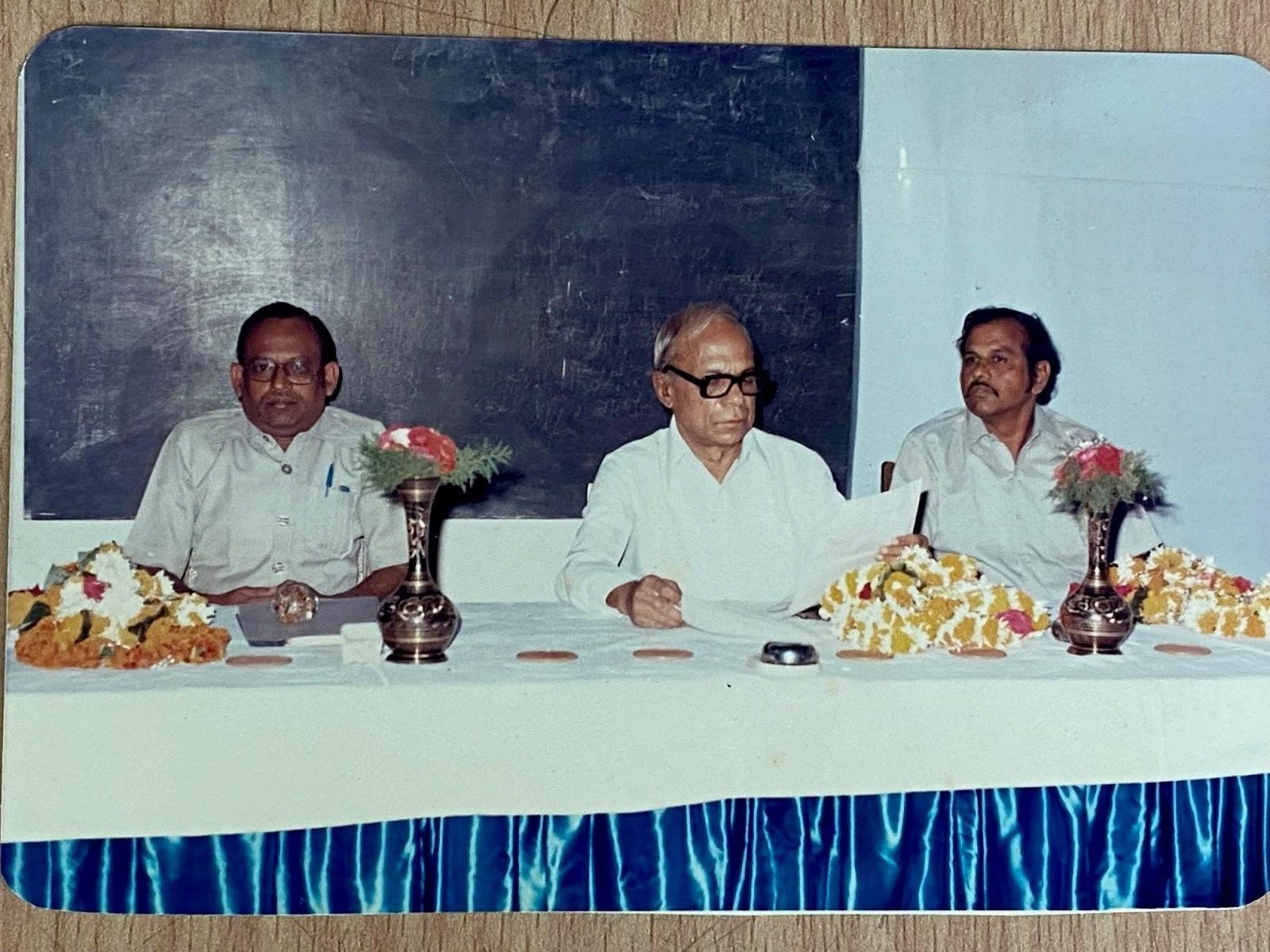
Caption: Madhya Pradesh Electricity Board Officers Training Program for IFMR, Chennai. Image courtesy: S. Srinivasan
Learning 3
The third important lesson is how do you manage yourself in a distress situation? How do you face disappointments? With the frequent job breaks due to either unrealistic expectations or some personal reservations or temperamental issues, one is pushed to great distress, especially when the next job is not forthcoming or the waiting period is long, and alternate financial succour is absent? God forbid such things from happening, and depending upon our luck, there could be friends and other family members or even the placement cell to assist you.
We should learn to accept the realities of life and continue to work without giving up our enthusiasm or zest for life in a situation of distress. All said and done, life is not just a job or career but is a multifaceted experience and God‘s gift to humans. If one door closes, there is always another door opening up. As an instance of what wise people think on such occasions, a quote from Thiruvalluvar, the great Tamil poet and author of Thirukkural, is cited below.
“idukkan varungal naghuha athanai | Aduthoorvadu ahuthoppadu il” (Kural 621)
When misfortune comes, do not lose heart but smile at it. There is nothing else that can go near the distress, oppose it, and win over it.
He further says that both fortune and misfortune are common things in this samsara. The wise man is aware of this. If he is not overzealous or overindulgent in his fortunate times, such a person does not suffer as much in periods of bad times or misfortune. All that matters is our attitude.
Learning 4
Fourth important lesson is, whenever one is in acute distress or mentally confused, our elders advice who have gone through the mill of life, can be the beacon light. Our shastras advocate a dharmic way of life. This should start early in one’s life, even as one is young. Purity of mind is the hallmark of dharma.
Kural 35 of Thiruvalluvar further elucidates what dharma is about.
“Azhukkaru Avaa veghuli innachhol nangum | Izhukkaa iyandradu Aram”
Jealousy, greed, anger, and the use of harsh words are to be avoided at all costs in a dharmic way of life.
Entertain no greed to others’ wealth or property. One has to give protection to others’ wealth as you would to yours. This is the grammar of good business. True happiness comes from following the dharma at all times.
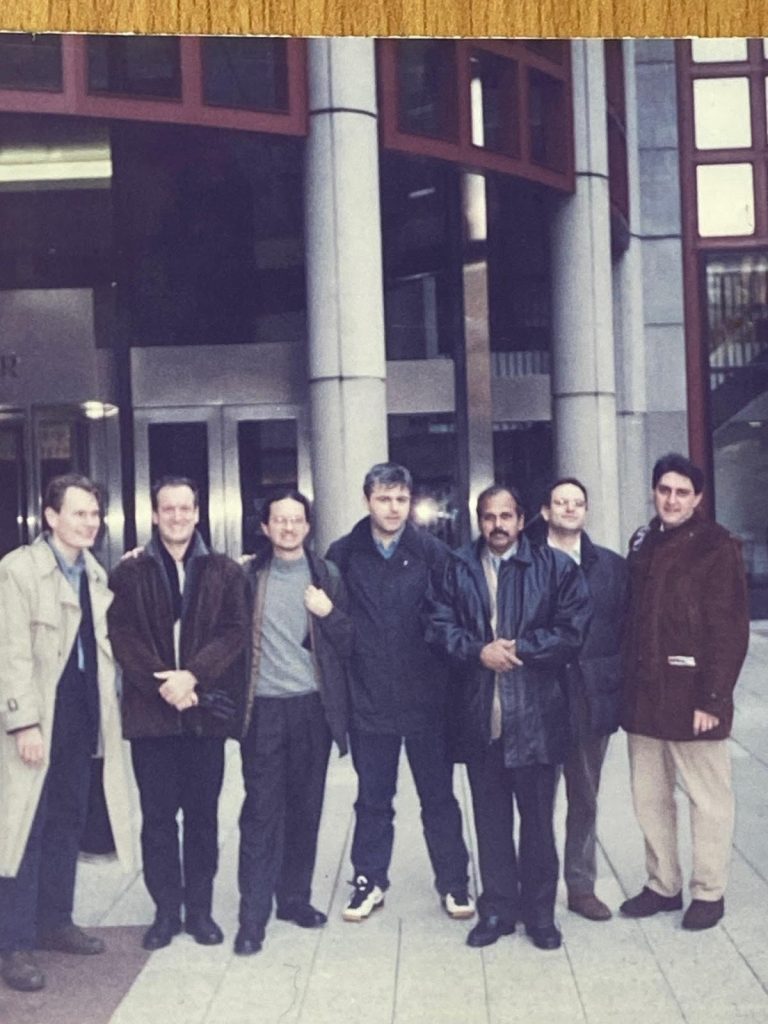
Caption: With I.T.P participants (International Teachers Programme 1990-2000) at New York Univ. Stern School of Business, New York. Image courtesy: S. Srinivasan
Learning 5
Fifthly there are non-career aspects in our life like marital relations, extended family, and social involvement, etc., which are equally meaningful for holistic living. Work–life balance and equanimity of mind, and a larger understanding of samsara or the mundane life of which we are a part, is needed to fully appreciate happenings around us and develop flexible attitudes to face life’s threats and disappointments. Our family system, which is a strong foundation of our societal culture, is a good support system in this healing process. If one carefully observes, we can find the housewife a true master practitioner of the management principles at home, be it budgeting or cash control, or inventory management, or even PR matters, and a true solution finder for emergency situations too. The Chennai-born Indira Nooyi, who became CEO of Pepsi Co., said that she owed her rise to her mother’s guidance and strict instructions as a young girl. This helped her to attend to her family duties even after reaching the top position in the company. A fine example of work-life balance and harmonious living that is worth emulating.
Learning 6
Sixthly, in all life’s situations, there cannot be a textbook-type solution or something taught about them in the business school curriculum. But these obstacles have to be surmounted. Late Prof. S.K.Bhattacharya of IIMA always mentioned self–management as a prerequisite for a manager. Self-regulation in day-to-day activities, moderation in food and drinks, upholding personal values, and ethical business practices contribute to a healthy inner being and promote performance on the job.
Learning 7
Finally, we have to fall back upon our value systems, what our scriptures have taught us and reinforced by our family traditions. Works like Thirukkural, Aathichoodi of Avvayar, and biographies of notable performers in Management can be good guides in this respect. The human race is a complex creation of God, and we have a spiritual side to our lives in addition to worldly things like power and fame, commercial success, or comforts for living, etc. The sooner we realise this, the greater its effect on our attitudes and interpersonal relationships. A life of simplicity with a serious purpose in life is always the driving force for singular performance. Traits like compassion, helping others, mutual respect, love, and a sensitivity to the environment can take one to greater heights of achievement. Who can forget Sant Kabir Das’s doha with its secret mantra for human wisdom and happiness?
“Pothi pad pad jagh muaa, pandith bhaya na khoy|Daaye akshar premka pade tho pandith hoy!!”
Many people read books and texts but could never acquire true wisdom; those who truly understood Love (spelt in two and a half letters in Hindi), learnt it all.
S. Srinivasan retired from the Institute for Financial Management & Research, Chennai, and now pursues the Vedanta course in Chennai.