By Arjun Mohan | AGMP 2025
When I began my career as an engineer, I imagined growth in the traditional sense: work hard, gain experience, move steadily upward, and eventually arrive at leadership. Like many young professionals, I assumed careers were meant to follow a neat ladder.
What I have learned since is that careers rarely move in straight lines. They evolve through choices, detours, discomfort, timing, and curiosity. Looking back, the most meaningful turns in my journey did not come from a predetermined plan. They came from staying open to learning and stepping into unfamiliar spaces.
My early years were rooted in manufacturing and operations. The shop floor became my first classroom. It taught me discipline, problem-solving, execution under pressure, and the importance of people who make businesses run every single day. In factories, outcomes are visible. A machine either runs or it does not. Quality is either achieved or rejected. Delivery either happens or it is delayed. That clarity shaped my professional mindset.
Over time, I moved across functions connected to packaging, supply chain, engineering, vendor development, and cross-functional execution. Each transition required learning a new language. Operations taught speed. Procurement taught negotiation. Projects taught structure. Supply chain taught interconnected thinking. Vendor management taught relationships. I slowly began to understand that business problems do not respect functional boundaries.
This realization changed the way I viewed growth.
For a long time, I believed expertise meant going deeper into one lane. Later, I discovered that in a rapidly changing world, value often comes from connecting multiple lanes. Specialists are essential, but so are integrators—people who can translate across teams, align execution with strategy, and move ideas into reality.
That shift led me to management education mid-career. Returning to the classroom while continuing to work was both humbling and energizing. It required late nights, disciplined weekends, and a willingness to question assumptions formed through years of practical experience. Yet it also reminded me that learning has no age limit.
The classroom expanded my thinking beyond operational excellence. I began to appreciate the role of strategy, markets, organizational behavior, finance, and leadership in shaping long-term outcomes. It also gave me something equally valuable: perspective. Many capable professionals work incredibly hard, but hard work compounds faster when paired with direction.
Another defining thread in my journey has been sustainability. Working close to materials, packaging, and industrial systems made one truth impossible to ignore: the future of business must include responsibility. Efficiency alone is no longer enough. The next generation of companies will need to solve for performance, affordability, and environmental impact simultaneously.
This is one reason I became deeply interested in new materials and sustainable packaging solutions. It sits at the intersection of industry, innovation, and impact. It also reflects a larger career lesson: sometimes your next chapter emerges from problems that genuinely bother you.
Careers today are less like ladders and more like portfolios. We accumulate experiences, capabilities, relationships, and convictions. Some chapters appear disconnected in the moment, only to make sense later. Time on the shop floor builds credibility in strategy rooms. Managing vendors sharpens stakeholder management. Handling crises builds calmness. Studying later in life builds humility.
The unscripted path also comes with uncertainty. There are moments when peers seem ahead on clearer tracks. There are times when transitions look risky. There are seasons when personal responsibilities compete with professional ambition. But uncertainty is not always a sign of poor direction. Sometimes it is the price of building an original path.
In recent years, life outside work has added its own lessons. Family milestones and new responsibilities reshape how one thinks about success. Achievement becomes less about titles and more about building a life with meaning, resilience, and contribution. Ambition remains important—but it becomes more grounded.
If I were to offer one reflection to younger professionals, it would be this: do not worry if your career does not look linear. Focus instead on learning velocity, integrity, adaptability, and courage. Titles can change quickly. Skills can become outdated. But curiosity remains renewable.
My own journey is still unfolding. I continue to explore opportunities at the intersection of business building, operations, innovation, and sustainability. I do not know exactly what the final script looks like anymore—and that feels less frightening than it once did.
Some of the best careers are not carefully written in advance.
They are discovered while walking.
Author Bio:
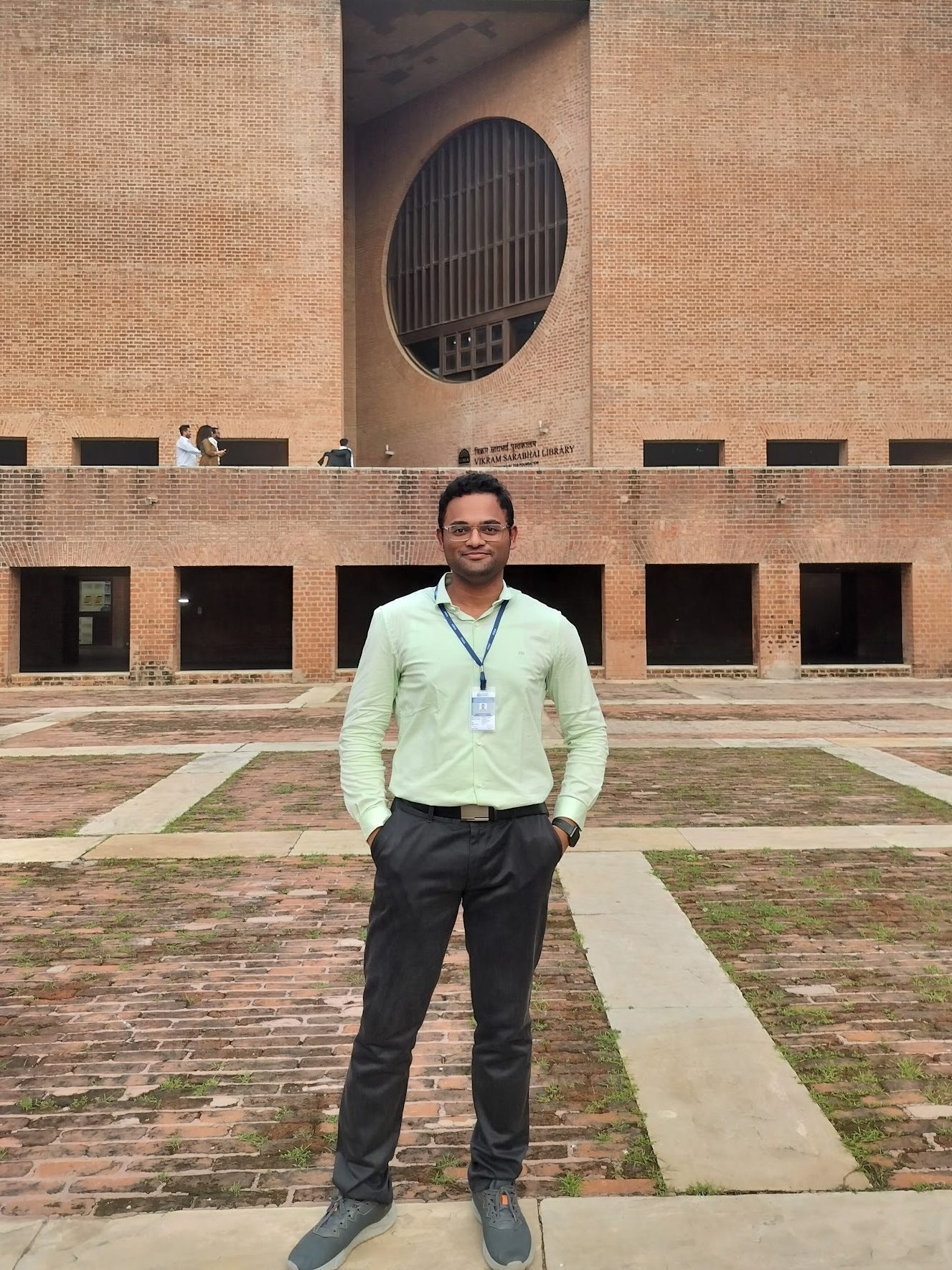
Arjun Mohan is a strategy and innovation professional working at the Founder’s Office of Bambrew Plant Fiber Technology Pvt. Ltd. With experience spanning manufacturing, packaging, R&D, supply chain, sustainability, and business strategy, he works on scaling next-generation sustainable materials, strategic partnerships, investments, and business growth. An alumnus of IIM Ahmedabad’s AGMP programme, he is passionate about building future-ready businesses through innovation, execution, and continuous learning.