
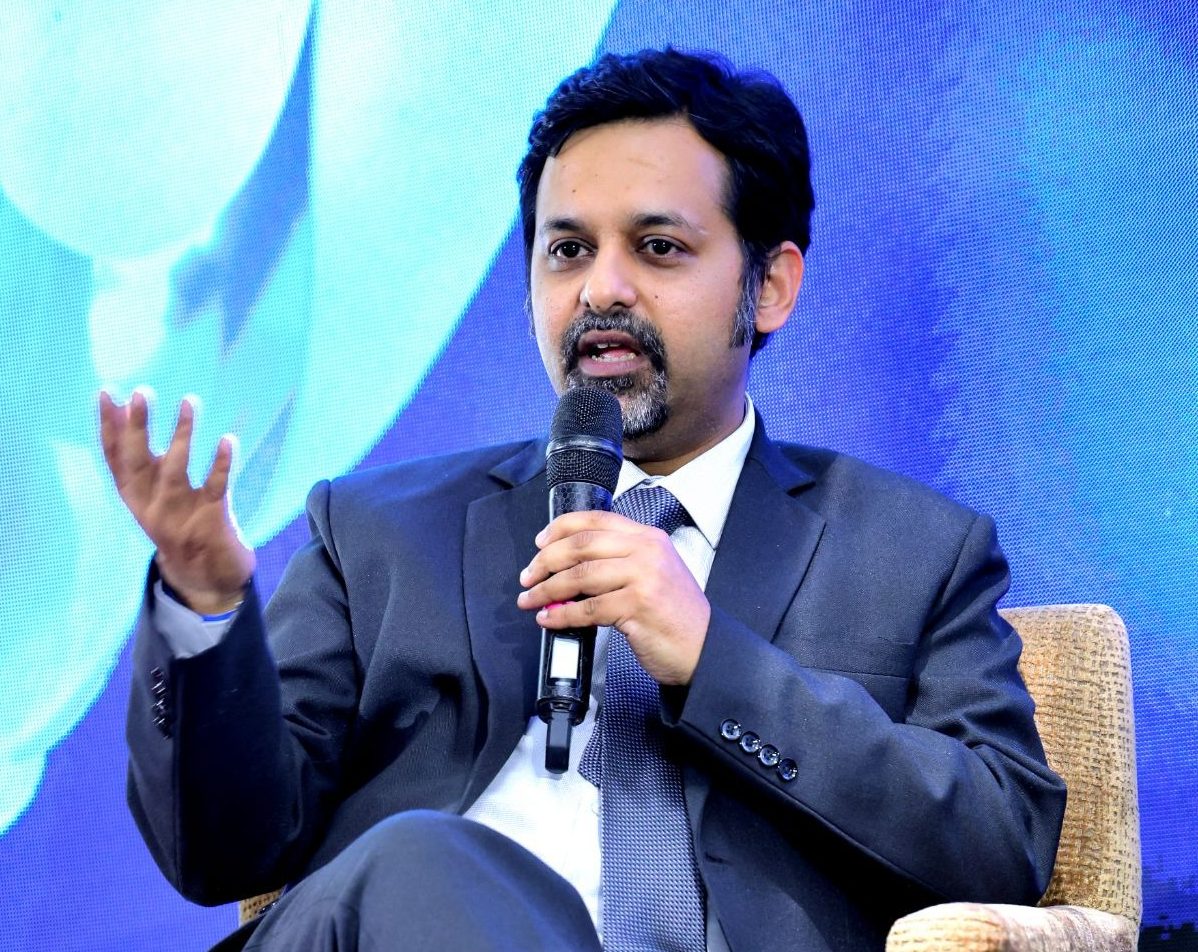
By Dr Saurabh Lall | EEP 2024
For MBA graduates and alumni of institutions like IIM Ahmedabad, career choices often gravitate toward established domains often framed in terms of scale, compensation, and intellectual challenge — consulting, finance, technology, or entrepreneurship. Yet, one sector that is steadily emerging as both a high-impact and high-growth avenue is healthcare management. Positioned at the intersection of business strategy, public policy, and human well-being, healthcare offers a uniquely complex and rewarding landscape for management professionals. Healthcare is no longer confined to hospitals and clinical settings. It is a vast ecosystem comprising corporate hospitals, pharmaceutical firms, health-tech startups, insurance providers, diagnostics chains, medical devices companies, and public health organizations. This ecosystem is undergoing rapid transformation, driven by digital innovation & AI/ML, regulatory shifts, demographic changes, and increasing consumer awareness. For Management professionals, this translates into a diverse set of career pathways where managerial acumen can directly influence outcomes at scale.
One of the defining features of healthcare management is its multidimensional complexity. Unlike many other industries, decisions in healthcare often carry life-altering consequences. This necessitates a balance between financial sustainability and ethical responsibility. For instance, optimizing hospital operations is not merely about cost efficiency; it involves improving patient outcomes, reducing wait times, and ensuring quality care. This dual mandate makes healthcare an intellectually stimulating domain for those who seek more than just profit-driven roles. It is one of the few domains where a spreadsheet decision in a boardroom can determine whether thousands receive timely & appropriate treatment — or none at all!
Perhaps, after hospitals, the most dynamic & glamourous segment within healthcare today is health technology. Startups and established players alike are leveraging artificial intelligence, data analytics, and telemedicine to redefine how care is delivered. For IIM alumni with an entrepreneurial inclination, this space offers a fertile ground to build ventures that address systemic inefficiencies & scale — be it in diagnostics, patient engagement, or chronic disease management. The COVID-19 pandemic further accelerated the adoption of digital health solutions, making this an opportune time to enter the sector.
To understand the depth of this field, it helps to move beyond conventional descriptions and examine the kinds of problems healthcare leaders actually solve. However, a career in healthcare management is not without its challenges. The sector is heavily regulated, often fragmented, and can be slow to adopt change. Navigating this environment requires patience, adaptability, and a willingness to engage with stakeholders ranging from clinicians and policymakers to patients and investors. Domain knowledge also plays a critical role. While an MBA provides the necessary toolkit in strategy and operations, professionals must invest time in understanding clinical workflows, regulatory frameworks, and industry-specific dynamics.
Consider this: a large hospital chain in India once discovered that nearly 18% of its ICU beds were occupied by patients who no longer required critical care—but could not be discharged due to lack of step-down facilities or home-care coordination. An MBA-led intervention redesigned discharge protocols, integrated a home-care network, and introduced predictive analytics for patient flow. The result? ICU availability improved by over 25%, effectively “creating” new capacity without building a single additional bed. In financial terms, this translated into significant revenue gains. In human terms, it meant more patients receiving life-saving care on time. Importantly, healthcare management aligns well with a growing desire among professionals to pursue purpose-driven careers. In an era where ESG (Environmental, Social, and Governance) considerations are gaining prominence, healthcare offers a direct avenue to create social impact while maintaining professional and financial growth. This is the essence of healthcare management—unlocking value where none seems to exist.
Healthcare demand is relatively inelastic and continues to grow with aging populations and rising health awareness, making it a future-proof career choice.
Or take the case of vaccine distribution during the COVID-19 pandemic. The challenge was not just manufacturing doses, but orchestrating a supply chain that could deliver temperature-sensitive vaccines across a geographically and infrastructurally diverse country. Professionals with operations and strategy backgrounds designed cold-chain logistics, optimized last-mile delivery, and used real-time dashboards to track inventory and demand mismatches. A poorly calibrated decision here could have resulted in millions of wasted doses—or delayed immunization for entire populations. Few industries demand this level of precision under such high stakes.
Another example lies in health insurance. Traditionally, insurers struggled with fraudulent claims and inefficient underwriting. Today, MBA professionals are working with data scientists to build predictive models that can flag anomalies in claims within seconds. In one instance, a leading insurer reduced fraudulent payouts by over 30% by integrating machine learning algorithms with claims processing. The downstream impact? Lower premiums for customers and improved profitability for the firm—a rare win-win in a complex system.
Yet, perhaps the most “mind-bending” opportunities lie at the intersection of healthcare and technology. Imagine designing a telemedicine platform that serves rural populations with limited internet bandwidth. The challenge is not just technological—it is behavioral, logistical, and economic. How do you ensure adoption among first-time users? How do you integrate with local pharmacies and diagnostic centers? How do you price services to be both affordable and sustainable? These are not textbook problems; they require a synthesis of strategy, empathy, and execution.
Globally, the scale becomes even more staggering. In parts of Africa, drone networks are now being used to deliver blood and medical supplies to remote areas. Behind these innovations are management professionals who have reimagined supply chains from first principles. Similarly, in the United States, value-based care models are shifting the industry from “pay per treatment” to “pay for outcomes.” This requires redesigning entire business models—aligning incentives across hospitals, doctors, and insurers. Such transformations are not driven by clinicians alone; they are orchestrated by leaders who understand both economics and systems thinking.
What makes healthcare uniquely challenging—and intellectually addictive—is that it operates as a “system of systems.” A decision in one node inevitably affects multiple others. For example, reducing the length of hospital stays may improve efficiency but could increase readmission rates if not managed carefully. Expanding insurance coverage may improve access but can strain provider capacity. Every lever has second- and third-order effects, and navigating these requires a level of analytical rigor and foresight that few other industries demand.
For IIM Ahmedabad students and alumni, this presents an opportunity to apply core management frameworks in a context where they are constantly stress-tested. Concepts like supply chain optimization, game theory, behavioral economics, and platform strategy are not academic abstractions here—they are tools for solving real, often urgent, problems.
However, entering healthcare also requires a shift in mindset. Unlike consulting or finance, where feedback loops are often immediate and quantifiable, healthcare outcomes may take months or years to fully materialize. Success is not always visible, and failures can be deeply consequential. This demands patience, resilience, and a willingness to engage with ambiguity.

The rewards, however, are equally profound. Few careers offer the chance to influence both macro-level systems and micro-level human experiences. Whether it is designing a national health program, scaling a health-tech startup, or improving hospital operations, the impact is both wide and deep.
Compensation in the sector is evolving rapidly, particularly in private healthcare, pharmaceuticals, and digital health. But the true differentiator is not just financial upside—it is the ability to operate at the frontier of complexity and purpose. As healthcare systems worldwide grapple with aging populations, rising costs, and technological disruption, the demand for skilled management professionals will only intensify.
In many ways, healthcare management is the ultimate “unscripted” career. There is no single playbook, no linear trajectory. Each problem is unique, each solution context-specific. For those who thrive on ambiguity and seek to build careers that are both intellectually rigorous and socially meaningful, it offers a canvas unlike any other.
For IIM Ahmedabad graduates, the question is not whether they can succeed in healthcare—their training ensures they can. The real question is whether they are willing to step into a domain where the metrics of success extend far beyond balance sheets, and where the true impact of their decisions may be measured in lives quietly improved or saved.
Author Bio:
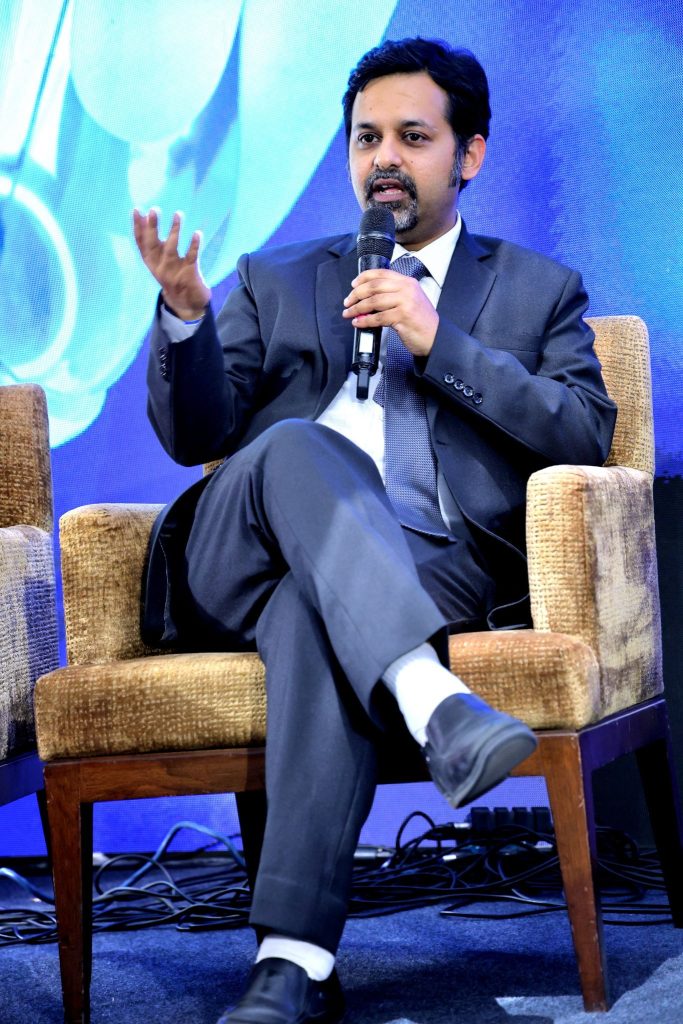
Dr Saurabh Lall is a distinguished healthcare leader and proud alumni of the IIM Ahmedabad. With extensive experience across hospital operations, business strategy, growth leadership, and digital transformation, he has led reputed healthcare institutions such as Max Healthcare, Centre for Sight & Clove Dental through phases of scale, operational excellence, and patient-centric innovation. Known for combining strategic vision with execution discipline, he has played a key role in building high-performing healthcare ecosystems. Dr Lall remains actively engaged with industry and alumni networks, contributing to thought leadership, mentorship, and the advancement of healthcare management in India. Currently he is the Chief Operating Officer at KIMS Hospitals, a listed network of quaternary care hospitals across India.
- saurabhlall.delhi@gmail.com, www.linkedin.com/in/drsaurabhlall