
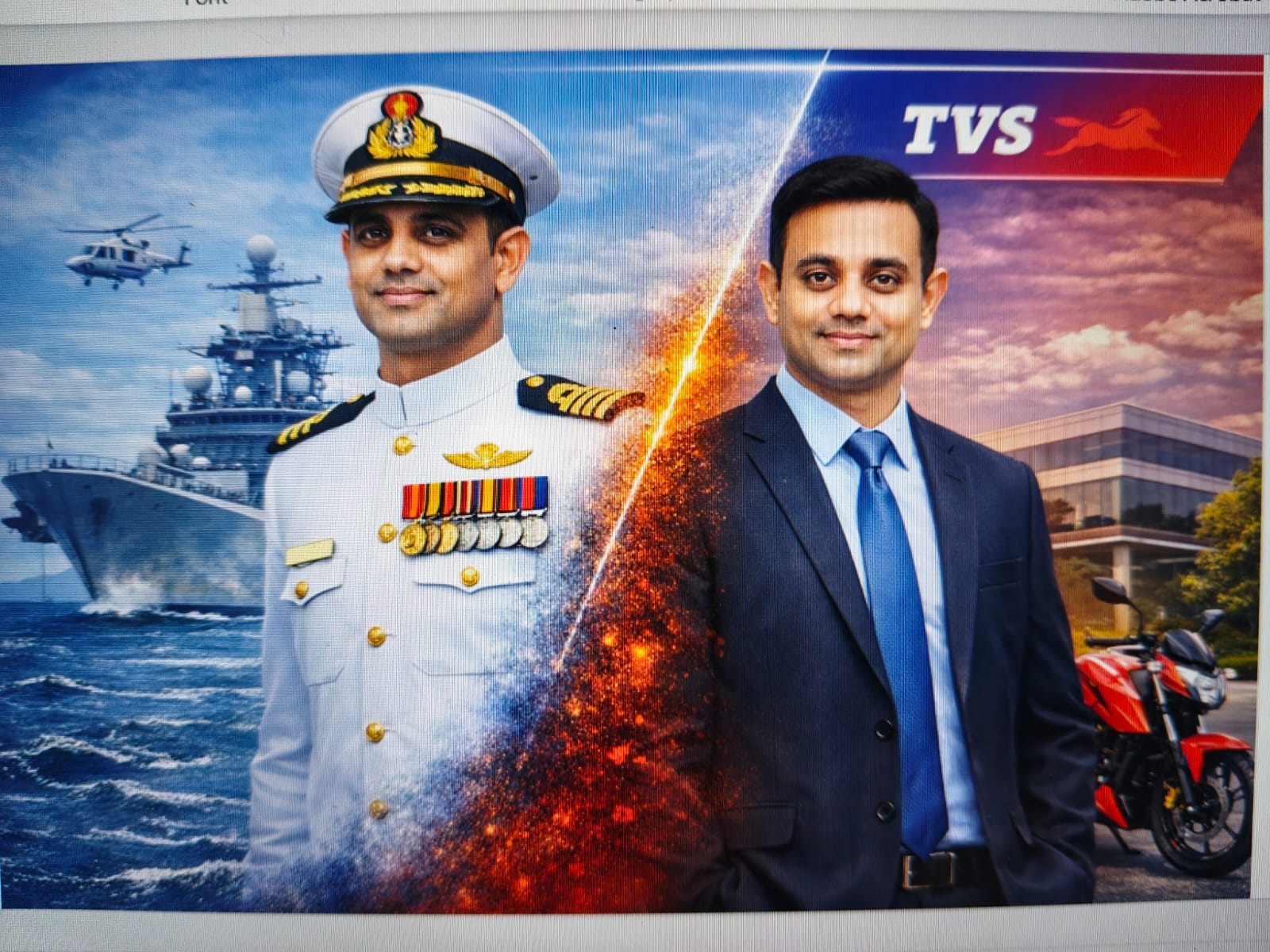
By Commander Anand T. | AFP 2024
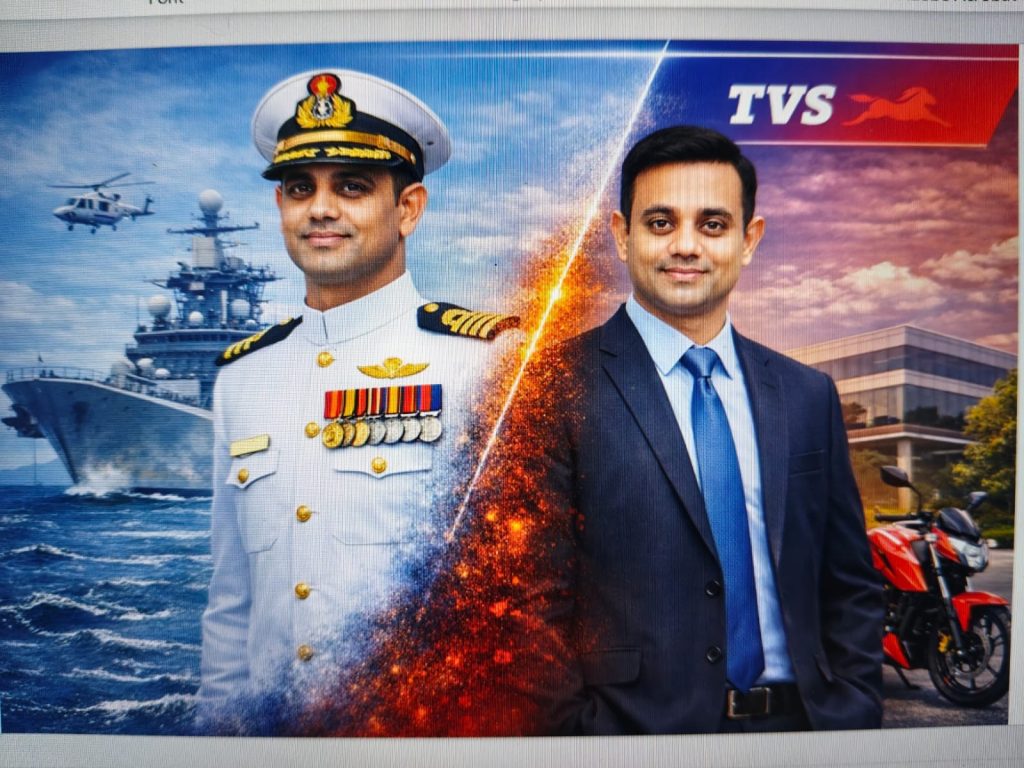
When I joined the Indian Navy as a young Technical Officer, my world revolved around engines, propulsion systems, and platforms that cut through the seas with precision and power. The Navy was not just a profession; as we often say, “Navy is a way of life.” It shaped my identity, my thinking, and my approach to leadership. I imagined my career would remain charted along that trajectory – steeped in engineering, operations, and command responsibilities – till the day I hung up my uniform.
But careers, like oceans, have currents we don’t always see in advance. My transition from propulsion to people was not a carefully scripted move. It emerged from curiosity, the courage to step into uncharted waters, and a deep belief that developing people is as critical as maintaining machines.
Seeds of Change
In the Navy, my core role was technical – managing propulsion systems, ensuring operational readiness, and leading technical teams. Yet, I often found my greatest satisfaction not just in problem-solving equipment issues, but in explaining concepts, coaching juniors, and facilitating learning. I enjoyed breaking down complex systems into intuitive ideas, helping others understand the “why” behind the “how.”
I facilitated sessions on engines and propulsion, and over time, I realised I looked forward to the classroom as much as the engine room. This was my first quiet hint that my career might one day move closer to the world of learning and development, even if I did not yet recognise it as such.
IIT Bombay further widened my horizons by deepening my understanding of renewable energy and sustainability in my Master’s, as more than just technical domains – they became a way of life. The programme exposed me to cutting-edge research, practical solutions, and policy perspectives that connected energy, environment, and society.
Still, my formal identity remained “Technical Officer”, and later, as I retired in the rank of Commander after 14 years of Short Service Commission, I carried with me the comfort of a defined professional label and a strong institutional identity. Stepping out of the gates of the Navy, I asked myself: “What now?”
Unscripted Waters
Transitioning from the Armed Forces into the corporate world can feel like stepping off a ship into unknown seas. I had more questions than answers:
- Could a Technical Naval Officer be relevant in a corporate environment not directly linked to defence?
- Would the corporate world value discipline, leadership and team-building the way the Armed Forces do?
- Could I genuinely reinvent myself into something new, or would I be forever defined by my past role?
IIM Ahmedabad played a pivotal role in shaping my confidence to transition from uniform to corporate. Through the Armed Forces Business Management Programme, I received a well-rounded exposure to business administration, strategy, finance, marketing, and people management, which helped me connect my defence experience to corporate realities. The rigorous classroom learning, peer interactions, and case-based pedagogy gave me not just knowledge, but also a new lens to view organisations and value creation.
The opportunity with TVS Motor Company came at this inflection point. The role was in the space of Learning & Development at TVS Institute for Quality and Leadership (TVS IQL) – a Corporate University dedicated to developing people, culture, and collective capabilities to support the organisation’s growth and leadership.
From Propulsion to People
My transition can be summed up in that simple phrase. In the Navy, propulsion was about generating and directing power – optimising thrust, ensuring reliability, and enabling movement towards a mission objective. At TVS IQL, I discovered that people development is another form of propulsion:
What helped me most in this transition was not a formal HR degree, but the transferable competencies honed in uniform:
- Leadership and accountability gained from commanding teams in demanding environments.
- Process discipline, which translates naturally into designing and running structured learning operations.
- A deep respect for people, teamwork, and mission focus, which resonated strongly with TVS values like “Respect for people” and the belief of “Country first and always, company next.”
At TVS IQL, learning is not an isolated event; it is a culture. Programs are not purely academic; they are experiential, business-linked, and designed to influence behaviour and results. My Navy background equipped me to think holistically about outcomes -just as a mission isn’t complete when the ship sails, learning isn’t complete when a session ends. The real test lies in behaviour change and impact on the ground.
Careers Unscripted
I did not leave the Navy with a meticulously crafted 10-year corporate roadmap. Instead, I followed a few guiding instincts:
- Stay curious about where your strengths show up repeatedly, even outside your official role description.
- Be willing to unlearn titles while retaining values and principles.
- Treat every new environment as a learning platform, not just a proving ground.
- Culture makes or breaks transitions – When the organisational culture aligns with your own values, transitions feel less like a risk and more like a natural progression.
In my case, that meant acknowledging that I enjoyed facilitation, coaching, and building learning ecosystems as much as I enjoyed solving technical problems. It meant allowing myself to be a beginner again in the domain of L&D and HR, even while drawing confidence from decades of leadership in the Armed Forces.
The corporate world, too, surprised me positively. At TVS, I found a culture where values are lived, not laminated. From being entrusted with roles in central learning operations, planning to being recognised for upholding TVS values, the organisation signalled that my Armed Forces background was not a misfit, but an asset. The transition from “Navy is a way of life” to the “TVS Way of Working” felt less like a break and more like a bridge – one value-based ecosystem connecting to another.
From propulsion to people, the journey has been unscripted—but deeply meaningful. Looking forward to the seasons of change with an open mind.