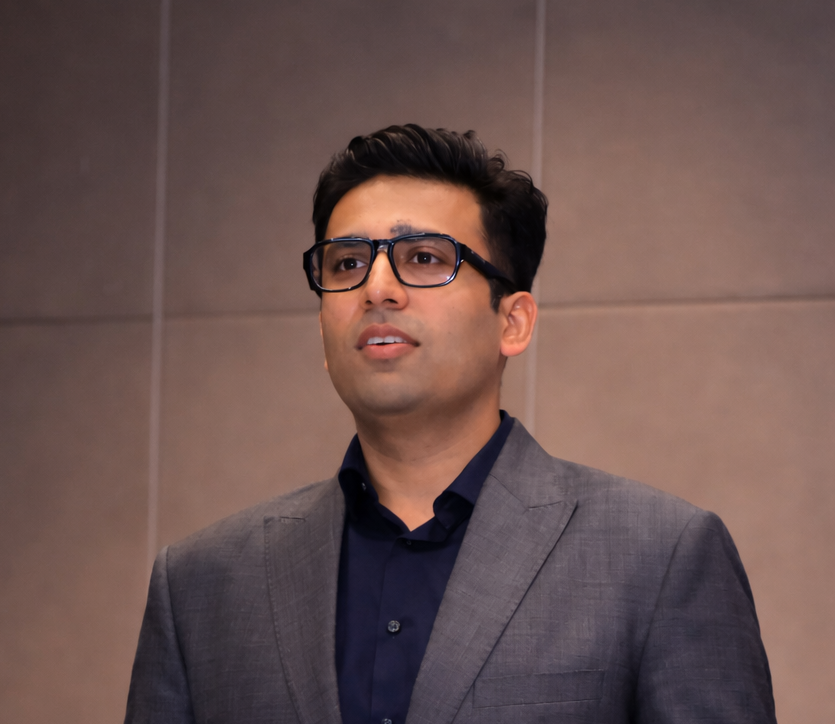
By Rajat Mohan | 3TP 2020
This is because my journey started from a concept that never existed. In 2008, after becoming a chartered accountant, I set out to pursue a PhD in Goods and Services Tax (GST). At that point, the Goods and Services Tax had not even been introduced in our country, nor was there any formal institution or process for conducting research on it. I even applied to some top international universities to conduct my advanced research in this field, but all of my applications were rejected. As there was no precedent or process for conducting any kind of research on GST, it became an impossible feat.
In 2009, I worked at a law firm, assuming I would become a tax partner in the future, only to resign after a year due to poor HR Policies.
In 2010, I joined my family’s professional practice. In the absence of formal avenues, I chose to independently study and research GST, despite its non-existence in the Indian legislative framework at that time. I spent considerable time researching different VAT/GST systems worldwide, along with the associated discussion papers and policy issues. It was only an intellectually rewarding experience.
Over time, the absence of tangible outcomes led to a degree of professional fatigue. The effort-to-outcome imbalance became increasingly evident, and the pursuit began to feel disconnected from the realities of practice.
Around 2013, I consciously shifted direction. Recognising the need to diversify my engagement. I ventured into early-stage entrepreneurial initiatives. These ventures were conceptualised along the lines of emerging service-platform models, broadly inspired by the business architecture later popularised by UrbanClap (Urban Company). The objective was to explore scalable, technology-enabled service delivery models.
While these initiatives provided valuable exposure to execution dynamics, market behaviour, and operational challenges, they were not financially successful. The venture resulted in capital erosion and did not yield sustainable returns. This phase represented another reset point—moving from academic uncertainty to entrepreneurial risk, and eventually encountering the realities of execution-led failure.
Following this phase, I returned to professional practice with a more pragmatic outlook. While the entrepreneurial experiments had not succeeded commercially, they significantly enhanced my understanding of scalability, client behaviour, and the importance of aligning expertise with market timing. I resumed my engagement with taxation—this time balancing active professional work with a continued interest in GST as a developing framework.
GST implementation in 2017 represented a clear turning point. A topic that had until then been purely of theoretical interest became an actual regulatory field, ever more complex and dynamic. Years of solitary research work were starting to acquire a practical professional dimension.
At this time, I had the opportunity to work with a professional firm on a retainer basis and assist in building a knowledge base for the newly enacted GST rules. This experience helped me understand the challenges of implementing such regulations in practice.
In 2017, my family’s consulting company employed ten professionals. The next 10 years saw continuous effort to develop capabilities, knowledge, and scale. The firm grew from a small consulting firm to a much bigger one, not only in size but also in the scope of work they carried out. Over the past 10 years, the size of the professional workforce has grown considerably, and the firm’s income has increased more than 10-fold.
It became involved in intricate litigations and valuable advisory roles. Information dissemination took centre stage as one of the key pillars of knowledge, contributing to various forms, such as publications and training, as well as to other activities within the taxation environment. This approach was further reinforced by sustained contributions to the profession—training thousands of professionals, mentoring and teaching IAS officers, authoring books and numerous technical articles, regularly appearing in leading news publications, and delivering seminars and thought-leadership sessions across India. Collectively, these efforts strengthened both professional standing and institutional trust, forming the foundation for long-term, sustainable growth.
It is at this juncture that I stand in the year 2026, and the call now is to venture outside the boundaries of the Indian indirect tax regime and seek new territory within the realm of direct taxation in the United Arab Emirates. Now let’s see what happens in the next 10 years?
Reflecting on this journey, it is evident that my career has not followed a linear or pre-defined trajectory. Instead, it has been shaped by a series of decisions taken in environments characterised by uncertainty, limited guidance, and evolving frameworks. Each phase—academic, entrepreneurial, and professional—has contributed to building a broader perspective on risk, resilience, and long-term value creation.
To conclude, careers do not have to follow a well-defined path or a predetermined series of steps. On some occasions, career development involves spotting emerging opportunities, putting in effort amid uncertainty, and changing course if necessary. The case is the same with my own experiences, which have been more about navigating new environments than following a map.