
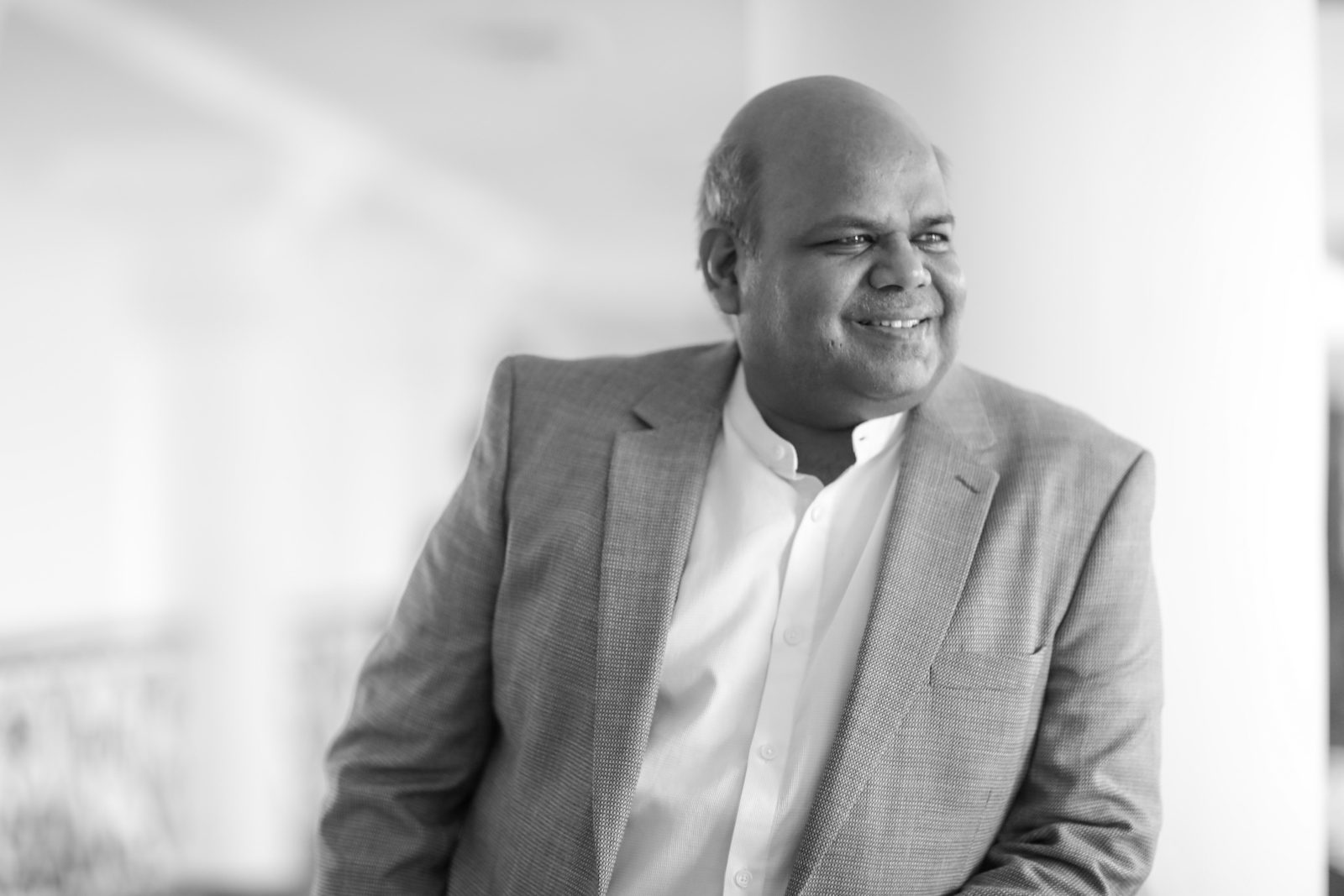
By Hareesh Tibrewala, MDP 2004
India has done this once before. We did not build out a copper landline network. Between 1995 and 2010, a country with fewer than 30 million landlines acquired 700 million mobile connections, skipping an entire generation of infrastructure that the West had spent eighty years laying. We did it again with digital payments: without a widespread chequebook culture or card penetration, we went straight to UPI.
AI is the third such leap and perhaps the most consequential, arriving just as India’s demographic dividend needs a matching productivity dividend.
The token economy is where India wins
Every leapfrog in India’s history has been won on unit economics, not on invention. We did not invent the mobile phone; we made the call cost a paisa a second. We did not invent digital payments; we made the transaction cost zero.
AI will follow the same script, and the unit is the token.
Consider the current pricing. Sarvam’s 105B model is priced at $0.80 per million blended tokens, compared with $4.50 for GPT-5.4 Mini and $9.00 for Gemini 3.5 Flash—roughly five to eleven times cheaper, with infrastructure physically located in India. For many Indian applications, a collections call in Bhojpuri, a KYC document read in Tamil, or a crop advisory in Marathi—Sarvam’s capabilities may be sufficient.
The strategic consequence deserves attention from anyone running a P&L. If India becomes the world’s cheapest place to run inference at acceptable quality, it could become the natural home for AI-intensive business processes serving any market. That is the “Made in India, Made for the World” thesis, restated in the only language that survives a board meeting: landed cost.
Where AI can drive order-of-magnitude shifts
Here are two applications of AI that can create seismic shifts in the economy
Service delivery at population scale: India’s chronic failure has never been policy design; it has been the last mile. A farmer entitled to crop insurance cannot navigate the form. A patient in a district hospital waits eleven days for a radiologist. Voice-first, vernacular AI, available around the clock, could reduce the cost of a competent human intermediary from hundreds of rupees to a fraction of that. Tata Capital already runs multilingual customer interactions on Sarvam’s voice platform, which has handled over 325 million minutes of AI conversations. Applied to grievance redressal, tax queries, pension claims, and paralegal support for the 45 million pending court cases, AI could significantly expand state capacity.
Manufacturing quality: Our sustained disadvantage against China is not labour cost; it is variation in quality. Defect rates, yield consistency, and schedule adherence all matter. Computer vision and predictive maintenance can reduce this variation—the key barrier to Indian component makers entering global tier-one supply chains.
The stack—and where our expertise actually lives
India is building across the full stack: fabs in Gujarat, compute through IndiaAI, sovereign foundation models, and a growing applications layer. But the base remains thin: no GPU in the national compute pool is domestically designed or manufactured, and power density in Indian data centres remains a bottleneck.
The value, however, is not evenly distributed. Indian IT’s lesson from the last thirty years is that we excel at translating deep domain understanding into deployed systems—the layer where messy institutional realities meet code. Three million engineers with decades of enterprise-systems experience are well positioned for an era when the scarce skill is not training models but integrating them into workflows that change outcomes.

The model layer will commoditise; the integration layer will not. That is where India has its best chance to become a global builder of AI applications.
In conclusion
India has leapfrogged twice by making expensive technologies radically cheap. AI offers a third opportunity: to run intelligence at low cost and build applications that tackle persistent gaps in last-mile delivery and manufacturing quality.
The technology will arrive regardless. Whether it delivers the GDP growth needed for Viksit Bharat 2047—or another decade of pilots—depends on how deliberately we deploy it. That is not a research problem; it is a management problem—which is to say, it is ours.
Author Bio:
Hareesh Tibrewala (MDP 2004) is a serial entrepreneur. Started India’s first e-commerce portal in 1999. He later started a digital media agency in 2009. After selling his digital agency (Mirum) to WPP in 2024, he is now CEO of Manabu AI Solutions.