
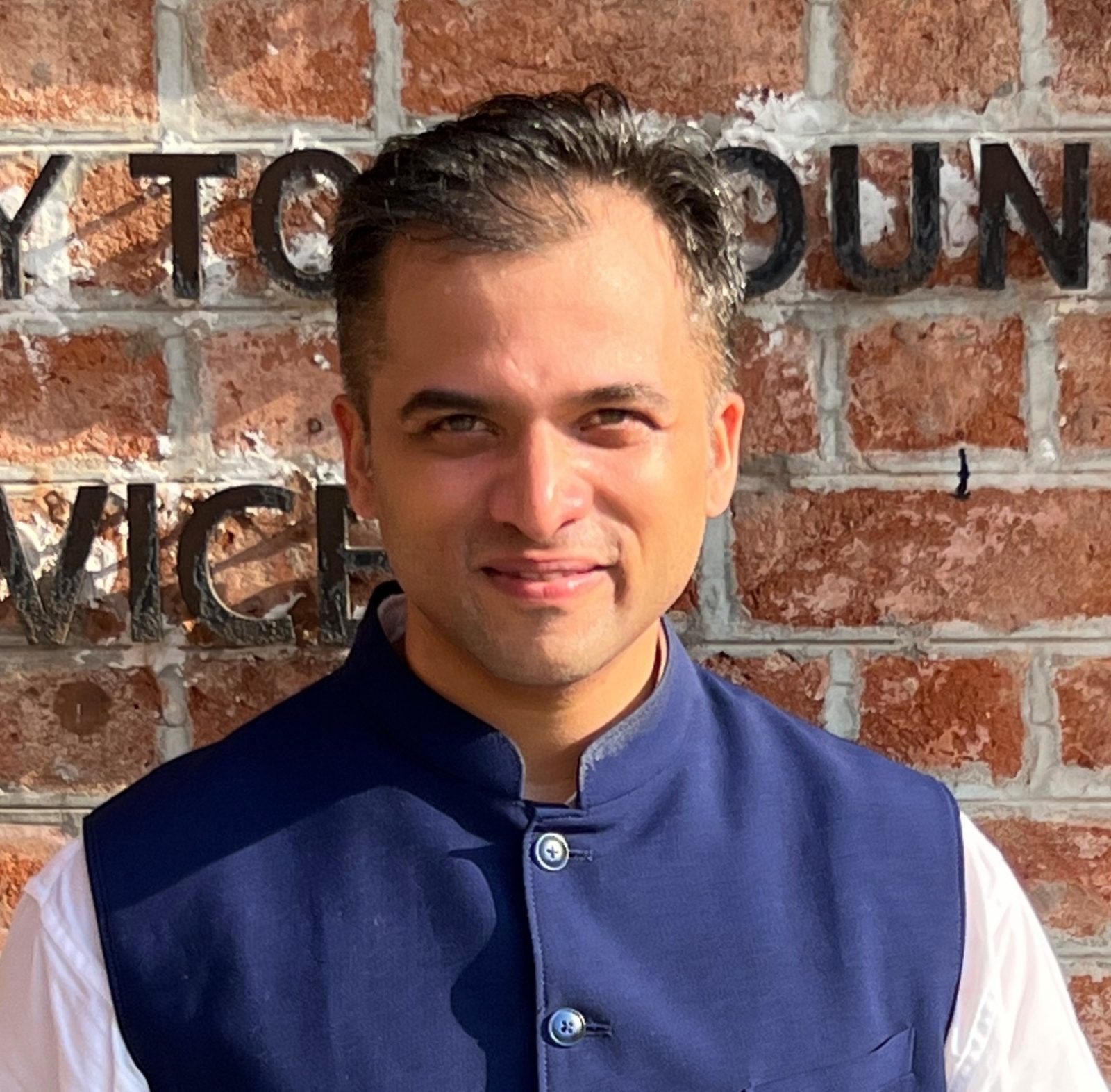
By Parikshit Gogate, AGMP 2025
India’s journey towards Viksit Bharat @2047 will not be shaped by linear progress. It depends on how effectively the country converts global turbulence into national capability. Over the last decade, India has demonstrated an emerging ability to operate, negotiate, and build amid energy shocks, supply chain fractures, geopolitical realignments, and technological disruption.
Having spent over a decade across Oil & Gas businesses, I have seen how crises reveal the true strength of systems.
Energy Systems: Capability Built Under Pressure
Energy markets are early indicators of global conflict. Volatility is not an anomaly; it is a constant. India’s response to recent disruptions reflects a shift from dependence to capability.
Reliance Industries’ calibrated engagement with Venezuelan crude following U.S. policy adjustments permitting controlled commercial flows, as reported by Reuters. India diversified sourcing while remaining fully compliant with international frameworks, demonstrating strategic maturity.
Reliance Industries’ support for U.S. refineries, documented by Bloomberg and industry publications, is equally significant. By applying its expertise in specialised grades and operational know-how, Indian refining is helping optimise operations in one of the world’s most advanced energy ecosystems. This marks a reversal of the historical technology-dependence equation.
India’s diversification into Uzbekistan, Algeria, and other unconventional geographies, reflected in MEA releases and ONGC Videsh disclosures, adds to this shift.
India’s rise as the world’s largest exporter of refined petroleum products among non-oil-producing countries is another strategic shift. For a nation importing most of its crude, exports of gasoline, diesel, and aviation fuel are a strategic achievement built through decades of investment and operational excellence.
India has also expanded its crude import basket. Ministry of Petroleum & Natural Gas data shows India now sources crude from over 40 countries, strengthening bargaining power and supply security while reducing geopolitical vulnerability.
On the exploration front, India has moved from sporadic activity to a structured policy regime. The Hydrocarbon Exploration and Licensing Policy (HELP) and the Open Acreage Licensing Programme (OALP) have enabled Indian companies to invest systematically in domestic exploration, shifting from passive dependence to active capability building.
Supply Chains: From Vulnerability to Strategic Depth
Global supply chains have become geopolitical instruments. India’s response has been to build capability, not merely chase cost advantage.
Cochin Shipyard’s expanding portfolio signals India’s intent to build and operate its own fleet, reducing reliance on foreign shipping companies.
India’s participation in the India-Middle East-Europe Economic Corridor (IMEEC), announced at the G20 Summit, positions it as a central anchor in a reconfigured trade geography. The corridor is not merely infrastructure; it is a geopolitical alignment that enhances India’s long-term leverage.
India’s trade diplomacy spans signed agreements with Australia, UAE, UK, New Zealand, Oman, the EU, Japan, and active discussions with Russia and the U.S. Even as the world fragments, India is building economic corridors that expand strategic autonomy.
Financial Governance: Institutional Strength in a Volatile Decade
Crises test institutions more than infrastructure. India’s financial governance risk systems, capital discipline, and transparency have strengthened through shocks.
RBI stability reports, SEBI disclosures, and global financial commentary (FT, WSJ) have noted India’s ability to absorb global turbulence without systemic breakdown. This resilience reflects sustained institutional repair, not coincidence.
A Viksit Bharat will require this discipline more than ever.
Diplomacy: Converting Turbulence into Strategic Advantage
India’s diplomacy has become a capability in itself.
The BRICS Summit, the G20 Presidency, and India’s leadership during COVID-19, including supplying vaccines and medical support to neighbours, reflect a nation acting with strategic clarity.
India’s ability to engage multiple power centres simultaneously Washington, Moscow, Tehran, Riyadh, Abu Dhabi, Paris, Tokyo, and African capitals without ideological entanglement has allowed India to extract value from crises rather than absorb damage.
Diplomacy is no longer an accessory. It is a strategic lever.
Structural Challenges India Must Navigate
India’s rise is real, but turbulence will persist. Several structural tensions require sustained attention:
- Activism amplified by digital platforms.
- Balanced development to avoid capability asymmetry.
- AI disruption reshaping industries faster than policy can adapt.
- Demographic pressure that becomes capability only through skilling and absorption.
- Imbalanced urban growth is visible in Mumbai, Hyderabad, Bengaluru, Chennai, Pune, and Gurugram, where cities expand faster than governance systems. Maharashtra government discussions around “Mumbai 3” and “Mumbai 4”, reported in state planning documents, point to a deeper tension: expansion is being used as a substitute for institutional reform.
Urbanisation must align with sustainability thresholds and centre-state-local coordination.
The India Emerging from Crises
The last decade has shown that India does not merely endure crises.
- India learns from them.
- India builds through them.
- India extracts value from them.
A confident nation celebrates its entrepreneurs; it does not resent their success. A capable nation sustains reform; it does not rely on momentum alone.
Viksit Bharat will not be defined by the absence of crises, but by India’s ability to navigate them with clarity, confidence, and strategic alignment.
India’s rise is not a story of survival. It is a story of systems strengthened, institutions matured, and resilience turned into advantage.

Author Bio:
Parikshit is a strategic finance and governance professional (AGMP 2025), with experience across global energy and advisory roles.
Beyond work, he writes on the intersections of history, culture, and geopolitics.