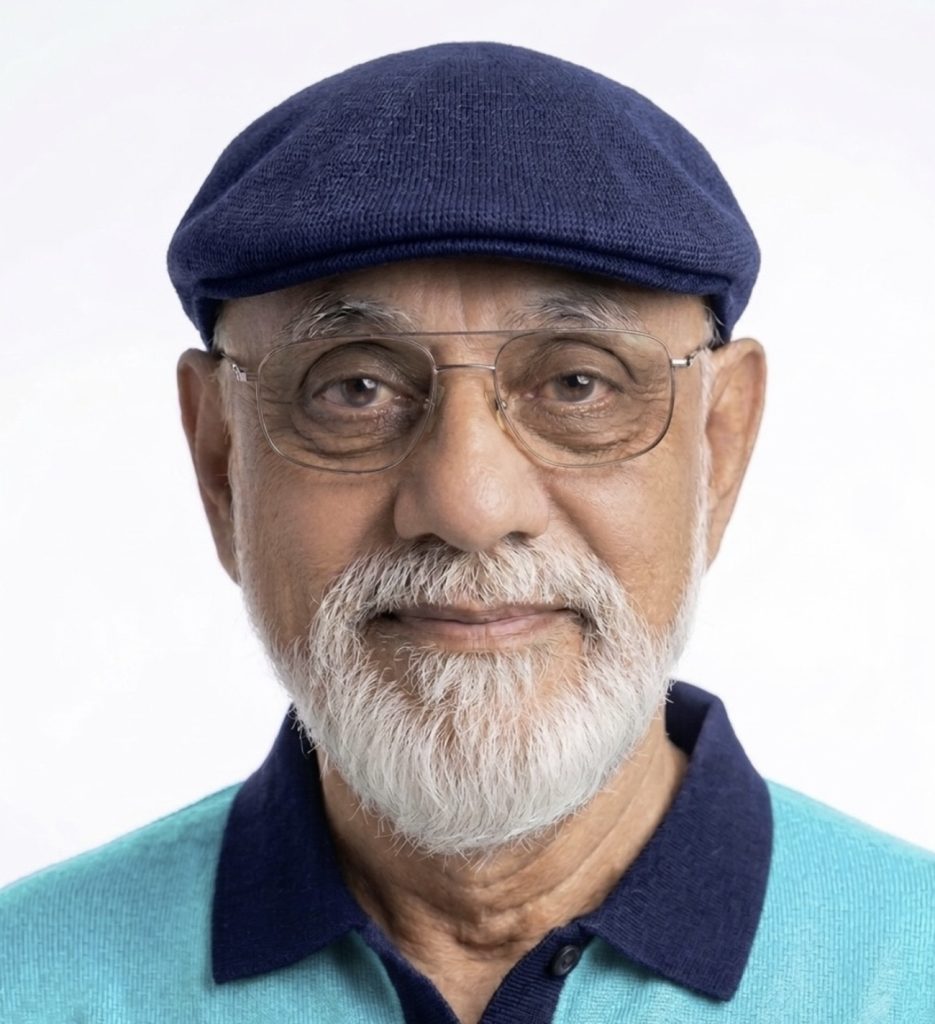
By Madhukar Parikh, MDP 2007
- Ideas and Actions for Viksit Bharat @2047
India’s journey towards Viksit Bharat @2047 is more than an economic ambition. It is an opportunity to build a nation that is productive, innovative, inclusive, sustainable, and confident in contributing to the world.
After four decades in industry, from the shop floor to senior management, I have learned that organisations are ultimately built by people. The same principle applies to a nation.
Transformation begins with the individual. A person who works sincerely, respects others, follows rules, keeps learning, and refuses to compromise on integrity is already contributing to nation-building.
This connects with my idea of The Human Alchemist: transforming knowledge into wisdom, opportunity into contribution, and challenges into solutions. Education cannot stop with degrees; we need people who can think, learn, adapt, create, and act.
- From Job Seekers to Problem Solvers
The India of 2047 will need people who ask not only, “What job can I get?” but also, “What problem can I solve?” Our young people can become entrepreneurs, engineers, teachers, farmers and leaders.
Artificial intelligence will influence almost every sector. It can improve productivity and services, but technology alone cannot provide purpose. India’s future should be technology with humanity.
- From Make in India to Made for the World
My years on the shop floor taught me that quality is created through discipline. Every machine teaches something, every failure contains information, and every problem can become an opportunity to improve.
Indian manufacturing can contribute greatly to Viksit Bharat by developing people, improving quality, adopting technology, and building global capabilities. The opportunity is to move to a stage where Indian companies design, engineer, manufacture, and deliver products and services meeting global standards.
- Development Must Reach Every Person
Progress should be felt in cities, villages, farms, schools, hospitals, and homes. Women need opportunities, farmers need knowledge and markets, young people need skills, and small businesses need room to innovate.
- Our Heritage Is Our Root, Not Our Boundary
India is fortunate to inherit a rich heritage of knowledge, philosophy, science, art, literature, craftsmanship, and purposeful living.
Our heritage should not become a boundary around our imagination. It is our root. A tree with deep roots can reach higher. India can carry its wisdom while embracing technology and innovation.
No one can stop us from growing when our roots are strong, our intentions are clear, and our actions are purposeful.
- Let Technology Move Forward—But Let Books Stay With Us
As AI and digital technology become more powerful, we should also preserve the habit of reading physical books.
I would like to see small reading spaces in gardens, railway stations, airports, and other public places. A bookshelf, seating, and a simple exchange system could be enough.
The concept: “Take a Book. Read a Book. Return a Book.”
A traveller could pick up a paperback at one station, read it during the journey and return it at another. A digital system could record the book and allow another reader to continue its journey.
Government institutions, municipalities, transport authorities, educational institutions, publishers and large private companies could collaborate. Companies could sponsor reading corners, publishers could contribute books, and citizens could donate books.
India has people across professions and generations carrying valuable experiences and ideas. More reading spaces could encourage them to write, publish, and contribute their knowledge to society.
Readers discover books. Books create readers. Readers become writers. Writers share knowledge. Knowledge creates wiser citizens.

AI can give us information quickly; books can give us depth.
- What Can I Contribute?
Nation-building begins with a simple question: “What can I do?”
I can improve my skills, mentor a young person, respect every worker, support innovation, read, learn, share knowledge, and work with integrity.
- The India I See in 2047
I imagine an India where economic growth is accompanied by human growth; where technology serves people without replacing human values; where education develops character; where industry creates opportunity; where villages and cities grow together; and where Indian businesses create for domestic and global markets.
I imagine an India confident about its heritage but not confined by it; ambitious about its future but grounded in values; technologically advanced yet human.
I do not see Viksit Bharat as a destination we arrive at in 2047. I see it as a daily practice.
Every honest decision, innovative idea, young person receiving an opportunity, worker acquiring a skill, entrepreneur creating value, company reaching a global market, writer sharing knowledge and citizen taking responsibility becomes part of the India we are building.
We cannot wait to see the India of our dreams. We have to actively participate in creating it.
Perhaps the most important question is not, “What will India become by 2047?” but:
“What will I do today to help build it?”