
By Madan Mohanka | PGP 1967
India continues to be the world’s fastest-growing major economy and is poised to become the third-largest economy globally in a few years. Growth, however, is only a milestone. By 2047, when India marks 100 years of independence, the national aspiration is to transition from a developing nation to a developed, Viksit and Atmanirbhar Bharat.
That transformation demands more than steady GDP expansion. It calls for a bold ambition: to create a million billionaires from among the country’s 1.4 billion citizens—many of whom today lack the opportunities, infrastructure and institutional support to build large enterprises. By 2047, India’s population may rise to 1.69 billion. National revenues could reach $30–32 trillion and per capita income could approach $21,000—about ₹25 lakh per person.
Employment alone will not generate this outcome. The nation must create job creators, not merely job seekers.
Beyond GDP: The True Meaning of a Developed Nation
A Viksit Bharat cannot be measured only by per capita income. It must reflect multi-dimensional human development.
Equitable access to housing, nutrition and sanitation; quality education combined with civic responsibility; affordable healthcare with reduced infant and maternal mortality; strong transport, communication and energy systems; and efficient institutions of governance—these are the foundations of developed status.
Balanced growth across sectors is equally critical. Agriculture must secure food sovereignty. Manufacturing must provide the muscle behind national security and large-scale employment. Services must continue driving innovation and global integration. Manufacturing’s share of GDP must rise from the present 15–16% to nearly 40% if India is to create sufficient employment and economic depth.
Despite considerable progress over the past three decades, the work ahead remains formidable. With barely two decades to 2047, the responsibility cannot rest with government alone. Citizens, educators, financial institutions and industry must participate actively. The children of today will be the decision-makers of 2047. Preparing them begins now.
Making a Case for the CASE Method
Transforming the education system is central to this journey. Present education policy emphasises helping students learn rather than merely teaching them. But how this learning transformation will occur is not fully defined. One powerful answer lies in the CASE method of teaching.
The case method teaches students how to think, not what to think. It converts passive learners into active participants. By stepping into real-life business and social situations, students learn judgment, reflection, and decision-making.
By using the CASE method to teach children, education will no longer be limited to literacy; it will become about community, conversation and capacity building.
This can be institutionalised through the Case Centre at the Indian Institute of Management Ahmedabad. The Case Centre has recently been established to strengthen the quality of teachers at IIM Ahmedabad, other IIMs and business schools. The proposal is to introduce entrepreneurship education for Classes XI and XII through the case method.
This requires systematic effort: collecting relevant cases, editing them, preparing teaching notes, and training schoolteachers to deliver entrepreneurship through case pedagogy. A detailed note is being prepared by the IIM Case Centre and has been submitted to the Ministry of Education for review.
Age-appropriate cases must cultivate specific skills:
- Curiosity and problem-solving
- Creativity and free thinking
- Communication and social skills
- Basic financial literacy
- Hands-on entrepreneurial experience
- Exposure to inspiring stories
- Goal setting
- Acceptance of failure as learning
- Use of technology and tools
- Real-world exposure
- Empathy
- Entrepreneurial behaviour modelled at home
After graduation, students choose between higher studies, employment, or starting an enterprise. The third path is the most challenging. It is also the most vital for national transformation.
Financing Without Fear: Changing the Banking Mindset
Access to capital remains one of the greatest barriers for first-generation entrepreneurs. Financial institutions must reorient their mindset and should realise that trust between banks and entrepreneurs is foundational. Without financial courage, entrepreneurial courage cannot flourish.
Banks and financial institutions must be taken into confidence to provide easy funding without collateral security. First-time entrepreneurs will fail in some cases. Such failure should be treated as a step upward on the ladder of success. Banks must be prepared to extend a second loan promptly to those who have learnt from their initial attempt, recognising that they are now more deserving.
The philosophy articulated within TiE Silicon Valley reinforces this principle: failure should not be a stigma. An entrepreneur who has failed once often becomes a stronger candidate for support because of acquired experience.
Risk capital is another requirement. Interest-free loans subscribed as equity capital were once available and strengthened enterprise balance sheets, enabling larger borrowings and reducing financing gaps. Reviving such mechanisms would expand the capital base of new ventures.
Banks must develop improved monitoring systems while reducing red tape. Trust must replace excessive collateral demands. Assets created by projects—including expenditure on training and skill development—should be recognised as forms of guarantee.
Building the Mentor–Mentee Infrastructure
Entrepreneurship cannot succeed without structured handholding. Infrastructure must be created comprising experienced business managers and entrepreneurs who guide first-time founders.
Industry associations, chambers of commerce, management institutions and alumni networks must collectively close this gap. Organisations such as FICCI, CII, All India Management Association, chambers of commerce and senior IIM alumni should lead this effort.
A formal mentor–mentee framework should allow young entrepreneurs to choose mentors aligned with their aspirations.
The root cause of first-time entrepreneurial failure is not lack of education; it is the absence of a supportive ecosystem. Before scaling credit, a nationwide support structure must be built—mentorship, advisory networks, export linkages, technology support and peer learning platforms. Entrepreneurship thrives in ecosystems, not in isolation.
Manufacturing and MSMEs: The Employment Engine

India’s recurring employment challenge cannot be solved by public-sector expansion or large corporate hiring alone. Many large organisations continue to rationalise employment through efficiency improvements. Net job creation at scale must come from the growth of Micro, Small and Medium Enterprises (MSMEs).
MSMEs contribute roughly 35% of India’s GDP, provide employment to over 110 million people and account for more than 40% of exports. Strengthening this backbone sector requires leadership training, improved human resource management, export acceleration and sustained workforce upskilling.
A National MSME Capability Academy and a National MSME Mentorship Network could provide structured support. Export facilitation through stronger embassy networks abroad would help enterprises scale globally.
Entrepreneurs must also be encouraged to build manufacturing enterprises rather than focusing solely on digital models. Manufacturinggenerates large-scale employment, particularly for less-privileged segments, and supports regional economic balance.
Women as Equal Participants in Growth
Women constitute nearly half the population, yet workforce participation remains disproportionately low. Expanding women’s economic participation is good economics.
Self-help groups must be strengthened manifold. Women require encouragement, safe working environments, technical training and digital and financial literacy. Manufacturing roles must open more widely to women; experience shows that with training and opportunity, women deliver high-quality output and operational reliability.
Tapping into women’s entrepreneurial potential alone could dramatically expand India’s economic capacity.
A Pathway to 2047
The vision of creating a million billionaires is a structural necessity. Broad-based wealth creation will only occur if education fosters independent thinking, finance enables risk-taking, mentorship transmits experience, MSMEs expand vigorously, manufacturing deepens, and women participate fully.
The transformation of teaching pedagogy must be paired with systemic changes in finance and ecosystem support. A comprehensive entrepreneurial infrastructure, sustained by education reform and institutional backing, can convert demographic potential into demographic advantage.
The pathway is demanding but achievable. The time to build it is now.
Author Bio:
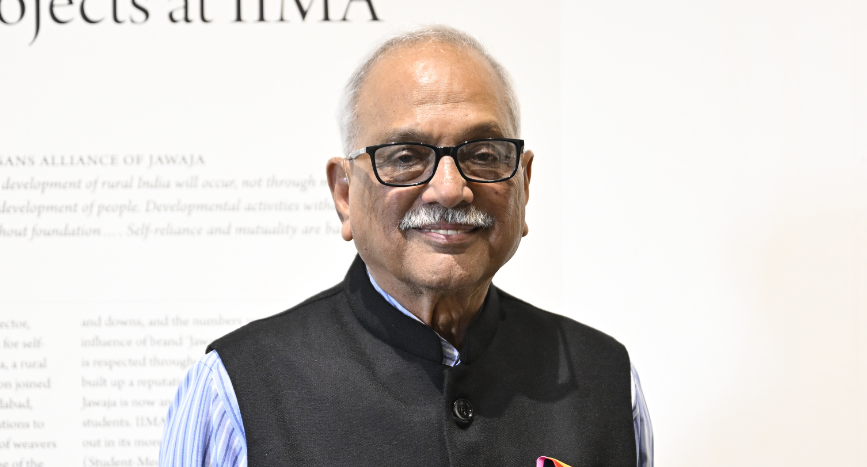
Madan Mohanka, an esteemed alumnus of the second batch of IIMA (PGP 1965-67). One of the first alumni-entrepreneurs of IIMA, he is the Chairman and Founder of Tega Industries. He has published two books, ‘Professor Extraordinaire’ about his mentor Prof DVL Mote and ‘I Did What I Had To Do’, a biography by Anjana Duitt, tracing the history of Tega Industries. He lives in Kolkata and can be reached at madan.mohanka@tegaindustries.com.