
Why accessibility is essential infrastructure for Viksit Bharat @2047
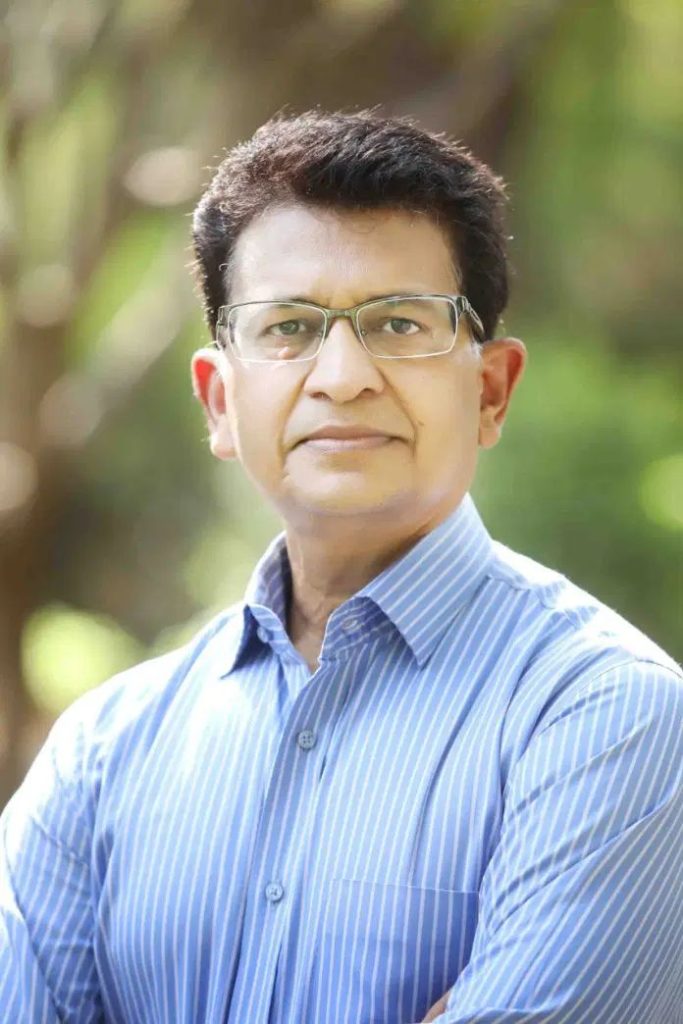
By Dr Mukesh Jain, PGP 1986
A building may be open to the public and still be closed to millions. A single step can exclude a wheelchair user; an inaccessible government website can lock out people who use screen-reading software. A bus that cannot be boarded independently can put a job, college or hospital beyond reach.
From a policy concern to a national mission
When I joined the Department of Empowerment of Persons with Disabilities in 2014, accessibility policy existed, but action was scattered. Buildings, transport and websites were managed separately, with varying standards, fragmented responsibilities and limited ways to measure progress.
Working with colleagues, experts and disability organisations, I conceptualised the Accessible India Campaign—Sugamya Bharat Abhiyan. Launched by Prime Minister Narendra Modi on 3 December 2015, the campaign set clear accessibility targets and established accountability.
The campaign covered the built environment, transport, and information and communication systems. An accessible office is of little use if the bus cannot be boarded; a welfare entitlement is not universal if its portal excludes beneficiaries.
it shifted the conversation from sympathy to citizenship, equal rights, opportunity and independent living. The Rights of Persons with Disabilities Act, 2016, strengthened this shift and expanded the number of recognised disability categories from seven to 21. In 2024, the Supreme Court described accessibility as a fundamental right and called for enforceable, rather than merely advisory, standards.
Progress is visible, but the journey is incomplete
The Department’s Annual Report 2025–26 records ramps at 5,639 railway stations and accessible toilets at 4,829. The Central Public Works Department has retrofitted 1,100 government buildings across 168 cities. Under the campaign, 676 state and union territory government websites have been made accessible.
Of the 1,45,490 buses reported by participating state transport undertakings, 51,041 meet basic accessibility standards—only 35 per cent of the fleet. Meanwhile, 2,521 of 3,363 bus stations are reported to be accessible.
Schools show the gap between visible accessibility features and meaningful inclusion. While 77.3 per cent of India’s 14.72 lakh schools have ramps, only 52.24 per cent have handrails, and 34.37 per cent have toilets suitable for children with special needs. A ramp alone is not accessibility.
We must measure complete journeys, not isolated facilities. Can a person leave home, travel, enter, navigate, complete a transaction and return independently? If one link fails, access breaks down.
The hidden bill India pays every day
The 2011 census counted 2.68 crore persons with disabilities in India, of whom only about 36 per cent were working. This count predates the expansion from seven to 21 recognised disability categories. The World Health Organization estimates that one in six people worldwide experiences significant disability.
The costs of exclusion are felt across the economy. A qualified person unable to access a workplace represents lost talent, earnings, tax revenue and productivity. When a family member must accompany an otherwise independent adult, the economy may lose two people’s time, with women often bearing the burden. Exclusion from education lowers lifetime earnings; businesses lose customers, and governments incur avoidable welfare, health and retrofitting costs.
An International Labour Organization study covering ten countries in Asia and Africa estimated that workplace exclusion of persons with disabilities was associated with losses of roughly one to seven per cent of GDP. This is not an estimate for India and should not be applied mechanically, but it illustrates the potential loss when human capability goes unused.
Accessibility is not a charitable expense; it is productive infrastructure. It expands the workforce, strengthens household purchasing power, reduces dependence and opens markets for banking, tourism, retail, transport, technology and public services.
Level entrances help older citizens, parents with prams and travellers with luggage. Captions help in noisy surroundings, while clear interfaces and voice options assist people with limited literacy, temporary injuries or age-related difficulties. Universal design recognises varied human needs.

Indian companies that design inclusively from the outset can reach more customers, avoid expensive redesign and compete abroad.
Making accessibility routine by 2047
Accessibility must move from special campaigns into everyday governance. Every publicly funded building, vehicle, website and application should meet notified standards before payment, occupancy or launch. Public procurement should reward accessible design; cities and districts should publish independently verified scorecards based on complete user journeys.
Professional education must change. Architecture, engineering, technology, management and public administration programmes should teach universal design. Persons with different disabilities must participate in planning, testing and auditing. A checklist confirms that a ramp exists; lived experience shows whether it works.
The Accessible India Campaign established a measurable framework. By 2047, no Indian should need extraordinary patience, family assistance or personal courage for ordinary tasks. India’s development will be judged not only by its buildings or networks but also by who can use them independently and with dignity. Viksit Bharat must also be Sugamya Bharat.
Source links
- https://economictimes.indiatimes.com/news/economy/policy/pm-modi-to-launch-accessible-india-campaign-for-persons-with-disabilities-on-december-3/articleshow/49985348.cms?from=mdr
- https://www.pib.gov.in/PressNoteDetails.aspx?NoteId=153473&ModuleId=3®=48&lang=2
Author Bio
Dr Mukesh Jain is a gold medallist in electronics and telecommunication engineering from MANIT, Bhopal, and a PGDM alumnus of the Indian Institute of Management Ahmedabad. He holds a Master of Public Administration degree from Harvard University’s Kennedy School of Government, where he received the Edward Mason Fellowship. His Harvard honours include the Mason Fellow Award and the Lucius N. Littauer Fellow Award for exemplary academic achievement, public service, and leadership potential. He also received the Raymond & Josephine Vernon Award for academic distinction and a significant contribution to the Mason Fellowship Program. He holds a PhD in strategic management from IIT Delhi.