
By Ajay Joshi, PGP 1980
The Shudra Varna was established primarily on ancestral lineage and tribal identity rather than occupational division. Scriptural, comparative Zoroastrian, and archaeogenetic data reveal that the barrier separating Shudras from Dwij categories stems from distinct ancestral origins, reflecting historical stratification between migrating Indo-Aryans and indigenous South Asians.
1. The Scriptural Dichotomy: Dwij vs. Non-Dwij
Hindu scriptures detail a four-fold social order (Chaturvarna) but fundamentally bisect it into Dwij (Twice-born) and Non-Dwij (Shudra). This systemic boundary was maintained through hereditary mechanisms:
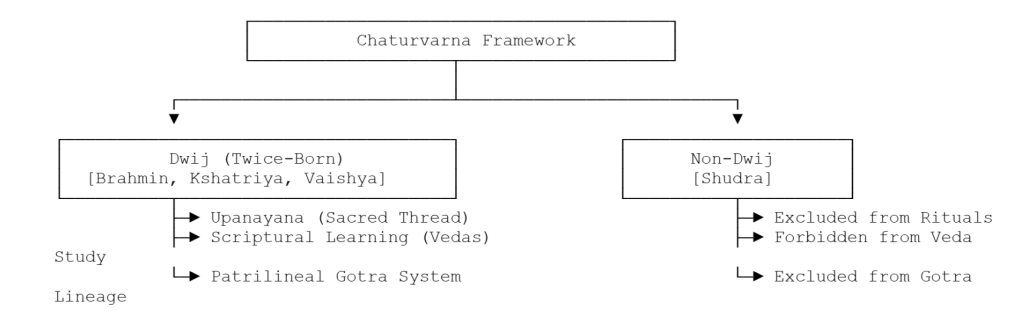
The Ritual Barrier (Upanayana): The sacred thread ceremony marks spiritual rebirth. Dwij lineages receive initiation by birthright, whereas Dharmashastras strictly bar Shudras, indicating fundamental ancestral ineligibility.
Access to Sacred Knowledge: Dwij are obligated to study the Vedas. Shudras were forbidden from hearing or reciting mantras, underscoring a strict lineage boundary.
Exclusivity of the Gotra System: Gotras track patrilineal descent from Vedic seers (Rishis). Dwij varnas belong to established Gotras, whereas Shudras traditionally lacked indigenous Gotras, placing them outside ancestral Indo-Aryan clans.
2. Comparative Indo-Iranian Stratification
Comparing Vedic society with Zoroastrian (Avestan) civilisation demonstrates that the Shudra varna reflects an external lineage group appended to an existing structure:
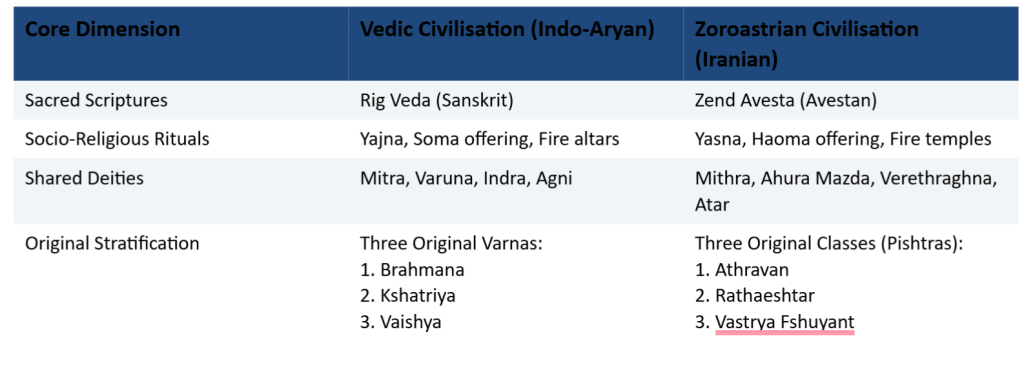
The Zoroastrian tradition contains no equivalent to the Shudra Varna. The tripartite Iranian structure mirrors the Dwij triad. The Shudra class emerged exclusively in South Asia through absorbing indigenous lineages.
3. Indo-Iranian Tribes: Origins and Divergence
Dwij lineages root in Central Asian steppe cultures (~2000 BCE). Environmental changes fractured this Indo-Iranian community into two migration streams:
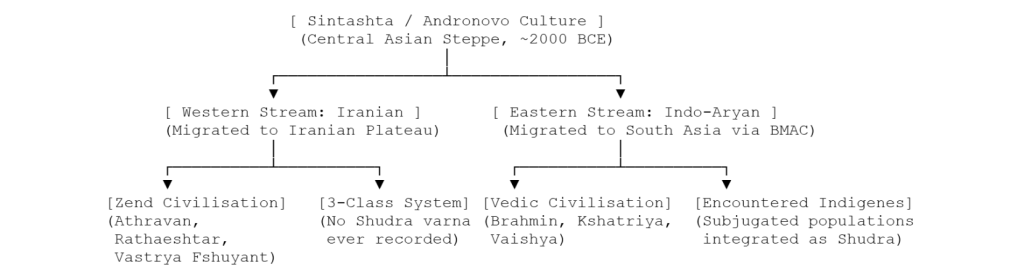
The Western branch settled the Iranian plateau, preserving three classes. The Eastern Indo-Aryan branch entered South Asia, encountering native populations.
4. Aryan Arrival and Indigenous Interaction
Entering South Asia (1500–1200 BCE), Indo-Aryans encountered native populations designated as Dasas or Dasyus, characterized by non-Vedic rites and distinct features. Expanding into the Gangetic plains, native groups were integrated into the social structure. To maintain ritual purity, elites excluded integrated groups from sacred rites, establishing them as non-Dwij Shudras.

5. Archaeogenetic Evidence and Haplogroup Distributions
South Asian genetic structure displays three nodes: AASI (Ancient Ancestral South Indian), IVC (Indus Valley Ancestry), and Steppe Ancestry.
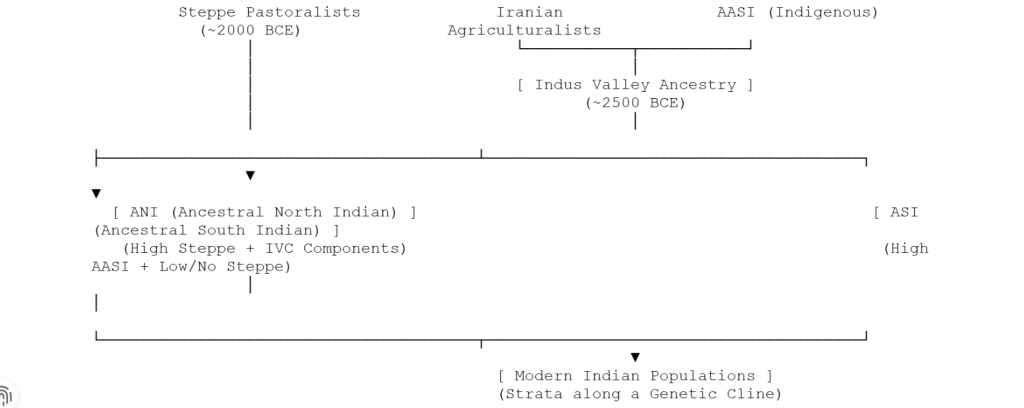
Quantitative Steppe Ancestry Trends: Dwij Upper Castes show high Steppe ancestry (20%–40%). Shudras display low Steppe signatures (<10%) and elevated indigenous AASI (40%–60%).
Paternal Lineage Differentiation: Steppe marker R1a-Z93 reaches 40%–72% among Brahmins (founder effect). Native haplogroups (H-M69, F-M89) dominate Shudras (25%–45%), aligning Varna divisions with biological lineages.
6. Conclusion
Scriptural, comparative, historical, and genetic evidence confirms the Shudra varna was established on ancestral lineage rather than occupation. Excluded from Upanayana, Vedic study, and Gotras, indigenous populations were integrated into the hierarchy as Shudras while maintaining the ancestral exclusivity of incoming Dwij clans.
Ajay Joshi is a Bangalore-based Indian History enthusiast. He holds a Bachelor’s degree in Engineering (JNV University, Jodhpur) and an MBA from the Indian Institute of Management, Ahmedabad.